Methods and techniques for collecting stumps and sourcing material for Syzygium buxifolium bonsai
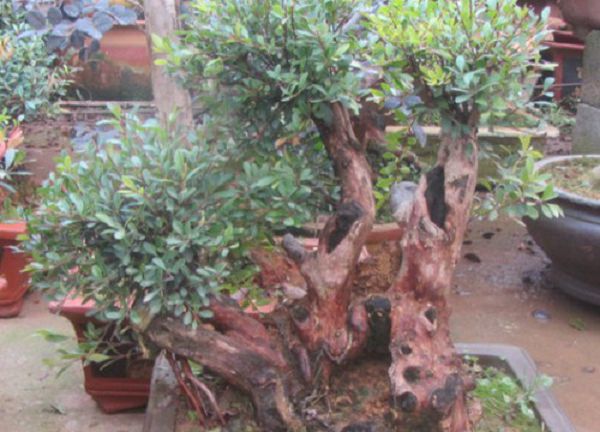
Syzygium buxifolium is a wild evergreen shrub of the mountainous regions of Jiangnan, and is rarely cultivated artificially. According to its ecological habits and biological characteristics, it can be propagated by sowing or cuttings. However, for making bonsai, wild plants or old stumps are mostly used. Collection in the wild: in the mountains and hills of Jiangnan, one can select old stumps that have been cut back for many years, sprouted again, and have a gnarled, ancient, and rugged posture.
Collect in spring between March and April, taking care to preserve as many lateral roots and fibrous roots as possible. Since the journey back from the mountains is rather long, coat the roots with mud slurry and wrap them in wet moss or rice straw to reduce water evaporation and help survival. After digging them out, plant them in loose, moist, well-drained sandy loam. Before planting, prune once, thinning out excessively dense branches to aid survival. After planting, promptly build a shade frame, water frequently, and keep the soil moist; in summer, also spray water on the leaves, 2-3 times a day. After October, the shade frame can be removed to give light. After a year of ground cultivation and care, they can be potted and shaped.
The best time to collect stumps is from March to August, which is the growing season for Syzygium buxifolium. As long as moisture is maintained and shade is provided, the stump material will quickly resume growth, especially in hot and humid seasons when it recovers even faster. They can also be dug in autumn and winter, but new stumps have not resumed growth and have no cold resistance, so in winter they must be kept warm and moist to survive the winter.
Syzygium buxifolium generally grows in clusters, growing together with Loropetalum chinense and rhododendron on steep slopes with granite and yellow soil; fewer grow on gentle slopes, and there are no good stumps there either, possibly because other trees grow quickly in gentle areas while Syzygium buxifolium grows slowly, resulting in insufficient light and death. On cliffside steep slopes the soil is poor, the stump material has many roots and fibrous roots and is easy to plant and keep alive, and there are many stumps with unusual shapes, good branching, good tapering, and good root spread.
When digging, keep more fine roots; there is no need to bring soil. Leave an extra section on the branches and roots of the stump material, and cut them to the proper length after returning home, to prevent branches and roots from being damaged in transport. When bringing the stump material down the mountain, it must not be thrown or rolled, to prevent damage to the bark, branches, and roots of the stump material. On clear days, take care to maintain moisture; before planting, it can be soaked in clean water for a few hours.