How to care for snake plants in summer? These care methods you need to master
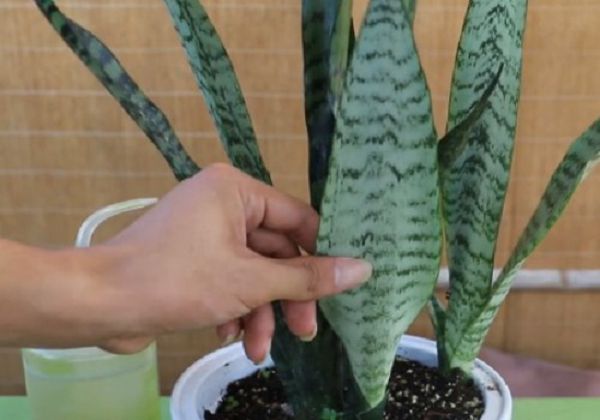
In the hot summer, when the temperature is above 32°C, many potted flowering plants will enter a dormant state and stop growing. Although the snake plant (Sansevieria), a foliage plant, can also go dormant during the hot summer period, as long as we can do a good job with care and management, we can also keep it from going dormant, and it can even keep sprouting new shoots and grow vigorously.
The snake plant is a plant native to the arid regions of Africa. Even when transplanted to all parts of the world, it still retains its drought-tolerant characteristics. And as a succulent plant, it is naturally also very afraid of waterlogging, otherwise it easily develops root rot. But as long as the growing environment is suitable, even in summer it can maintain vigorous growth, and can even keep sprouting new shoots.
For many flowering plants, in summer you should not expect them to bring us much ornamental value, and the focus is on ensuring they can safely and smoothly overwinter. But the snake plant can maintain vigorous growth in summer, so it can be said that summer is also its peak growing season. As long as we can do a good job with the following four aspects of care and management in summer, it can always maintain vigorous growth and keep sprouting new shoots.
1. Provide shade in time
Although the snake plant is a light-loving plant, summer not only has high temperatures but also particularly strong light intensity. For a light-loving plant like the snake plant, it is also not suitable to be exposed to strong direct light or the scorching sun for a long time. Otherwise, the markings on the plant's leaves, including the color of the golden edges of the leaves, will become dull or even disappear, and there will be no glossy feel; the leaves will also turn white, thereby reducing the ornamental value of the potted plant.
Therefore, in summer you should provide shade in time, and it is suitable to place the potted plant in a bright, ventilated place with plenty of scattered light. Generally, when the ambient temperature is above 30°C, you should provide shade for it in time. But you also cannot give it no light at all, otherwise the snake plant's leaves will also show the above adverse symptoms.
2. Water appropriately
Like other tropical succulent plants, the snake plant has the characteristics of being drought-tolerant but not water-tolerant, and its leaves are broad and thick with a strong water-storage capacity, so it can survive even in relatively dry soil. But if it is excessively deprived of water and suffers drought for a long time, its leaves can easily become shriveled. After all, its leaves are broad, and in summer the transpiration of water is strong.
However, watering too much can also easily cause water accumulation in the pot and root rot. Moreover, during the high-temperature summer period, you should not water heavily, and watering should also avoid the midday period when the temperature is highest. Generally, in the morning and evening, use a small amount of water to soak gradually, keeping the potting soil moist. And even in summer, watering still needs to follow the principle of watering thoroughly only after the soil has dried out. Usually, it is more appropriate to water after the top 3 cm layer of soil has dried.
3. Apply thin fertilizer sparingly
In summer, many flowering plants are in a difficult state, and their growth slows down, so they generally need to stop fertilization in time. But the snake plant can still maintain vigorous growth in summer, so it also consumes quite a lot of nutrients, and therefore also needs appropriate topdressing to promote growth. However, its root system is not well developed, and summer is hot and scorching, so applying too much fertilizer can also easily cause root burn.
When fertilizing the snake plant in summer, adhere to the principle of applying thin fertilizer sparingly. You can dilute organic fertilizer water with water at a ratio of 50-100 times, and when the snake plant needs watering, use it instead of plain water to drench the roots. Or open a small groove around the inner wall of the flower pot, then evenly sprinkle in some slow-release fertilizer, and then backfill the soil. As you water, the nutrients in the slow-release fertilizer will also seep down and be absorbed by the plant's root system.
4. Repot correctly
If repotting is not absolutely necessary, it is not advisable to repot the snake plant in summer. Because repotting flowering plants will more or less cause some damage to the plant's roots, and summer has high temperatures and hot weather, which often makes it difficult for the plant to adjust after repotting. At the same time, in a high-temperature and high-humidity environment, it is also very easy to cause wound infection.
However, if the snake plant shows lodging and the cause is root rot due to excessive watering, then as a last resort, even in summer you can only repot it. At this time, you need to promptly take the plant out of the pot and trim the roots, then replant it using a new pot and new soil.