How to grow magnolia? Detailed guide to cultivation methods and precautions
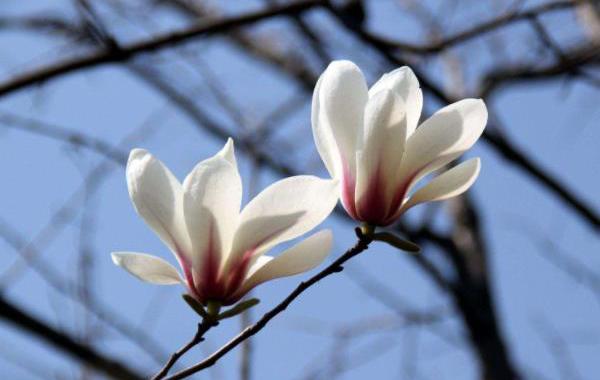
Magnolia is a deciduous small tree with purplish-brown branches, and its wood is fragrant. It originally grew in the mixed forests of central China, so it likes light but also tolerates shade, prefers warmth and humidity, and can also tolerate cold, with relatively low requirements for its growing environment. So when growing it at home, how do you grow magnolia? And what should you pay attention to?
How to grow magnolia
Magnolia likes moisture but fears waterlogging, prefers sufficient sunlight and good ventilation, and acidic soil; usually apply more ferrous sulfate and light fertilizer.
1. Soil: Magnolia likes fertile, moist, and well-drained sandy soil, is not drought-tolerant, and avoids alkaline soil; it grows poorly in dry, alkaline, or clay soil.
2. Watering: Magnolia avoids both drought and waterlogging. Usually ensure a supply of water and frequently spray the leaves to increase air humidity, so as to avoid yellowing and falling leaves.
3. Sunlight: Magnolia likes light and is slightly shade-tolerant, so usually pay attention to the light issue and let magnolia fully receive sunlight.
4. Temperature: Magnolia likes a warm and humid climate and can also tolerate cold, but when the temperature is relatively low in winter, it should still be moved indoors for insulated cultivation.
5. Fertilizing: Magnolia likes fertilizer, so fertilize in time. Apply fertilizer once each before and after the flowering period, mainly phosphorus and potassium fertilizer. From October to November each year, apply rotted compost and stable manure as base fertilizer. After flowering, during the period of budding and branch growth, apply 2 to 3 topdressings of quick-acting nitrogen fertilizer.
6. Pests: The main pests of magnolia are Pittosporum cottony cushion scale, sooty mold, etc., which reduce its ornamental value. Bordeaux mixture 1-3 degrees lime sulfur can be sprayed; during the nymph hatching period, 40% omethoate emulsifiable concentrate at 1000 times plus 10% imidacloprid wettable powder at 1500 times can be used; when adults occur, use Kuangshajie 800—1000 times solution or 40% Supusha emulsifiable concentrate at 1500 times solution for uniform spraying. Adding an appropriate amount of diesel oil when spraying can increase its permeability, and at the same time the spray solution must be sprayed thoroughly and evenly.
7. Pruning: For magnolia to form a tree shape, it is necessary to remove tillers and sprouts and to train the branches, which facilitates the growth of magnolia's tree form.
Magnolia cultivation methods and precautions
I. Soil requirements for magnolia
1. It likes fertile, moist, and well-drained sandy soil.
2. It is not drought-tolerant, avoids alkaline soil, and grows poorly in dry, alkaline, or clay soil.
3. The roots are fleshy, fear flooding, and have poor wound healing ability, so transplanting is not easy to survive.
II. Magnolia cultivation and care
1. Cultivation management is simple; pay attention to preventing drought and waterlogging and fertilize in time.
2. Transplanting can be carried out in autumn or before flowering in early spring. Small seedlings should be dipped in mud slurry, and large seedlings must be transplanted with a soil ball.
3. Apply fertilizer once each before and after the flowering period, mainly phosphorus and potassium fertilizer.
4. During high temperatures in summer and the dry season in autumn, maintain soil moisture.
5. After flowering and before new shoots sprout, prune dead branches and dense branches and shorten overgrown branches.
III. Magnolia water and fertilizer regulation
1. Magnolia is drought-tolerant and fears flooding. Usually ensure a supply of water and frequently spray the leaves to increase air humidity, so as to avoid yellowing and falling leaves.
2. Magnolia likes fertilizer. From October to November each year, apply rotted compost and stable manure as base fertilizer. After flowering, during the period of budding and branch growth, apply 2 to 3 topdressings of quick-acting nitrogen fertilizer. In the dry season, mulch around the roots and water moderately. The following year it can be expected to have abundant flowers and lush leaves.
IV. Magnolia pest and disease control
1. Magnolia has relatively few pests and diseases. As long as you pay attention to water control, promptly prune diseased leaves, and maintain ventilation, it is fine.
2. In severe cases, appropriately increase the spraying of insecticide.
How to prune magnolia
1. During magnolia cultivation, pruning must be carried out continuously. When old leaves turn yellow and dry, they should be pruned in time to facilitate ventilation, and some leaves with dry tips should also be cut off. In particular, leaves damaged by pests and diseases need to be removed in time to avoid contagion. When pruning leaves with viral disease, the scissors used should not then be used to cut healthy leaves, to prevent the spread of the virus. If the same pair of scissors is used, it must be disinfected.
2. After magnolia flower buds emerge, if there are too many flower buds, keep the strong buds and remove the remaining thin and small flower buds. It is suitable to keep 1-2 flower buds per pot. If there are too many flower buds, it will not only make that year's flowers bloom poorly, but also consume too much of the mother plant's nutrients and affect the next year's flowering. Generally, magnolia may not need flower buds removed.
Magnolia propagation methods
I. Seed propagation
1. Raising seedlings
Select seeds from robust plants as mother seeds. In early to mid-September, mix the harvested mature seeds with coarse sand and rub repeatedly to remove the red oily layer, then rinse with clean water and dry, then mix with fine wet sand for low-temperature treatment. Generally choose a sheltered, sunny spot, dig a pit, mix in fine sand at 2-3 times the seed volume, cover with grass to retain moisture, check frequently, and keep moist. When the seeds crack and show white, sow them in the seedling bed in time. Trenches can be opened at a row spacing of 30 cm and a depth of 3 cm. After sowing, cover with a little soil and keep moist; seedlings can emerge in about 1 month. During sand storage, pay attention to preventing water accumulation and mildew.
2. Transplanting
After 2 years, when the seedlings are 80-100 cm tall, they can be transplanted, and the seedlings should be planted as soon as they are lifted.
3. Grafting
Grafting can be done throughout the growing season, but the survival rate is highest when grafting in late May. Producing areas mostly use the bud grafting method. For scions, choose branches that are well developed, grow robustly, have dormant buds, and are free of pests and diseases; one-year-old scions are best, and the rootstock and scion should be similar in thickness. Choose a sunny, windless or slightly windy afternoon for grafting. When grafting, insert the bud piece into the cut on the rootstock, press the bud piece tightly against the rootstock bark, tie it firmly with string, and seedlings will emerge in half a month.
4. Cutting propagation
Choose branches more than two years old, cut them into sections about 60 cm long, remove the leaves, and on cloudy and rainy days in summer and autumn, insert them into a moist seedling bed, burying 20-30 cm into the soil, firm the soil and water, and they can survive; they can be transplanted the following year.
Magnolia is a very good early-spring ornamental flowering tree. Every year in early spring when magnolia blooms, purplish-red flowers hang all over the branches, the flowers are huge, and the floral scent is fresh. Because magnolia is a woody plant, it is not very suitable for potted home cultivation; it is best planted in courtyards or gardens.