Caragana Bonsai Making Methods and Techniques
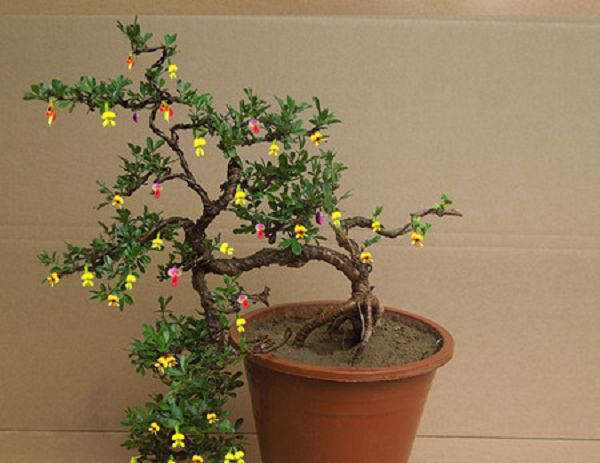
Sourcing Material for Caragana Bonsai
The stump material for making Caragana bonsai can be small seedlings grown from cuttings, division, or layering, or old stumps dug from the wild; choose ones with graceful posture to achieve quick styling results.
Dig up the Caragana plant during the dormant period or the rainy season. First cut off most of the above-ground stems, then remove the soil, and carefully dig out the Caragana roots according to their growth direction; be careful to protect the root system and do not let the roots get damaged.
After digging out the Caragana, there is no need to shorten it immediately; first place it in a semi-shaded spot, and when the roots are slightly dry, coil and shape them so the roots can substitute for the trunk, then plant it in a pot. Never coil the roots while wet, or they will break easily. Handled this way, once established the roots become gnarled and interlaced, very pleasing to the eye.
Potting the Caragana
Choose a suitable flower pot. When making Caragana bonsai, a round or square purple clay pottery pot is preferable. For a cascade-style bonsai, a tall cylindrical pot is preferable; to fully display the Caragana roots, a somewhat shallower pot may be chosen.
After choosing the pot, fill it with soil. Use neutral or slightly acidic loam or light clay for the potting soil; alkaline soil is not suitable, though ordinary potting soil or garden soil will also do. Then pot it in early spring.
Shaping the Caragana Bonsai
To make the Caragana bonsai beautiful in form, the main branches and trunk can be shaped appropriately. On the basis of grasping the overall styling effect, make fine adjustments. For small branches, pruning is the main method, and they should be cut with pleasing irregularity. Arrange and lay out the root system, intertwining them, or appropriately wrap them with palm fiber to bring out the gnarled, interlaced beauty of the roots.
For the shaping of Caragana bonsai, those with a single gnarled trunk and an ancient, elegant posture are best; it can also be made into a form with branches and leaves drooping down in profusion; or with roots raised and claws exposed, showing its aged look; or with branches and leaves pruned and tied into cloud-like tufts; all to achieve the effect of beautiful form and brilliant flowers.