Potted Peony Winter Management Methods and Care Points
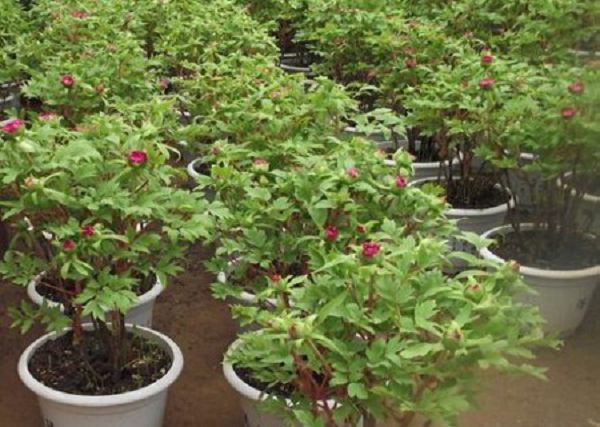
Peonies can not only be planted in the ground, but are also grown in pots by people for ornamental purposes. Moreover, peonies have strong cold resistance, so in the relatively warm southern regions in winter, we do not need to give them much special care. But the winter in northern regions is indeed very cold, so we cannot manage them the same way as in the south.
Around the Beginning of Winter, the northern regions are already quite cold. So at this time we should promptly move potted peonies to a bright place indoors, keeping the room temperature above 0°C. But in the following spring, we should not rush to move them outdoors too early, because early spring in the north still has very low temperatures, and potted peonies still cannot endure the outdoor cold waves. Generally, we need to wait until around Qingming, when the temperature is relatively warm and stable, before moving them outdoors.
For regions with relatively higher temperatures, in winter we do not need to move them indoors for warmth and cold protection. We can choose a place away from drafty openings with relatively stable airflow, bury the flower pot in the ground, and keep the pot surface level with the ground. This not only maintains the moisture of the potting soil, but more importantly also maintains the temperature of the potting soil, providing protection for the potted peony to overwinter safely and smoothly. When the peony begins to form buds in the following spring, we then dig the pot out from the ground and carry out care and management according to normal procedures.
Protection against the cold and keeping warm is a relatively key part of winter management for potted peonies, but to ensure good flowering results the following year, other aspects of management in winter cannot be neglected either.
I. Pruning
After entering winter, peonies also enter their dormant period, and the plants are basically in a state of halted growth, so this is a very suitable time for pruning. Winter pruning of potted peonies should be carried out on the basis of maintaining a rounded plant shape, mainly cutting off basal shoots at the base of the plant and overlapping branches, crossing branches, and thin, weak, diseased or pest-infested branches above, with the standard of retaining thick, strong branches that have flower buds. To achieve better ventilation and light penetration, pruning of potted peonies should be done so that density, sparseness, length and shortness are coordinated and appropriate.
II. Leaf Removal
After entering winter, the leaves of peonies will gradually dry up, and the disease pathogens and insect eggs and other harmful substances attached to the leaves will also remain. So we should promptly cut off these dried branches and leaves, to prevent them from later falling into the potting soil and continuing to spread and harm the plant the following year. But during leaf removal, be careful to avoid injuring the flower buds, and at the same time pick up the dead leaves that have fallen on the pot surface to one side, then burn them in a concentrated manner, eliminating diseases and pests as much as possible.
III. Watering
Because peonies in winter are basically in a dormant state, their water consumption is negligible. Although sometimes the surface soil of the pot appears to have dried out, we do not need to replenish water. And during rainy or snowy weather, we should promptly move potted peonies to a place where rain and snow can be blocked, to avoid excessive moisture in the potting soil causing root rot.
IV. Fertilizing
Peony is a flowering plant that likes fertilizer. Even after entering winter, we should appropriately supplement nutrients for it to ensure good flowering results the following year. But to ensure the safety of winter fertilizing, organic fertilizer is recommended, using semi-decomposed cake fertilizer or human and livestock urine for topdressing. Of course, a small amount of compound fertilizer can also be applied along with it, but it needs to be buried in holes dug more than 10 cm deep.
V. Weeding
Although winter has arrived, some weeds have very tenacious vitality and can often survive even in severe cold climate conditions. This will inevitably continuously absorb nutrients from the potting soil, consuming the nutrients needed by the peony. So we should promptly remove the weeds in the flower pot to prevent them from competing for the peony's nutrients. However, deep turning of the potting soil is recommended, because on one hand it can completely eliminate the weeds, and on the other hand it also loosens the soil and helps with smooth overwintering.