How to care for potted anthuriums? Detailed care methods and tips
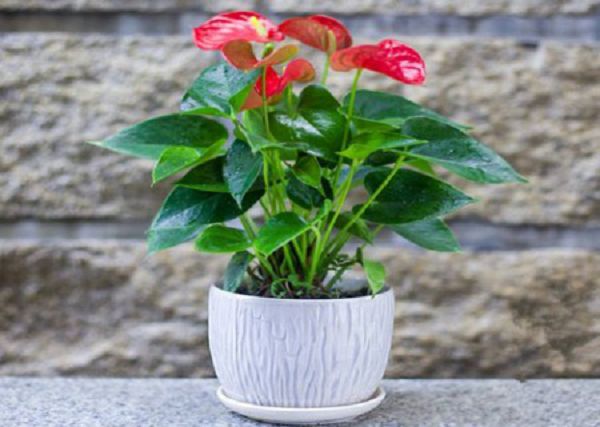
Anthurium, also known as flamingo flower, red flamingo lily, fire crane flower and candlestick flower, is a perennial evergreen herbaceous flowering plant in the Araceae family, native to Central and South America. The flower stems of anthurium are relatively short, so it is not suitable for use as a cut flower and is mainly grown in small and medium-sized pots. When it blooms in spring, the green leaves are set off by bright red, glossy spathes (in the spadix inflorescence unique to Araceae plants, the spadix is wrapped by a spathe resembling a flower crown; it gets the name "spathe" because it resembles the candlestick offered to the Buddha in temples).
So, how do you care for anthuriums grown in pots at home?
1. Growing medium
It should have good water retention, drainage and aeration, otherwise it easily causes root rot. Anthurium's requirements for the growing medium are good water retention, the ability to promptly drain excess water, resistance to rot, the ability to remain loose and airy over the long term, and no toxic substances contained or released. The commonly used medium is imported peat.
2. Light
One very important factor affecting anthuriums is light. Too strong light inhibits plant growth and causes the leaves and the spathes of the flowers to discolor or become scorched, greatly affecting flower yield and quality. Conversely, when light intensity is too low, because the plant's assimilation products are insufficient, it easily causes flowers to become smaller, flower stems to soften and yield to decrease. During the growth stage, anthuriums have relatively high light requirements, and light can be appropriately increased to promote growth; during flowering, the light requirement is lower, and light can be reduced to prevent the spathes from discoloring and affecting ornamental value.
3. Temperature
Anthurium growth is relatively sensitive to temperature. The suitable growing temperature is 14°C to 35°C, the optimum temperature is 19°C to 25°C, and a day-night temperature difference of 3°C to 6°C is suitable; that is, a daytime temperature of 21°C to 25°C and a nighttime temperature of about 19°C are most suitable for anthurium growth. If the temperature stays below about 13°C for a long time, the plant will not die, but it will be difficult for it to resume growth for a long time; when the temperature is above 35°C and light is relatively sufficient, leaf surfaces are prone to scorching, and because damaged leaves do not reverse, this will directly affect the overall quality of the anthurium.
4. Humidity
Anthuriums have relatively high requirements for air humidity. If humidity is too low, the plant will grow old and hardened, and the leaves and flowers will be smaller; if humidity is too high, the plant will grow very fragile and fungi will easily invade. When the temperature is 20°C to 28°C, humidity should be 60% to 70%; when the temperature reaches above 28°C, humidity should be between 70% and 80%.
5. Watering
Natural rainwater is the best water source for anthurium cultivation. During the seedling stage, because the root system is weak and distributed relatively shallowly in the medium, it is not tolerant of drought, so water thoroughly in one go, keep the medium moist frequently, encourage early and abundant new root growth, and pay attention to the dryness and moisture of the medium surface in the pot; during the medium and large seedling stages, the plant grows quickly and needs more water, so the water supply must be sufficient; during the flowering stage, watering should be appropriately reduced and phosphorus and potassium fertilizers should be added to promote flowering. During watering, alternate wet and dry conditions must be maintained.
6. Fertilizing
The fertilizing principle is to apply thin fertilizer frequently. Fertilize with different compound liquid fertilizers according to different stages of anthurium growth: apply fertilizer a during the growth period, and during the flowering period apply fertilizer b combined with fertilizer a. Generally, depending on the dryness and moisture of the medium in the pot, apply fertilizer water once every 2 to 3 days; in summer, apply fertilizer water once every 2 days; in autumn, generally apply fertilizer water once every 5 to 7 days. At the same time, regularly conduct sample checks on the plant's nutritional status so as to promptly improve its absorption of the fertilizer solution.
7. Repotting
Repotting depends on the growth of the seedling's fleshy root system. If the roots have already grown plump and thick and wrap around the medium surface along the inner wall of the pot, then repotting is needed. When repotting, first place a layer of medium at the bottom of the pot, with the thickness determined by the medium height and the pot depth. Take the anthurium seedling out of the small pot together with the medium, place it in the center of the pot, cover with soil up to the junction of roots and stems, then gently pat firm. The repotting operation method is basically the same as planting. After repotting, immediately water thoroughly with clean water.
8. Pests and diseases
To prevent and control anthurium pests and diseases, you should first improve cultivation techniques and management levels, and must adhere to the principle of prevention first and comprehensive management. During anthurium cultivation, strengthen anthurium quarantine and disinfection; improve the environment and raise cultivation techniques; ensure the cultivation environment is clean, ventilated and well lit, which can promote vigorous anthurium growth and improve its ability to resist pests and diseases. In short, put prevention first and spray regularly.