Prune and shape your Kalanchoe this way for a better-looking plant that blooms more
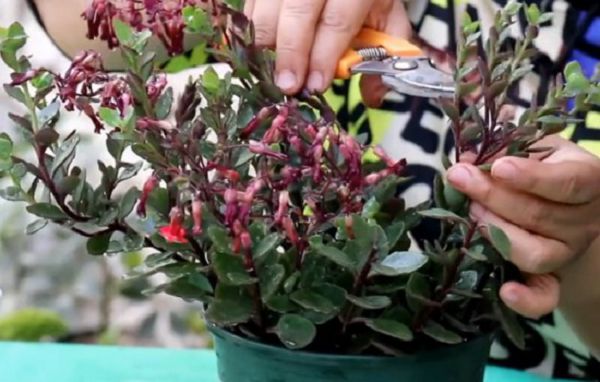
Kalanchoe (Kalanchoe blossfeldiana) is a fleshy, succulent-type plant that is highly ornamental thanks to its abundant blooms and vivid flower colors. We usually grow it in pots for enjoyment, and as long as it is pruned and shaped well, it blooms profusely and fills out its pot easily, growing into a big ball of flowers that is truly striking. So how do you prune and shape a Kalanchoe? In fact, pruning your Kalanchoe this way not only gives it a better-looking form, but also makes it bloom more.
Pruning of Kalanchoe is best done after flowering, because post-bloom pruning saves a great deal of nutrients and promotes the sprouting and growth of new buds. And if done properly, it can even bloom a second time. Shaping pruning, on the other hand, usually needs to wait until the flowering period ends and the plant enters dormancy, and the entire dormant period is suitable for shaping pruning.
Once the shaping pruning is finished, the plant's growing season arrives right on cue, and it easily grows into a plant with abundant stems and leaves, making the potted plant not only more attractive in form but also more likely to bloom profusely. And when it comes to shaping pruning, it is generally recommended to start from the seedling stage. Once the Kalanchoe seedling reaches a height of more than 5 cm, we can pinch or top it to encourage side buds to sprout.
Then, when the side buds have grown into branches 5-6 cm long, we prune the side branches again. At this point the pruning is still mainly topping or shortening, keeping just 3-4 leaf buds on each side branch. Generally, after repeatedly topping and shortening a potted Kalanchoe this way, the plant grows more vigorously, sprouts more new buds, and has more branches and leaves, so its form naturally becomes fuller.
But during the peak growing season, be sure to thin out overly dense branches and leaves as appropriate, especially large leaves that stick out prominently, which should be removed promptly. This is because overly dense, overly large leaves block light strongly and also hinder air movement; removing them in time saves a great deal of nutrients and improves the ventilation and light penetration of the potted plant, thereby reducing pests and diseases and better supporting the plant's growth.
And after being treated this way, the whole upper part of the plant can be covered all around with flowering branches, and the potted plant takes on a hemispherical or oval shape, so when it blooms profusely it is bound to form a big ball of flowers. So, as long as we can learn to prune and shape our Kalanchoe, the potted plant we grow will not only bloom beautifully but also have a better-looking form, naturally giving it high ornamental value.