Can Kalanchoe stem cuttings use ordinary soil? Choose the cutting soil like this
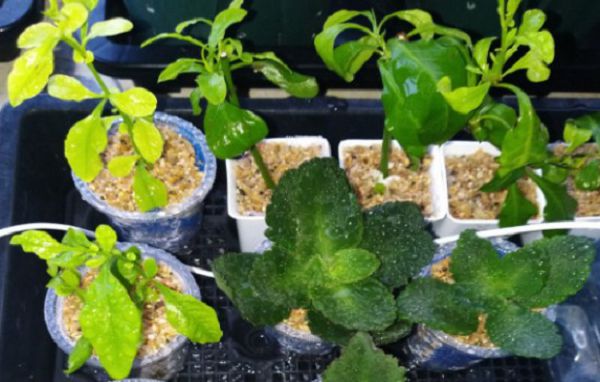
Kalanchoe is very suitable for taking cuttings from branches, and you can cut stems, side branches, or even flower stems as cuttings, and they usually root and survive very easily. Compared with leaf cuttings, stem cuttings also have more obvious advantages. After rooting, stem cuttings can generally continue to sprout, while leaf cuttings usually need several months of cultivation after rooting before they can successfully sprout.
However, there are many factors affecting the survival rate of cuttings. Not only does it require the cut stems to be robust and mature, but the temperature, humidity, light, ventilation and other factors in the cutting environment will also have a certain impact on the rooting and survival of the cuttings. Not only that, the choice of cutting medium is also very critical, so?
Kalanchoe is very easy to root and survive from cuttings, but if the medium is poor, although it cannot be said that it is impossible to root and survive, it is easy to have a great impact on its rooting and survival, thereby reducing the survival rate. If ordinary soil is used for cuttings, survival is generally not a problem, it is just a matter of sooner or later.
Because ordinary soil is generally neutral and has a certain viscosity with poor permeability, and these factors usually only affect the growth of the cuttings after rooting and survival, and generally do not play a decisive role in their rooting and survival. Therefore, even if we use ordinary soil, Kalanchoe stem cuttings can still survive.
But precisely because ordinary soil has too poor permeability, is not loose and breathable enough, and also affects drainage, it is not conducive to the respiration and growth of the small seedlings' root system, and it is also easy to cause water accumulation in the medium. Since the root system of small seedlings is very tender and fragile, and Kalanchoe is naturally drought-tolerant but not water-tolerant, when the medium accumulates water, it is easy for its tender roots to be damaged.
Moreover, Kalanchoe has many fibrous roots, which are also very fragile and easily damaged. Whether it is our usual management of water and fertilizer during maintenance, or our transplanting into pots, we must protect its root system, otherwise it will affect its survival.
In order to improve the survival rate of Kalanchoe stem cuttings, we generally need to choose a loose, breathable, and highly water-permeable medium as the cutting bed, preferably a clean plain medium with no nutrients at all. Plain sand, perlite, vermiculite, etc. are all very good media and can all be used as the medium for Kalanchoe stem cuttings.
These plain media contain no nutrients or few nutrients, so they are relatively very clean and are not likely to cause wound infection or damage to the cuttings, so they can greatly improve the rooting and survival rate of the cuttings. But at the same time, because these media lack nutrients, they are not suitable for the long-term growth of the rooted cuttings, so after the cuttings root and survive, they should be transplanted into pots in time and planted in fertile, loose soil with better breathability and water permeability.