Analysis of the reasons why prevention and control of viral diarrhea in piglets is difficult
Why is viral diarrhea in piglets so hard to prevent and control?
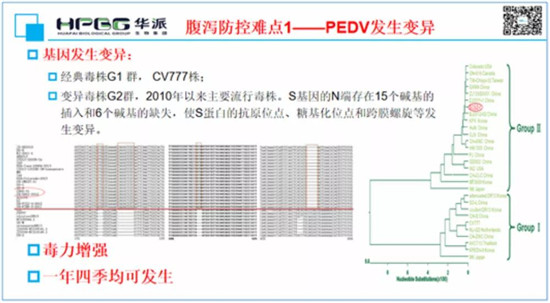
1. PEDV has mutated
PEDV is the main pathogen of viral diarrhea in pigpig diseaselets and has undergone obvious mutation since 2010, resulting in increased virulence of the strains, with pigs of all ages and all four seasons being susceptible. The vaccine strains CV777, ZJ08 and the Korean vaccine strain DR13 all belong to the G1 group and are conventional classical strains. The epidemic strains belong to the G2 group, and the mutation of the strains has significantly reduced the protective efficacy of vaccines based on classical strains.
2. PED has multiple transmission routes and strong infectivity
PED can be transmitted both horizontally and vertically, and sow milk can also carry the virus. PEDV survives for a long time in the environment. At room temperature, PEDV can survive for 7 days in dry feed and 28 days in wet feed; it can survive for 14 days in manure slurry; and it can survive for 7-13 days in drinking water or recycled water.
Infected pigs shed a large amount of virus. At the peak of the disease, 1 g of feces can contain 10 billion virus particles, while the pig median infectious dose of PEDV is very low: 103 virus particles are enough to cause infection and disease. The virus shedding period of affected pigs is long. Trials have shown that viral nucleic acid can still be detected in oral fluid 10 weeks after nursery pigs are infected.
3. The pathogens are complex, with mixed infections predominating
The pathogens causing viral diarrhea include porcine epidemic diarrhea virus (PEDV), porcine transmissible gastroenteritis virus (TGEV), porcine deltacoronavirus (PDCoV), porcine rotavirus (PoRV), porcine pseudorabies virus (PRV), porcine circovirus type 2 (PCV2), classical swine fever virus (CSFV) and porcine reproductive and respiratory syndrome virus (PRRSV), among others. In addition, it has been reported that porcine kobuvirus (PKoV), porcine bocavirus (PBoV) and porcine sapelovirus (PSV) can, to a certain extent, cause vomiting and diarrhea symptoms in pigs. Diarrhea is mostly a mixed infection, which increases the difficulty of prevention and control.
Tables 2 and 3, cited from Zhou Ling, Chen Guihua et al., Investigation and analysis of diarrhea pathogens in large-scale pig farms in Guangdong region from 2016 to 2017 [J], Chinese Journal of Veterinary Medicine, 2017 (10): 3-5
4. Inadequate biosecurity and poor feeding management
At present, many pig farms have strengthened externalbiosecurity prevention and control, but internal biosecurity on quite a few farms is still inadequate and has loopholes. To quickly resume production and increase output, large numbers of replacement gilts are introduced into the herd, and some farms even bring in breeding stock from multiple locations, which easily introduces wild-type PEDV into the herd. Porcine epidemic diarrhea is more infectious; being able to prevent African swine fever does not necessarily mean diarrhea can be well controlled. Biosecurity is crucial for the prevention and control of porcine epidemic diarrhea on pig farms. Farms must take effective measures to reduce the viral load in the environment, especially in the farrowing house. The farrowing house should strictly follow all-in/all-out; empty pens must be thoroughly cleaned and thoroughly disinfected, and drying the farrowing house after disinfection is essential. Once diarrhea occurs, isolation and disinfection should be strengthened, and the handling of diarrheic feces must be strictly carried out. Pig farms should strengthen herd health management and provide appropriate health care to improve herd health.
5. Basic immunization on pig farms has not been done well
Under the new normal of African swine fever, many pig farms have suspended or reduced their farm disease prevention plans to reduce African swine fever infection caused by factors such as immunization injections and personnel cross-contact, and have made extensive use of medication-based health care to improve herd immunity and resistance. This kind of disease prevention measure has major drawbacks, and the basic disease prevention of the breedingbreeding pigherd is not solid. PED can occur in all four seasons, and viral diarrhea vaccines should be included in the routine immunization of breedingbreeding pigfarms and implemented as whole-herd immunization.
6. Neglect of herd health monitoring and failure to take timely intervention measures
Many pig farms do not pay enough attention to clinical observation of diarrhea, and do not promptly collect samples for testing and diagnosis when abnormalities occur, delaying the timing of disease prevention and control. On many farms, viral diarrhea first occurs in finishing pigs, replacement gilts and piglets. Because no attention is paid to it, the virus circulates and spreads on the farm. Once it is introduced into the farrowing house, the piglets born to some sows with low immunity levels are the first to develop vomiting and diarrhea and shed large amounts of virus, ultimately leading to a full-scale outbreak of diarrhea in the farrowing-house piglets and causing serious losses.
Pig farms should strengthen clinical observation of the herd. When watery diarrhea is found, it should be reported promptly, and samples should be collected for accurate diagnosis. At the same time, farms should also strengthen routine laboratory testing of the herd: for newly introduced gilts and gilts within 20 days before farrowing, collect fecal samples or saliva samples to monitor pathogens, and after immunization collect serum and milk samples to monitor antibody levels.
If a virus is introduced into a pig farm and some pigs develop diarrhea, great attention should be paid and emergency intervention measures should be taken to cut the chain of virus transmission within the herd: first, isolate promptly to prevent internal cross-contact; second, disinfect strictly, especially strengthening the disinfection and treatment of feces; third, carry out one whole-herd blanket immunization and appropriately increase the immunization dose.
In general, viral diarrhea, especially porcine epidemic diarrhea, is very difficult to prevent and control, and there is still no particularly effectivetreatmentdrug. Once it occurs, it often causes serious losses. The key for pig farms is to do a good job in routine disease prevention. On the basis of good biosecurity, they should choose diarrhea vaccines based on mutant strains for scientific immunization.