Detailed Explanation of a Prevention and Control Plan for Respiratory Diseases in Growing-Finishing Pigs
Prevention and Control Plan for Respiratory Diseases in Growing-Finishing Pigs - Take It, No Thanks Needed!
Because growing-finishing pig herds have high stocking densities, combined with complex pathogens and antibody decline, as autumn and winter approach, respiratory diseases will become more prominent, making prevention and control of respiratory diseases especially important!
The recommended prevention and control plan is as follows:
Identify the disease occurrence pattern on the farm
Generally speaking, respiratory diseases in growing-finishing pigs mainly occur in three important stages:
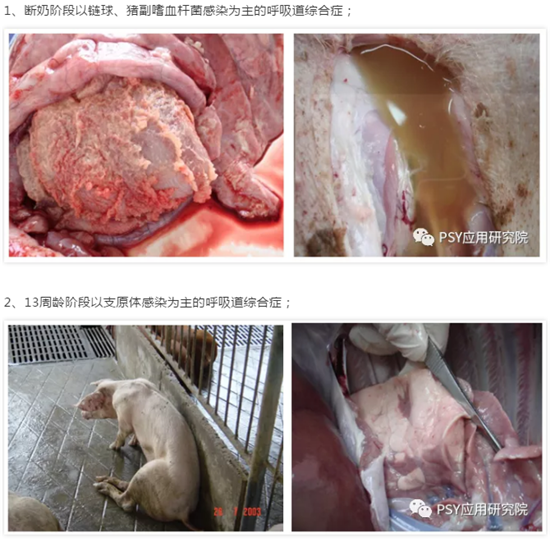
The specific stages at which the above respiratory diseases occur may differ among different pig farms. Pig farms should carry out preventivetreatmentin advance according to the farm's own pattern, to avoidtreatmentbeing costly and having a low cure rate when problems suddenly arise.
Specific prevention and control plan
1. Weaning and nursery stage:
① After weaning, use for the whole herd: Chuankexin 2 kg/t + Abeishu 0.5 kg/t, continuously for 7-10 days;
② At weaning and transfer, precise dosing per individual pig: Subeizhi 1.5-2 mL/pig by intramuscular injection.
2. 13-week-old stage
① Medication stage:
One week earlier according to the disease occurrence pattern, generally 90-100 days of age.
② Medication plan:
Plan A: 80% Tiamulin 125 g + Abeishu (10% amoxicillin) 500 g + 15% chlortetracycline 2 kg;
Plan B: Tylosin 250 ppm + sulfadiazine-trimethoprim 250 ppm + TMP 50 ppm;
Plan C: Tylvalosin 60 ppm + 10% amoxicillin 3 kg.
③ Medication precautions:
★ Choose any one plan and add it continuously to feed for 5-7 days, then after stopping for two weeks use it again for 7-10 days;
★ Pay attention to rotating medications, changing the plan once every quarter;
★ In the first three days of each medication period, the dose can be doubled for pulse dosing.
3. 18-week-old stage
① Medication stage:
One week earlier according to the pig farm's disease occurrence pattern, generally at 80 kg body weight.
② Medication plan:
Plan A: Qifu 1.5 kg/t + Chuankexin 2 kg/t;
Plan B: Florfenicol 150 ppm + Doxycycline 200 ppm;
Plan C: Florfenicol 150 ppm + sulfadiazine-trimethoprim 250 ppm + TMP 50 ppm.
③ Medication precautions:
★ Choose any one plan and add it continuously to feed for 5-7 days, then after stopping for two weeks use it again for 7-10 days;
★ Pay attention to rotating medications, changing the plan once every quarter;
★ In the first three days of each medication period, the dose can be doubled for pulse dosing.