What exactly is the culprit behind a case of sow miscarriage?
The following content is compiled from Fan Fuhao's WeChat group [Life Management Forum - West Group] (views are for reference only):Pig farming informationWang Wang Shihong
-------------------------
Cheng Shuigui: Teachers, please help me diagnose this, thank you! A certain farm has recently had consecutive cases of premature birth and miscarriage, occurring at all stages, and the farm's endometritis return-to-estrus rate is also high. From the end of May until now, more than ten litters have been affected.
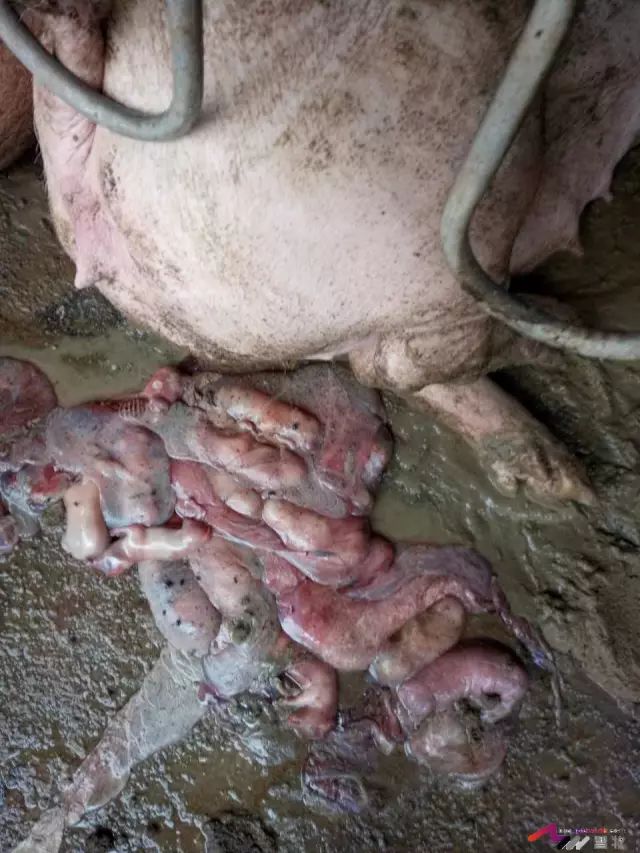
Huang Chengfeng: Mold, heat stress?
Cheng Shuigui: @Huang Chengfeng Agreed.
Zhao Shunxi: Endotoxins are relatively severe. In this situation, if testing is done, PRRS virus and wild-type pseudorabies virus should both be relatively active. (The cause of) miscarriage is more likely pseudorabies. Chlamydia should also be taken seriously in summer. The detection rate for similar situations in the Central Plains region is quite high.
Huang Chengfeng: Once the body is compromised, any disease can appear?
Cheng Shuigui: @Zhao Shunxi Does this pig look like it has a chlamydia infection?
Zhao Shunxi: Focus on pseudorabies.
Cheng Shuigui: Test results show that the antibody levels for classical swine fever, pseudorabies, and PRRS are all acceptable.
Zhao Shunxi: Check wild-type virus antibodies (pseudorabies); vaccine antibody testing is of little significance.
Wang Ruiqiu: On site, check whether the sow's body surface has rust-like bleeding spots and whether the placenta is abnormal. If the placenta has blood blisters, it may be related to PRRS infection; if there are needle-tip-sized white spots, it may be related to pseudorabies infection; soybean-sized white patches suggest mycotoxin poisoning; calcified-like white patches suggest chlamydia infection.
Cheng Shuigui: @Wang Ruiqiu Can you tell anything from today's miscarriage photos?
Wang Ruiqiu: @Cheng Shuigui The photos are not very clear.
Zhang Guoxiang: It looks like a miscarriage caused by PRRS.
Zhao Shunxi: Has diarrhea in nursing piglets in the farrowing house increased?
Cheng Shuigui: Not much diarrhea.
Zhao Shunxi: PRRS is unavoidable. The fetuses can be dissected and examined. As long as endometritis is severe, PRRS is generally in an active phase, and normal pseudorabies vaccination simply cannot control it. The eyes and back are generally quite dirty. It is related to metabolic disorders caused by exogenous toxins.
-----------------------------
The following is a supplement from the South Group:
Chen Yiping: This pig farm has an outbreak of chlamydia.
Yang Jianxiong: At present, the major causes of miscarriage with a high incidence rate are: first, cumulative mycotoxin poisoning; second, Eperythrozoon, Toxoplasma, Chlamydia, Spirochetes; third, brucellosis; fourth, heat stress, heatstroke; fifth, for viruses, focus on classical swine fever and pseudorabies. Especially pseudorabies. The sow's overall basic immunity is acceptable, but the incidence of endometritis and the return-to-estrus rate are high. Saying it is mold is a bit illogical. The current prominent points are the high proportions of endometritis and return to estrus, miscarried fetuses at all stages, placenta turning gray, and fetal skin bleeding. Are there any abnormalities in pigs at other stages? Diarrhea, respiratory? Newborn fetuses, etc. Based on the current situation, ruling out heat stress and damp-heat causes, the locked targets are: Chlamydia, Eperythrozoon, Toxoplasma, Leptospira, brucellosis. I mainly consider Chlamydia and brucellosis. At the same time, these should be considered importantly in combination with seasonal factors. Brucellosis and tuberculosis can be verified in the laboratory; I am somewhat suspicious.
Chen Yiping: Using the elimination method, Toxoplasma will cause miscarriage after feed intake decreases. Chlamydia causes miscarriage with normal feed intake and almost no symptoms. When it is misdiagnosed as miscarriage caused by PRRS virus or pseudorabies virus, vaccinating with PRRS vaccine or pseudorabies vaccine at this time produces more serious results, and more pigs miscarry.
Yang Jianxiong: Toxoplasma and Eperythrozoon will cause elevated body temperature and pale skin. Mold does not change body temperature, and the skin turns gray; Leptospira generally has a high proportion in the later stage, and the urine is yellow-red. With Leptospira, a high proportion of the skin appears yellowish, especially at the base of the ears. If it is Chlamydia, there are many problems in the farrowing house. The diarrhea rate of pigs around twenty [days old] is high. There is mild respiratory disease.
Chen Yiping: Why do many pig farms often have sow miscarriages? From what I have seen in production practice, aside from Chlamydia and Toxoplasma, it is almost always stress created by human factors. [Aside from individual differences] Heavy metals in premixes, excessive artificial addition of drugs, and various unknown additives, the influence of feed mold factors, external parasites, rough vaccine handling, excessive vaccination, temperature, etc. [All factors that make pigs uncomfortable are called stress]. Reducing stress is the most urgent problem to solve at present.
Zhong Shiyang: Mold factors, and also immune factors, including vaccines.
Han Chunguang: Miscarrying sows should be culled as much as possible! They have generally already been infected with some pathogen, and if they continue to remain in the herd they will become a potential source of infection! Thisbreeding pigThe more there are in the herd, the more problems there are in the sow herd.
Yang Jianxiong: The proportion of miscarriages caused by non-infectious factors is large, followed by Chlamydia. The incidence of blood parasite disease has a great relationship with mold. Brucellosis and tuberculosis are suspected, but the question is how were they introduced? @Han Chunguang The problem is to first clarify what the main cause is.
Han Chunguang: Some pig farming problems, frompig farmers'perspective, do not necessarily have to be fully clarified! We are not doing academic research! As long as the pig herd is stable, that is enough. Pig miscarriage definitely means there is a problem. The key is whether it is one miscarriage or several miscarriages, whether they are successive miscarriages or miscarriages separated by a long interval? At how many days did the miscarriage occur, what did the fetuses look like after miscarriage? What were the manifestations of the miscarrying sows? All must be observed carefully! How large is the sow herd? What is the monthly miscarriage rate? Does it fall within normal pig farming indicators!
Tang Chao: It is not habitual miscarriage. No need to cull.
Han Chunguang: My view is that most miscarriages have relatively many pathological causes. They are generally infected by disease, and once many pathogens infect [the animal], they carry and shed the pathogen for life. So from the perspective of the herd, culling is better! Many people think it is heavy metals and mycotoxins, but if this kind of problem occurs, it would not be a single miscarriage. Instead, the whole herd would have problems. Sows at all stages would have problems, including empty sows, nursing sows, and newly mated sows! Among the current pathologically miscarried fetuses, PRRS is a main cause, and pseudorabies, classical swine fever, parvovirus, Japanese encephalitis and other problems are often mixed in! I have seen test reports for many kinds of miscarried fetuses, and most of them detected PRRS and mold, which is quite prominent!
Chen Yiping: The title says: In more than ten days, there have already been more than ten litters of premature birth and miscarriage, and the return-to-estrus rate is high. Personally, I firmly oppose the PRRS theory. We all believe in science, but it must be based on reality. Testing conducted under a subhealthy state of the pig herd can be false positive or false negative, and there is no way to prove whether it is true or false. In fact, testing methods at this time have already lost their significance. Personal suggestion: for the miscarrying sows on this farm, using authentic "doxycycline" for ten days should be able to bring the miscarriage problem under control. It is best to combine it with sulfachlorpyridazine sodium. Use it for ten days at the same time. Whether the follow-up work is done depends on the boss's execution ability.
Tang Chao: This situation still needs to be analyzed in combination with the overall situation of the pig farm. If PRRS is suspected as the cause of miscarriage, the nursery should also be very unstable. Recently, in various groups, cases of sow rectal prolapse, uterine prolapse, dystocia, miscarriage, and edema have been emerging one after another, which deserves attention.
Chen Yiping: There are many sow problems. Under high-temperature and high-humidity environments, feed mildew and heat stress are the triggering factors.