Solutions for Crown of Thorns with Rotten Leaves and Dry Edges in Winter
Crown of Thorns (Euphorbia milii) is a flowering plant that many gardening enthusiasts love to grow, and because of its high ornamental value, it is becoming more and more widely used. But for home growers, it is generally kept as a potted plant for enjoyment. Importantly, Crown of Thorns not only has exquisite flowers, but also an especially long flowering period, and with good care it may even bloom in all four seasons.
But after winter arrives, the Crown of Thorns grown by some enthusiasts may develop poor growth such as rotten leaves and dry edges. This will inevitably greatly reduce the ornamental value of the potted Crown of Thorns, and of course this is also a phenomenon we are extremely reluctant to see.
First, we need to check the ambient temperature to see whether the plant has been frozen, because Crown of Thorns has relatively poor cold tolerance and is prone to frost damage when the temperature is too low. If it has been frozen, take warming measures in time; if it has not been frozen, the rotten leaves still need to be cleaned up promptly to avoid breeding harmful bacteria.
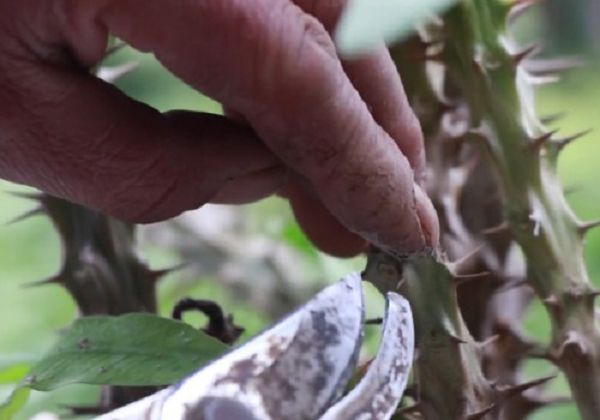
But Crown of Thorns is a plant whose branches are covered with sharp thorns, so when cleaning up rotten leaves you must be careful to avoid being pricked. Its sap is also toxic and can easily harm the human body. If during the process of cleaning up rotten leaves you find branches damaged by frost, they also need to be cut off promptly.
In short, whether rotten leaves or rotten branches, they must all be cleaned up promptly to avoid infection after rotting that damages the plant's growth. And after pruning, the wounds also need to be treated; you can sprinkle some carbendazim powder on the wounds, or apply some plant ash to inhibit bacterial invasion.
In addition, after pruning, we also need to observe the dryness and moisture of the potting soil. Crown of Thorns prefers a somewhat drier potting soil environment and fears waterlogging, especially in winter. So when watering, be sure to wait until the potting soil is very dry before watering. For winter care, try to achieve "better dry than wet", otherwise if the humidity is too high it can easily cause stem rot.
If you want to repot, it is recommended to wait until next spring when the temperature reaches above 15°C. When repotting, remove the outer old soil and replant using new potting soil with high looseness and strong air and water permeability. And after repotting, do not rush to water, because it is itself relatively drought-tolerant, and just after repotting it has not yet fully adapted to the pot, so do not rashly water when the potting soil is not very dry.