When Does Agapanthus Bloom? A Detailed Guide to Growing It
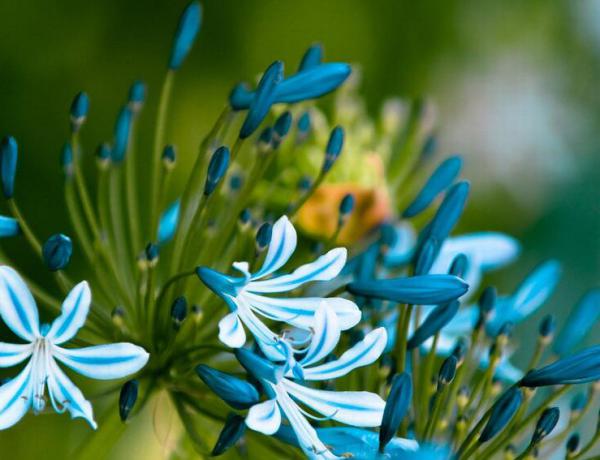
Agapanthus blooms from midsummer to early autumn, with a flowering period from July to August, and the flowers are deep blue or white. According to available information, Agapanthus is a perennial herb in the family Agapanthaceae. It has rhizomes; its leaves are linear-lanceolate and nearly leathery; the flower stems are upright and can reach 60 cm in height; the umbel inflorescence bears 10 to 50 flowers, the flowers are funnel-shaped, deep blue or white, and the anthers are initially yellow, later turning black.
When does Agapanthus bloom?
Agapanthus blooms from midsummer all the way into early autumn, and its flowering period is considered fairly long, generally the two months from July to August. During this time, Agapanthus produces deep blue or white flowers that are vivid and striking. After mid-August, the Agapanthus flowers gradually wither until they fade.
Care Methods for Agapanthus During Its Flowering Period
Agapanthus blooms during July and August, and its flowers are beautiful and moving, so they naturally need to be protected so we can enjoy them. Agapanthus likes warmth and moisture, so during the flowering period you must maintain a warm environment and water moderately to keep the growing soil moist, but do not let water accumulate. Light also affects Agapanthus flowering; during the summer flowering period, avoid direct strong sunlight so the buds are not damaged and flowering is not affected.
For fertilizing Agapanthus during its flowering period, pause watering once the day before fertilizing, which allows the potting soil to take in water, and the fertilizer used should be manure, cake fertilizer and chemical compound fertilizer used alternately, or phosphorus fertilizer can be used before flowering. As long as sufficient fertilizer and water are provided, Agapanthus will bloom earlier and produce good flowers.
Cultivation Methods for Agapanthus
For Agapanthus cultivation, it is best to mix 3 parts garden soil with 1 part rice-hull ash and 1 part compost. For care, place it in a semi-shaded, moist spot, and from June to September be careful not to let harsh sunlight shine directly on it, so the leaves are not scorched. Water to the extent of keeping it moist, alternating between dry and moist; in summer especially, be sure to provide sufficient water, and frequently spray water on the plant and the surrounding environment to increase humidity and lower the temperature.
The day before fertilizing, pause watering once so the potting soil takes in water; after fertilizing, spray the leaves with clean water. It is best to use manure, cake fertilizer and chemical compound fertilizer alternately, once every 10-15 days. For divided seedlings, even more sufficient fertilizer and water should be given so they bloom earlier. After flowering, remove the flowers and promptly apply additional fertilizer.
Stop fertilizing after October, and when the temperature drops to 1-2°C, move it indoors to a moist place; it can overwinter as long as the temperature is kept above 0°C. At this stage, be careful to control watering; keep the potting soil slightly moist, and do not water too much.
It likes fertilizer and water, but water must not accumulate in the pot, otherwise the roots rot easily. Fertilize once every 2 weeks; apply additional phosphorus fertilizer before flowering, which can make the flowers bloom abundantly and the colors vivid. After flowering, growth slows and it enters a semi-dormant state, so watering should be strictly controlled, and it is better to keep it dry than wet.
The Flower Language of Agapanthus
Agapanthus is a flower of love full of mystery and romance. Agapanthus is also called the purple lily, and in Greek it is synonymous with "flower of love," "romantic love," and "love arrives," making it a very beautiful flower. The flower language of Agapanthus is: the visit of love, the communication of love.