How long does the acclimatization period generally take after repotting a pothos?
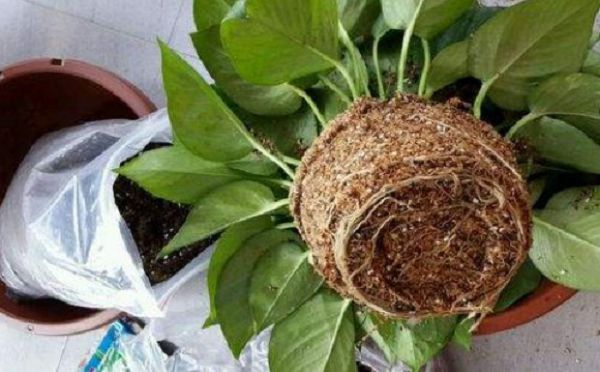
Pothos is widely loved for its extremely high ornamental value and practicality, and in recent years it has increasingly found its way into ordinary households, and this potted green plant is very easy to care for in daily life. Even when it comes to repotting, it is usually done once every 1-2 years, as long as we can choose a suitable time and carry out the operation properly. But after all, pothos needs a process of acclimatization to adapt to a new environment after repotting, so how long is it?
Repotting pothos is often constrained by the temperature environment, but as long as the temperature environment is suitable, it can usually be repotted in all four seasons. In particular, avoid repotting in high-temperature summer conditions, especially at noon on sunny summer days, because the temperature environment during that noon period is indeed very harsh, and if you repot pothos then, it can easily die. Even if you must repot in summer, avoid that noon period and do it in the evening instead, which is crucial for the plant to survive the acclimatization period at night.
Under normal circumstances, the acclimatization period for pothos after potting and transplanting is about 1 week under ideal conditions, and with the influence of various conditions, it is usually between 10-15 days. And you need to create conditions that promote acclimatization as much as possible, otherwise the acclimatization period may be longer, and it may even increase the risk of failing to acclimatize smoothly and failing at repotting.
Pothos has a strong tolerance for shade, and it also likes a hot and humid growing environment. But it just so happens that a hot and humid growing environment is also deadly, especially when ventilation is poor, as it is very easy for pathogens to breed and infect the plant. Therefore, the usual placement location must have smooth ventilation, avoiding a hot, humid and unventilated growing environment.
After transplanting and potting the pothos, place it in a cool, ventilated and sunny spot, avoiding direct sunlight, as this is more conducive to helping it settle into the pot and shortening its recovery to a normal growth state. If it is exposed to sunlight during the acclimatization period, it may become dehydrated and die from excessive water loss, and fertilization must be avoided during the acclimatization period. This is because the plant's root system has not yet recovered its absorption function, so even if fertilizer is applied it will not be absorbed by the plant, and it may also cause fertilizer burn.
Of course, the key during the acclimatization period is not to water, because pothos will inevitably undergo root trimming before potting, and the wounds left on the roots are prone to root rot in moist soil, making root rot more likely. And it is unavoidable for pothos to show yellowing leaves during the acclimatization period; you can use carbendazim or thiophanate diluted with water in an appropriate ratio and spray it to effectively improve the condition or achieve the purpose of prevention and control.