How to increase humidity when caring for clivia
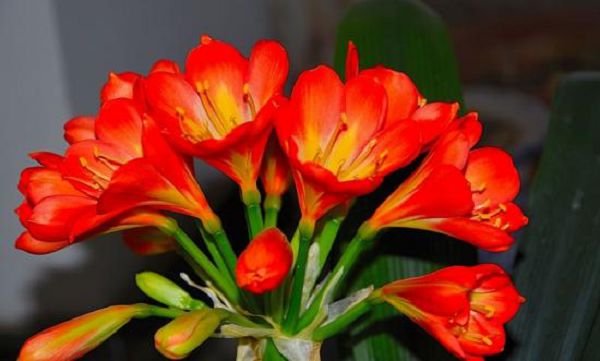
First of all, what needs to be corrected is that the way gardening friends ask about how to keep clivia moist is wrong, because what we need is not to keep the clivia moist, but to increase the air humidity of the clivia's growing environment. There are many ways to increase air humidity, such as spraying water, sprinkling water on the ground, placing two basins of water on the balcony, and so on, all of which can appropriately increase the environmental humidity. It can even be said that an air humidifier can also be used.
Apart from the above methods, the author has seen gardening friends soak clivia in a basin of water to grow it (that is, soaking the clivia pot, with the water level not too high, kept low, growing it this way all the time without taking it out, and adding water when the water runs out), and the clivia grew quite well.
All along, we have known that clivia has fleshy roots, so the soil should be wrung dry rather than wet, but some gardening friends do exactly the opposite, and it is indeed feasible, but gardening friends need to be reminded that this method must be used with caution.
How to care for clivia in summer
In summer, clivia prefers a cool, moist, semi-shaded environment. The suitable temperature for growth is 15-25°C. If the temperature is higher than 26-28°C, it will enter a dormant or semi-dormant state. If the temperature is even higher, it is prone to disease and even death.
In summer, clivia should be placed indoors or in a ventilated spot under a shade shed. The surrounding environment should be sprinkled with water frequently or have water basins placed around it, and the leaves should also be sprayed with water to increase air humidity and lower the temperature. When spraying water on the leaves, do not let the water run into the center, to prevent heart rot. It should be noted that although the amount of watering in summer is more than in other seasons, the principle of not watering until dry and watering thoroughly once you do must be adhered to. Also be careful not to wait until the potting soil is completely dry before watering; water it when it is half dry, so that the potting soil stays moist from top to bottom.
In terms of temperature, clivia is a medium-light flower that likes soft light and avoids exposure to scorching sun. In summer, it must be placed in a ventilated spot under a shade shed, avoiding direct sunlight at noon. If exposed to strong direct light, it will cause "sunburn disease," with large brown spots appearing on the leaves and dead, damaged areas. When the temperature rises above 25°C, the growth of clivia is inhibited, and at this time fertilization should be stopped; if fertilization continues, it is easy to cause root rot and stem rot. If the ambient temperature for clivia can be lowered below 25°C, then in summer a dilute liquid fertilizer of 1:20 or more can also be applied, once every half month. This can promote the growth of clivia and shorten its dormant period or prevent dormancy.