How to grow orchids? Master temperature regulation and rainy-day care measures
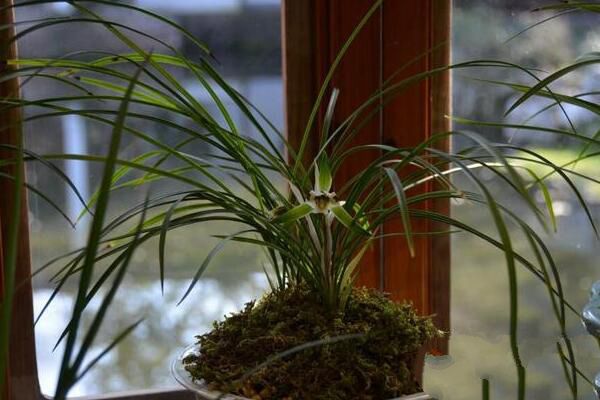
Orchids, also known as Chinese orchids, terrestrial orchids, and orchid grass, are perennial herbaceous flowers with fleshy roots in the genus Cymbidium of the family Orchidaceae. They originated in China, where they are widely distributed in Yunnan, Guizhou, Sichuan, and Tibet. They are a traditional precious flower of China and also a world-famous flower. Orchids are very sensitive to temperature and humidity, and improper handling can easily affect their growth. Below is an explanation of temperature regulation and humidity control in orchid cultivation.
I. Regulating temperature in orchid cultivation
When the daytime temperature is 22°C and the nighttime temperature is around 16°C, it is more favorable for orchids to sprout. If they are terrestrial orchids, the temperature required for growth is relatively lower; the daytime temperature stays the same, while at night 13-0°C is sufficient. In winter, orchids enter dormancy, and their temperature requirements become relatively low; keeping the temperature at 0°C still allows normal growth. The growth temperature of orchid leaves is closely related to light; even in a low-temperature environment of 12°C, orchid flower buds can still differentiate, and this has little to do with the duration of light they receive. Regulating the temperature of the orchid's growing environment is mainly to achieve the goals of cold protection, heat protection, and changing the flowering period. In the cold winter climate, orchid leaves and flower buds have poor cold resistance and are prone to disease, but the care temperature should not be adjusted too high either, otherwise it will have an adverse effect on orchid dormancy. In the hot summer climate, leaves easily become rough and dark yellow and are also prone to disease, so mastering scientific temperature regulation methods is very important.
During the domestication and cultivation of orchids, it is necessary to establish regular daily temperature differences and seasonal temperature differences, keeping the temperature similar to that of the orchid's place of origin. In summer, double-layer shade nets can be chosen for shading, which can achieve a better cooling effect. In winter, plastic greenhouses can be chosen to keep the nursery warm, reducing the temperature difference inside the greenhouse, which is conducive to storing nutrients, and orchids can also avoid freezing damage. Planting shrubs, trees, and other plants around the orchid nursery can also achieve a good temperature-regulating effect, blocking sunlight in hot weather and reducing the release of ground heat in winter. It should be noted that orchids themselves also have a certain adaptability and defensive ability toward the external environment, so in the planting and care of orchids, moderation is needed. If protected excessively, it will instead be detrimental to the healthy growth of orchids.
II. Rain protection and regulation of watering and misting in orchid planting and care
Orchids can be cared for normally in light rain. If there are showers or continuous rainy weather, rain protection measures need to be taken. From June to September, showers are more frequent, and the temperature is also higher at this time. If the shower duration is short and the rainfall is light, then watering should be increased in the evening. Drain the hot air from the flowerpot as soon as possible to avoid hot air damaging the orchids; in severe cases, it may cause root rot, and improper care can cause the orchids to wither and die. If the sun comes out after a shower, shade measures should be taken for the orchids in time, otherwise the hot air rising from the ground will also cause damage to the orchids. During periods of increased rainfall, orchids are also in a critical growth stage. To avoid the soil for growing orchids being too humid, plant ash can be sprinkled in an appropriate amount to keep the soil dry and ensure the healthy growth of orchid leaf buds.
For watering orchids, choose rainwater or spring water. If using rice-washing water or tap water, it should be left to stand overnight before use. Water along the edge of the pot to avoid water entering the flower buds. The specific amount of watering should be determined according to the dry and wet condition of the soil and temperature changes, and everything should be suitable for the growth of the orchids; orchids are fine in a relatively dry environment. If the orchid leaves are larger, watering can be appropriately increased; if the leaves are smaller and narrower, the amount of watering should be appropriately reduced. If the external environment is relatively dry, more watering should be done. In dry seasons, misting on the balcony should be increased in the evening to keep the ground moist and increase air humidity. When misting, spray upward so that the mist droplets fall evenly, and the moisture the orchids receive is also even. This can make orchid leaves more glossy and help them adapt to the external dry climate. If the climate is relatively humid, water less. Usually during the orchid's growth period, that is, in May and June, the amount of watering needs to be increased. In March and April, during the orchid flowering stage, less watering is needed. In winter, orchids enter dormancy, and at this time the amount of watering should be further reduced, or watering can be stopped depending on the situation.
III. Precautions for orchid cultivation
(1) Orchids are mainly distributed in the southeast and southwest regions. They mostly grow on soil under sparse forests in moist valleys and in shaded places beside rocks, so they are warmth-loving and humidity-loving in nature, prefer shady and moist conditions, and require a shading degree of 70%-90%. They avoid high temperatures, dryness, and strong light.
(2) During orchid cultivation, withered and yellow old leaves and diseased or insect-damaged leaves should be continuously pruned to facilitate ventilation. After flower buds emerge from the soil, each plant should keep one strong flower bud and prune away the rest to avoid consuming too many nutrients and affecting flowering the following year. After the flowers fade, the flower stems should be pruned away.
(3) In winter, attention should be paid to cold protection. Terrestrial orchids have strong cold resistance, while tropical orchids require a higher overwintering temperature and should be moved indoors early or protected from cold with a plastic greenhouse to avoid freezing. The room temperature is best kept at 10-15°C, and indoor care should pay attention to ventilation. As the climate gradually warms in spring, the orchids should be gradually moved to the courtyard or balcony.
(4) For home cultivation of orchids, natural rainwater, stream water, well water, and river water are best. If using tap water, it should first be stored in a vat and exposed to the sun to remove bleaching powder before use. If tap water is used to water flowers for a long time, the cultivation substrate will gradually become alkaline. Ferrous sulfate can be applied once every so often to increase soil acidity. In addition, watering orchids with fermented rice-washing water can also keep the soil in a slightly acidic state.