How to revitalize weak potted orchid seedlings? A detailed guide to practical methods
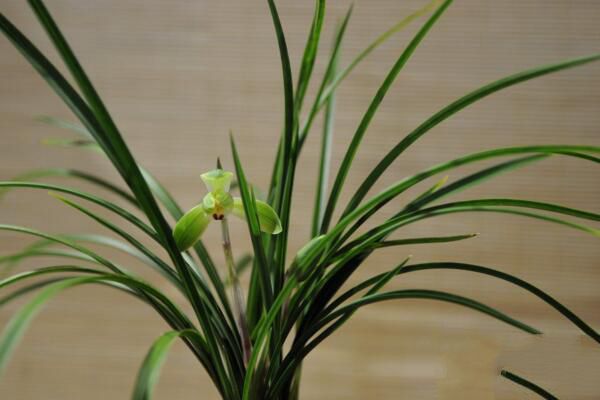
How to revitalize weak potted orchid seedlings? The reason potted orchids develop weak seedlings is mainly frequent division, improper management, or disease attack, resulting in a phenomenon where new seedlings grow slowly and the plant body is thin, short and weak. When this phenomenon occurs, corresponding remedial measures should be taken in time, so today the editor will talk about it, hoping it can be of some help to everyone.
1. Weak seedlings should not be planted and grown alone
There is a saying in potted orchid growing: "Orchids like to cluster together and fear leaving the mother." Therefore, when cultivating orchids, in order to enhance the growth vitality of weak orchid seedlings, it is best to find a pot of orchids with a similar plant shape, vigorous growth and dense clustering and plant it together with the weak seedlings. Through the method of using the strong to support the weak, the growth vitality of the weak orchid seedlings is enhanced. Wait until the weak seedlings grow into medium and sturdy seedlings, then separate and plant them individually.
2. Weak seedlings are best cultivated with fine-particle growing medium
In order to shorten the time for weak seedlings to adapt to the pot, in the growing medium below the pseudobulb, you can mix in the original organic-rich growing medium from a large pot of sturdy seedlings. From the bottom of the pseudobulb upward, use fine-particle Kanuma soil. When potting, place a few grains of Magic Fertilizer in the middle of the pot as base fertilizer, ensuring that new seedlings can absorb nutrients in time after rooting. The pseudobulb area of weak seedlings should be filled solid with even finer weathered stone, keeping the pseudobulb area as moist as possible, so that the new roots sent out can come into contact with the "ground energy" in time, avoiding stiff buds and black tips on new roots. Because the root system of weak seedlings is not well developed, the roots and buds they send out also grow weakly. If the particles around the pseudobulb bud points are too large, the surrounding environment for sprouting and rooting will be dry, making it very difficult for new buds and new roots to grow. In addition, to prevent watering from washing away the fine-particle growing medium, it is best to cover the top with a layer of fine Kanuma soil.
3. Water and fertilizer management must keep up
After weak orchid seedlings are potted, do not grow them dry. When the pot surface is dry, spray generously with water in time. After they have adapted to the pot, apply a light fertilizer once after every two waterings. When applying fertilizer, pour it along the pot wall, and try not to pour it into the leaf center and pseudobulb. The organic fertilizer formula and method of use are: in spring, put rice washing water, a packet of yogurt, some eggshells and a handful of fried soybeans into a large transparent beverage bottle. Leave the bottle mouth open and place it outdoors in a sunny place to ferment. After autumn, gradually add dried orange peel, until the fertilizer becomes fruit-scented, then dilute it with 50 times water and pour it on the roots.
4. Appropriately let weak seedlings get more sun
Many people think that weak orchid seedlings should be grown in shade, but actually this is not the case. Sunlight is very important for weak orchid seedlings, as it helps new seedlings grow quickly. Of course, old seedlings also decline quickly when exposed to sun, so it is best to let them get an appropriate amount of sunlight.