How to Completely Eliminate the Sow Triad Syndrome
Livestock Farming0 views
"Sow Triad Syndrome" - How to Eliminate It
“Sow Triad Syndrome” refers to endometritis, mastitis, and high fever with feed refusal before and after farrowing in sows. “Sow Triad Syndrome” is the main cause of the high culling rate of sows, and is also a common disease of sows.
1.Sow endometritis:
Sow endometritis is a common disease of the sow reproductive system, often causing sows to fail to conceive after repeated matings, raising the sow culling rate and causing heavy losses to pig farms.
Sow endometritis is generally caused by abortion, dystocia, and insufficient disinfection during assisted farrowing, as well as incomplete post-farrowing anti-inflammatory treatment, which allows bacteria such as Escherichia coli and Streptococcus to multiply massively in the uterus and discharge large amounts of milky white or yellowish-white secretions, resulting in a high return-to-estrus rate and failed mating.
Endometritis in gilts and first-parity sows is mostly caused by the cervix opening during estrus; during this stage the environment is damp, dirty, and poorly disinfected, and bacteria enter the uterus along the birth canal, causing inflammation.
Irregular mating of first-parity sows, exogenous infection caused by natural mating with the boar, and damage to the birth canal or uterine mucosa caused by artificial insemination.
In multiparous sows, resistance decreases during farrowing, dystocia, and lactation; combined with poor hygiene on the farrowing crate, insufficient disinfection during assisted farrowing, birth canal injury, incomplete assisted farrowing, and retained placenta, this promotes the occurrence of sow endometritis.Manifestations of endometritis:
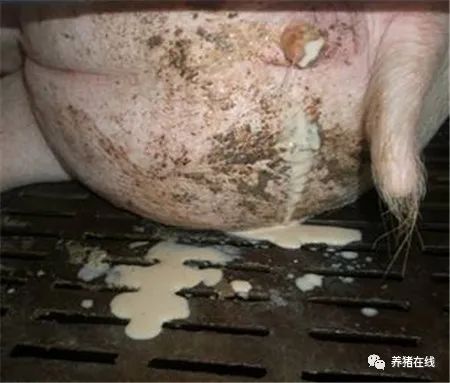
Sows often discharge purulent secretions when lying down, and yellow purulent secretions often adhere to the vulva and tail root. Some sows often do not discharge secretions after weaning, and their feed intake, body temperature, and movement are all normal, but during estrus, mating (especially artificial insemination), or after mating, they discharge large amounts of yellow or grayish-white, relatively viscous pus.Treatmentmethods:
Flush the uterus with 0.1% potassium permanganate or 500 mL of normal saline; after 30 minutes, inject oxytocin to completely expel the filth in the uterus; then flush the uterus with 100 mL of normal saline + 3--4 vials of 4 million units penicillin + 4 vials of Houttuynia cordata, once a day for 2--3 consecutive days.
While cleaning the uterus, intramuscularly inject Houttuynia cordata + cephalosporin, or Houttuynia cordata + lincomycin for three consecutive days.2.3.Post-farrowing feed refusal syndrome:It is mainly caused by sows being infected with viral diseases such as swine fever, porcine reproductive and respiratory syndrome, and porcine circovirus, causing excessive internal heat and constipation in sows; at the same time, incomplete anti-inflammatory treatment after farrowing and excessive inflammation ultimately cause sows to refuse feed after farrowing.
Prevention and controlprinciples:(1)Improve feeding management and reduce stress factors.(2)Control infection and secondary infection, and check whether there is mastitis or endometritis.(3)Regulate the digestive function of sows and improve appetite.Treatmentmethods:(1)Houttuynia cordata + ceftiofur sodium, lincomycin by intramuscular injection.(2)Ear vein infusion:① 500 mL normal saline + 3 vials Houttuynia cordata + 1 g ceftiofur sodium;② 500 mL normal saline + lincomycin;③ 500 mL glucose + vitamin B + vitamin C.For sow triad syndrome, feeding management should be strengthened, and various reproductive disorder diseases should be prevented and controlled. At 80 days of gestation, do a good job of drug prevention and control of porcine reproductive and respiratory syndrome, and one week before and after farrowing, use amoxicillin and lincomycin to do a good job of pre- and post-farrowing anti-inflammatory work for sows.