How to prevent and control swine influenza in piglets? Large temperature differences in autumn require early prevention
With large temperature differences in autumn, how should piglets be protected against influenza virus?
So what exactly is influenza?
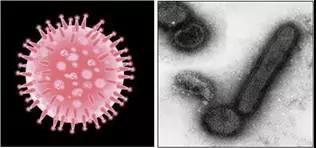
Influenza is an acute, highly contagious respiratory infectious disease of pigs caused by influenza virus. Influenza virus is a member of the Orthomyxoviridae family, enveloped, spherical, with some filamentous forms reaching several micrometers in length. It is an RNA virus that can cause upper respiratory tract infection and spread rapidly through the air, and it can infect pigs at any stage.
After infection with this disease, the whole herd of pigs becomes ill simultaneously within 2 to 3 days, with body temperature rising to 40-41°C, and up to 42°C in severe cases. Clinical symptoms include mental depression, decreased appetite or even complete loss of appetite; often lying on the ground unable to rise, unwilling to move, and often limping when forced to walk; difficulty breathing, abdominal breathing, paroxysmal coughing, and mucous-purulent discharge flowing from the mouth, eyes and nose, often containing blood, with conjunctival congestion, etc. Pregnant sows abort or give birth to weak piglets, with an abortion rate of about 10%, and the mortality rate of newborn piglets is relatively high.
At the same time, it is often accompanied by mixed infection with porcine reproductive and respiratory syndrome virus, classical swine fever virus and respiratory coronavirus, and is often secondarily infected by Haemophilus parasuis, Actinobacillus pleuropneumoniae, Bordetella bronchiseptica, Pasteurella multocida, Mycoplasma pneumoniae and Streptococcus, which complicates the condition and triggers diseases such as bronchitis, pneumonia, pleurisy and pericarditis, thereby increasing morbidity and mortality and causing greater losses.
Piglets have poor resistance and face a complex and changeable environment, so they are at great risk of infection by influenza virus. So how should influenza virus be prevented and controlled in piglets?
First, provide piglets with a safe and comfortable living environment.
Ensure the temperature, humidity and appropriate stocking density inside the pig house. Due to their own physiological characteristics, such as thin skin and sparse hair, low subcutaneous fat content, and insufficient body fat and glycogen reserves for providing heat energy, piglets have poor heat preservation capacity and therefore have relatively high environmental temperature requirements. The environmental temperatures required by piglets after birth are shown in the table below.
At the same time, reasonable stocking density and appropriate humidity help air circulation and reduce stress. If stocking density is too high, air circulation will be poor, and it will also affect the pigs' feeding, drinking and resting. Influenza virus is mainly transmitted through the air via the respiratory tract, so the air quality in the pig house is very important for preventing influenza. On the one hand, ventilation should be used to prevent excessively high concentrations of ammonia, carbon dioxide and hydrogen sulfide in the pig house; on the other hand, the air should be prevented from becoming too dry, so as to reduce irritation of particulate matter in the air to the pig respiratory mucosa and thereby prevent inducing this disease.
Second, establish and improve various biosecurity measures on the pig farm.
Regularly carry out harmless treatment of manure and sewage produced by the pig farm, do a good job of sanitation inside the pig house, and disinfect the pig farm every week. Influenza virus is sensitive to glutaraldehyde, so Huanqing can be diluted at 1:300 and sprayed as a fine mist for thorough disinfection once every 3 days. During an outbreak, disinfection can be carried out every day. People and items entering the pig farm should be disinfected to prevent bringing the virus into the farm.
It is very important to improve the immunity of piglets. From birth to weaning and until the end of the nursery period, piglets undergo stress such as tooth clipping, tail docking, castration, weaning and group transfer throughout the whole process. Repeated and continuous stress can cause piglets to become ill. Therefore, the immunity of piglets throughout the whole process is crucial for the prevention and control of influenza. Therefore, after birth, piglets should receive colostrum as soon as possible, which can enhance their physique, disease resistance and ability to adapt to the environment.
Third, piglets should be properly vaccinated.
Scientifically vaccinate against classical swine fever, pseudorabies and foot-and-mouth disease, etc., to establish a good immune system and prevent infection with other diseases from causing low immunity, which would allow influenza virus to take advantage of the opportunity. In addition to receiving good colostrum, anti-stress products such as Aoyinmei should be added when piglets are weaned and transferred, so as to minimize the possibility of influenza induced by weaning and group transfer stress.
As is well known, the high fever caused by influenza can reduce the resistance of piglets, making piglets restless and mentally depressed, damaging the respiratory system, and obstructing digestive function and circulatory metabolism. In addition, there is no specific drug for influenza, so improving the resistance of piglets and combining the use of antibiotics to avoid secondary infection arethe treatmentprinciples for influenza.
For the influenza that occurs frequently in autumn, we add Yishuda (50% carbasalate calcium) at 1 kg/T to drinking water and feed for 7 consecutive days to restore the body to normal temperature, while also adding Abeishu 0.5 kg/T + Jianliyuan 0.5 kg/T + vitamin C 0.4 kg/T, to prevent secondary infection while supplementing the nutrition needed for piglet recovery. Severe individuals require intramuscular injection: Enroqing 0.05 ml/kg + Shengliyuan 0.1 ml/kg by intramuscular injection, once a day for 3-5 consecutive days; Subeizhi 0.1 ml/kg injected on the other side (maximum dose not exceeding 10 ml), once is sufficient, and for severe cases inject once more on the third day.
Autumn has arrived. Doing a good job in the prevention and control of swine influenza in piglets is very important for improving pig farm production. Regarding these prevention and control measures, have we done them?