How to Grow Bellflowers? Detailed Guide to Cultivation Methods and Precautions
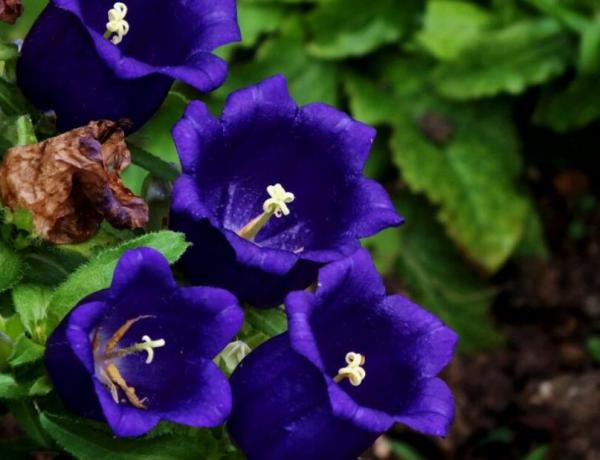
Bellflower is a perennial herbaceous plant of the genus Campanula in the family Campanulaceae. Its flowers are bell-shaped, with common colors including blue, purple, and pink. It prefers to grow in places with warm winters and cool summers and ample sunlight, and it is tolerant of partial shade.
The genus Campanula has more than 200 species, almost all of which grow in the northern temperate zone. In China there are more than 20 species, commonly found in the mountainous areas of the southwest, and also in the north and the western regions of Guangxi and Guangdong in the south. Bellflowers are brilliantly colorful and highly ornamental. So how do you grow bellflowers? Today Hua'er Gu will introduce them to everyone.
I. Cultivation Methods for Bellflowers
1. Soil: Bellflowers like to grow in fertile and moist soil environments. Well-drained soil allows them to grow more robustly, and the soil should preferably be slightly acidic or neutral. Strongly acidic soil used for planting bellflowers needs to be neutralized with limewater. Common soil for growing bellflowers can use orchard soil, garden soil, sandy loam, etc., mixed with dried chicken manure and other animal manures, then add a small amount of lime and stir evenly.
2. Water: After bellflowers sprout seedlings, we need to reduce soil moisture, keeping the soil environment only slightly moist. Special attention should be paid to avoiding waterlogging, otherwise it will cause damping-off disease in the seedlings. Conversely, the seedlings should not lack water during growth; a dry and arid environment will cause their growth to wilt, and in severe cases they will dry up and die. So when growing bellflowers, we should pay attention to a reasonable watering method, trying to keep the soil in a slightly moist state. When necessary, we can use spraying to control moisture and maintain soil dryness and moisture.
3. Fertilizing: Bellflowers have low fertilizer requirements for growth. We can fertilize once a month to promote their growth. During the seedling stage, calcium-nitrogen fertilizer spray can be used to enhance nutrient absorption through the leaf surface. Afterward, plants normally potted for maintenance can mainly be given a diluted fertilizer solution once a month. The fertilizer can mainly use nitrogen fertilizer and potassium fertilizer, and human and animal manure water can also be used for irrigation, which can promote the absorption of phosphorus and potassium nutrients before bellflowers bloom and prevent problems such as plant lodging. Generally speaking, when summer temperatures are high and winter temperatures are low, we should stop fertilizing to prevent fertilizer damage.
4. Light: Bellflowers like ample sunlight. To let them grow better naturally, we should plant them in places with ample sunlight, so that the plants will grow more uniformly and the flowers will be more brightly colored and beautiful when they bloom. Bellflowers grown in shady environments will show uneven heights among plants, and the flowers will also be paler, with slightly poorer aesthetic appeal.
5. Temperature: Generally speaking, bellflowers are fairly tolerant of low temperatures. A low-temperature environment will slow their growth, so in winter we can control the temperature at above 3°C as much as possible, so that they will still be in a growing state; otherwise their growth will be in a stagnant state.
II. Precautions for Growing Bellflowers
Potted bellflowers may grow rather messily in the early stage, with a relatively poor ornamental effect, but in the middle and later stages of growth they will gradually grow neat and compact. Under normal conditions we do not need to pinch them, but in order for them to grow larger and stronger with more branches, we can pinch them, which can increase the number of side branches, and naturally there will be more flowers when they bloom.
During the planting process, bellflowers may develop some pests and diseases. Common ones include rust disease, which harms the leaves, stems, and buds of bellflowers; powdery mildew, which is a fungal disease that harms the leaves, branches, flower stalks, flower buds, flower shoots, and tender tips of bellflowers, etc.; in addition there are also leaf spot disease, aphids, and red spiders. When these pests and diseases appear, drugs must be used promptly for prevention and control, and attention should be paid to observation and timely prevention and control during maintenance.