What are the suckers that grow on potted Anthurium
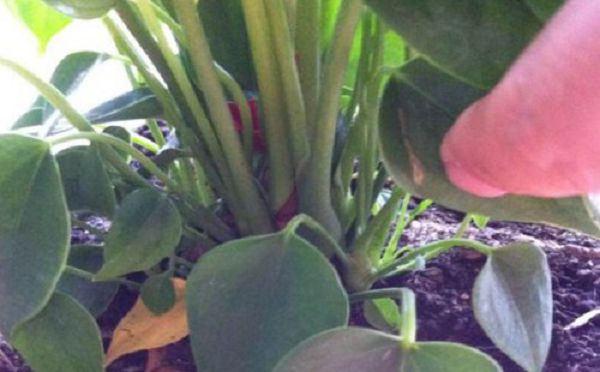
There are quite a few varieties of Anthurium, but for most varieties, only one sucker needs to be kept on each Anthurium plant. If there are too many suckers, it is often very unfavorable to the plant's growth. Too many suckers mainly tend to cause the flower stems of the Anthurium to bend, and the flowers produced are also relatively small, so the ornamental value of the potted plant is relatively low.
The suckers of Anthurium generally grow at the base of the plant; they are the parts that can grow into seedlings from small buds and can be used for division propagation. As the plant grows, the suckers of the Anthurium will also continuously sprout and grow, often competing for a large amount of nutrients that originally belong to the mother plant, and causing the growth and development of both the mother plant and the suckers to be affected, and may also produce yellow leaves at the base of the plant. Therefore, except for a few varieties of Anthurium that can retain multiple suckers, for most varieties of Anthurium, it is often only suitable to retain one sucker.
Moreover, the removal of suckers should be done early rather than late, because the larger the suckers grow, the more nutrients they consume, which not only weakens the growth vigor of the Anthurium, but also makes it easier to damage the rhizome of the Anthurium when removing them. After all, the larger the suckers grow, the more difficult it is to remove them from the roots. And when the plant's roots are damaged, it will more or less affect the plant's growth, thereby affecting the growth of its stems and leaves and its flowering effect.
In addition, when removing suckers, you can directly break them off with your hands, as this operation is often more thorough. But when removing suckers, you also need to choose a suitable time. Generally, it is not suitable to break off suckers during the slow growth period of the Anthurium or during the rainy season. This is mainly because the Anthurium is relatively fragile during the slow growth period or the rainy season, and the plant's resistance is also relatively poor, making it more susceptible to pests and diseases. This is because after the suckers are broken off, wounds will be left, and when the humidity is too high, they are prone to attack by pests and diseases.
As for breaking off the suckers of the Anthurium, it can be done during the usual soil turning and loosening, so that excessive suckers can be prevented from consuming a large amount of nutrients. And after breaking off a large number of suckers, it can stimulate the plant to sprout new roots and promote root germination, thereby ensuring that the growth and development of the entire plant in the original pot remain in good condition. This is of great significance for potted Anthurium to maintain good growth vigor, branch out and spread leaves, and promote flowering.