How do you grow the peach egg succulent so it grows quickly?
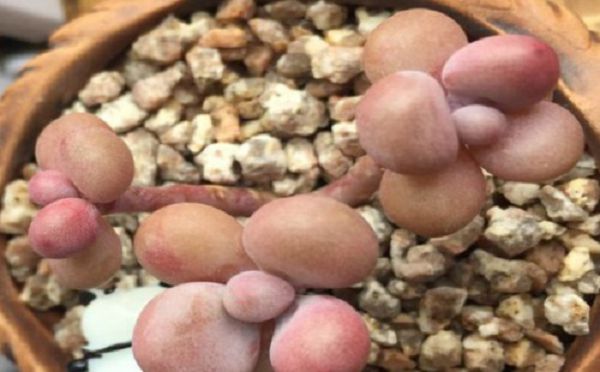
The peach egg is a succulent plant that many hobby growers like to keep in pots, because it not only has a beautiful plant shape but also rather lovely leaf shapes, with round, pink, plump little leaves that are very cute. However, good ornamental value can only be achieved by combining a suitable growing environment with scientific management, and the ornamental value is especially high when the plant is kept in normal growth.
Quite a few hobby growers find that the peach egg succulents they grow in pots always grow rather poorly, with either leaves that are too thin and small and a plant shape that is too loose, or an unattractive leaf color. Only when a potted peach egg has a beautiful plant shape, full leaf shapes and pink leaf color does it have extremely high ornamental value, so we need to promptly adjust our care and management methods to promote the plant's growth. So, how do you make the peach egg succulent grow quickly?
1. Soil
The quality of the soil mix directly affects the normal growth of the peach egg succulent. If we choose relatively large soil particles, it will easily cause a large loss of nutrients and water from the medium, so the soil mix is very important. According to the growth habits of the peach egg, we can usually mix peat soil and a large-particle medium in a 2:3 ratio. This not only helps retain water and nutrients in the potting soil, but also ensures the potting soil is loose, breathable and well-draining.
2. Light
Plant growth cannot be separated from photosynthesis, so light needs to be provided appropriately. Especially for a light-loving succulent like the peach egg, when there is plenty of light it not only increases photosynthesis and promotes the plant's growth, but also colors the leaves, making the potted plant more ornamental. Apart from shading during the high temperatures of summer, in other seasons as long as the light is not too intense you can provide plenty of light, which is very crucial for the growth of the peach egg.
3. Temperature
The peach egg not only likes light, but also rather likes a warm growing environment, with the most suitable growing temperature kept between 10°C and 20°C. When the summer temperature reaches as high as 30°C, cooling measures such as shading and improving ventilation should be taken promptly. In winter, when the temperature drops to 5°C, the pot should promptly be moved indoors to keep it warm and protect it from the cold, otherwise frost damage may occur. In other seasons, since the temperature is suitable, it can be placed in a spot with plenty of light and allowed to grow freely.
4. Watering
Watering the peach egg should follow the principle of not watering until the soil is dry, and watering thoroughly when you do. When the plant starts dropping leaves, it is generally caused by too much watering, which makes the soil in the pot too wet. So each time you water, check whether the potting soil drains well and whether excess water can smoothly drain out of the pot. In summer, not only should you not water too much, but you should also control water promptly; you can keep watering 3-4 times a month, and at the same time ensure smooth ventilation to avoid a hot and humid environment.
5. Fertilizing
The ornamental highlight of the peach egg is its leaves, but as the plant grows, the lower leaves gradually age, and the pink color of the leaves gradually fades and turns green. Yet the old leaves still consume nutrients and water. To give the plant enough nutrients to sustain its growth and keep it in that plump pink state, timely topdressing is very important. Only when nutrients are sufficient can the plant keep growing. In the spring and autumn growing seasons, we can spray the plant with paclobutrazol several times, which can effectively prevent spindly growth, and at the same time bury some slow-release fertilizer in the pot to increase nutrients; with sufficient nutrients, the plant will maintain good growth and ornamental effect.