What causes soft legs and cracked hooves in sows?
Every year after autumn, some large-scale pig farms experience cracked hoof disease in their pigs, especially starting in October and November, with December being the most severe; sows with good growth performance, such as New American line and New Danish line Landrace, are more prone to it. According to the intuition of frontline pig farm managers, these pigs with cracked hooves are suffering from biotin deficiency.
Here, I want to express a viewpoint: biotin deficiency can cause cracked hooves, but cracked hooves are not necessarily caused by biotin deficiency.
The stress and pain caused by lameness can damage the reproductive physiology of animals, causing sows to fail to come into estrus and conceive. During artificial insemination, pain may interfere with the release of oxytocin, affecting uterine contractions and the effective transport of sperm to the fertilization site. Lame sows are reluctant to stand up to eat and drink, which further leads to body condition decline, urinary tract and external genital infections, and reproductive disorders.
In addition, lame sows have a high risk of crushing piglets before weaning (Defra, 2005). Due to lameness, sows have reduced agility, and their ability to move away from piglets in dangerous situations and to respond quickly to piglets' distress calls from crushing is diminished.
Besides reproductive disorders, lameness is the second largest cause of culling in immature gilts, with approximately 16%-17% of first and second parity sows being culled for this reason (Dagorn et al., 1979; D'Allaire et al., 1987; Dijkhuizen et al., 1989; Stein et al., 1990; Lucia et al., 2000). In a survey of farm records (Boyle et al., 1998), it was found that among all first-parity culled sows, the proportion of sows with locomotion disorders was close to 32%!
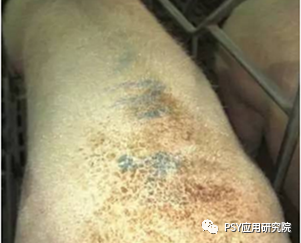
Figure 2: Biotin deficiency cracked hooves
What are the causes of soft legs and cracked hooves?
1. Breed
◆ Lean-type breeds and lines such as New American line, New Danish line Landrace, Large White, Duroc and Hampshire are more prone to it
◆ Pigs with slender limbs and hooves are most susceptible to this disease
◆ Chinese local breeds and their crossbred offspring with exotic breeds rarely develop this disease
2. Bone dysplasia
The main cause of weak legs is bone dysplasia (breeding -- rapid growth, high feed conversion, thin backfat, long carcass, high lean meat percentage; sexual maturity at 5-6 months of age, but bones do not mature until 18 months of age, and the period from 6-18 months of age is exactly when pig bone dysplasia manifests). Growth rate too fast during the rearing period, protein (lysine) too high
3. Physiological stage
Pregnant sows are more prone - heavy load - nutrition in late pregnancy should be raised to higher than during lactation, because intake is only 2.5kg (excluding energy)
4. Pen floor
◆ Too smooth floor - when feeding liquid feed, feed spilled onto plastic flooring contains high levels of soluble non-starch polysaccharides, which makes the plastic floor surface extremely dangerous, and the slipperiness causes more leg injuries in pigs
◆ Too rough floor - bruises - Staphylococcus and other bacteria breeding
◆ Freshly made new cement floor - strong alkalinity
◆ Excessive use of strongly alkaline disinfectants - strong alkalinity (lime water, phenols, quaternary ammonium salts) - corrosion of the hoof sole - scabbing
5. Season
After autumn, weather turns cold - peripheral blood vessels constrict - nutrient supply - hooves become fragile
After autumn, the pig's body undergoes adaptive regulation, peripheral blood vessels constrict, leading to reduced secretion of lipids, hooves become hard and brittle, prone to cracks, forming hoof disease; calcium and phosphorus deficiency, imbalanced ratio, reduced vitamin D synthesis
6. Biotin deficiency
◆ Biotin is widely distributed and can be synthesized by intestinal microorganisms; biotin requirements are low, so deficiency is rare in both humans and animals. However, biotin deficiency can be induced by certain antagonists.
◆ Biotin-binding proteins: such as egg white damage; feeding animals raw egg white can induce dermatitis and hair loss, which returns to normal after biotin supplementation; the damage mainly involves abnormal lipid metabolism and energy generation.
◆ Certain Streptomyces antibiotics streptavidin, avidin.
◆ Rancid fatty acids in fishmeal can destroy biotin, so biotin deficiency is likely to occur when using low-quality fishmeal.
◆ High-temperature environments hinder intestinal bacteria from synthesizing biotin.
◆ In certain grains (wheat bran, wheat, barley, sorghum) and animal-derived proteins (meat meal, poultry processing by-products), only part of the biotin can be utilized.
◆ Moldy feed, oxidative rancidity of raw materials.
7. Mineral changes
◆ Zinc deficiency is one of the main causes; zinc deficiency presents as hoof sole cracks or side cracks; (accompanied by rough coat)
◆ Calcium-zinc antagonism - quality and quantity of limestone powder
◆ Insufficient calcium and phosphorus or improper ratio, VD deficiency easily causes hoof sole cracks
◆ Excessive fluoride, chronic fluorosis ----- CaF ---- calcium deficiency and manganese deficiency can cause abnormal deformation of limbs and hooves
◆ Mn deficiency -- mostly transverse cracks
◆ Selenium deficiency can cause foot deformation (may be accompanied by hair loss, arthritis, etc.)
8. Vitamins
Vitamin C supplementation provides some improvement — it is a prerequisite for vitamin E and D to function, affects collagen synthesis -- calcification-incomplete cracked hooves.
9. Pharmaceutical additives
◆ Beta-agonists -- cause low blood calcium, zinc, and manganese levels -- hind limb weakness, lameness.
◆ Niacinamide -- can to some extent prevent metabolic loss of minerals and trace elements -- leg disease in ducks.
Cracked hoovesPrevention and treatmentMeasures
Avoid selecting those with “long back, narrow waist, wide rump, short hind limbs, upturned front legs, slanted front (foot) ankles and small inward hooves”Breeding pigs。
2. Floor
Rough floors can be smoothed with bricks or machinery; keep dry;
Newly built cement floors should first be disinfected several times with acidic disinfectant before use.
3. Exercise
After 80 kg, exercise once a week; at 90 kg, exercise once every three days; at 100 kg, exercise once daily.
4. Sunlight
Artificial light is not the same as sunlight; vitamin D synthesis requires ultraviolet light; build sunlight pig houses.
Figure 3: Sunlight pig house with transparent tiles installed on the roof
5. Nutrition
◆ Nutrition related to limb, hoof and bone development -- calcium, phosphorus, biotin, zinc, manganese, vitamin D, etc. need to be balanced in the formulation; pig farms under non-standard production conditions need dynamic management and supplementation of relevant nutrients.
◆ Biotin: biotin added per ton of compound feed must not be less than 400mg; zinc 120-250g (zinc source -- organic zinc);
◆ After the first estrus, restricted feeding is needed; body development and sexual development need to be synchronized. For farms with fast growth and serious overall leg problems, restrict feeding by 10% at 60 kg, by 20% after puberty, and provide premium feeding 15 days before mating to compensate for the negative impact of restricted feeding on ovulation.
Treatment
0.1% KMnO4 soaking, chlortetracycline ointment or petroleum jelly + zinc sulfate + chlortetracycline applied to the affected area
TreatmentSexual diagnosis to verify the effect
Figure 4: Photo at onset (dry, flaky, fish-scale-like skin)
Figure 5: 11 days after adding 500ppb biotin-containing product to the gestation diet (old fish-scale-like dead skin sheds, revealing healthy pink skin)
30 days after adding 500ppb biotin-containing product to the gestation diet (complete recovery, no visible fish-scale-like skin)