Diagnosing the causes of stillbirth in sows based on the shape of the stillborn fetuses
A sow giving birth to stillborn piglets is not the end of the matter. You must understand the causes of stillbirth in sows to ensure the sow does not repeat the same mistake in her next litter. Through many years of veterinary clinical experience, the following methods for diagnosing the causes of stillbirth in sows based on the shape of the "stillborn fetuses" have been summarized for everyone's reference:
1. Fetuses that die before farrowing (white fetuses), the fetuses are not dehydrated;
Differential diagnosis: mostly seen in blue ear disease (one month before farrowing, it can break through the placental barrier)
Treatment suggestion: use blue ear vaccine with caution
2. The stillborn fetuses are dirty and foul-smelling, and the sow has a fever and does not eat;
Differential diagnosis: mostly seen in Streptococcus
Treatment suggestion: use lincomycin, use Streptococcus vaccine with caution
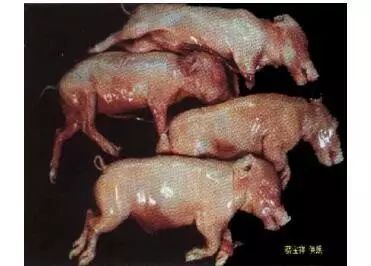
3. The stillborn fetuses are clean, but if death occurred not long ago the fetal head is edematous, and if death occurred longer ago the fetuses are dehydrated and dark brown;
Differential diagnosis: mostly seen in Toxoplasma
Treatment suggestion: sulfonamides
4. Entire litter stillborn
Differential diagnosis: mostly seen in Japanese encephalitis
Treatment suggestion: Japanese encephalitis vaccine (late March to early April, seasonal immunization)
Pictured: an entire litter of stillborn fetuses
Pictured: clinical characteristics of the testicles in a boar caused by Japanese encephalitis virus
5. Mummified fetuses
A. Mummified fetuses are uneven in size, but cannot be arranged in proportion:
Differential diagnosis: mostly seen in pseudorabies
Treatment suggestion: immunize the sow with pseudorabies vaccine 30 days before farrowing
B. Mummified fetuses are uneven in size, but can be arranged in proportion from small to large:
Differential diagnosis: mostly seen in parvovirus infection in mid-pregnancy.