Daylily Growing Methods and Blooming Period Explained
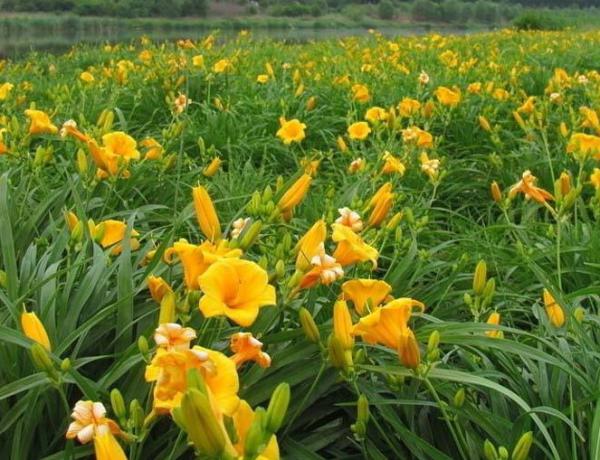
The daylily is a common ornamental flower today, with orange-yellow flowers and long flower stalks, shaped like a lily. In fact, it is the yellow daylily we often eat in daily life - surprising, right! Many people also like to grow daylilies for their ornamental value. Let's take a look below.
Daylily Growing Methods
1. Soil
Although the daylily has low requirements for soil, if you want it to grow more robustly, the soil should preferably be sandy soil rich in humus, loose, and well-drained and aerated. If conditions allow, you can use a mix of leaf mold, garden soil, and river sand.
2. Light
The daylily likes sunlight and can also grow normally in a semi-shaded environment. Therefore, if conditions allow, you can place it in a spot with full sunlight to grow, or manage it in a ventilated, semi-shaded spot.
3. Temperature
The daylily is relatively cold-tolerant and heat-tolerant. It can be cultivated in the open field in North China and overwinter successfully, which shows its adaptability to temperature. However, in an environment of 15-25 degrees, it grows fastest. Therefore, if you want it to grow well, keeping the temperature at around 20 degrees is best.
4. Fertilizing
Start topdressing from the second year after planting. The first time is when the new shoots grow to about 10 cm, the second time is when pruning the flower scapes, and the third time is before the blooming period. Liquid fertilizer is mainly used, which can promote its growth and flowering. Therefore, in the daylily growing methods and precautions, fertilizing is very important.
5. Watering
The daylily is relatively drought-tolerant, but it prefers a moist environment, so during the growing period you can water according to climate changes. In the rainy season, you can reduce watering or not water at all. In summer, you can water once every 3-5 days, as long as you avoid the soil becoming too dry.
6. Pest and Disease Prevention
Common diseases of the daylily include leaf spot, leaf blight, rust, and so on. Common pests include red spiders, aphids, and so on. Keeping the environment clean, tidy, and ventilated, and fertilizing in a timely manner to improve its resistance to pests and diseases, can achieve a very good preventive effect.
The Daylily Blooming Period
The daylily blooming period is from early June to mid-July, lasting about 10 days, with each flower blooming for one day. The flower colors are diverse, and the flower shape is similar to that of a lily. The blooming period is relatively short. It can not only be used for ornamental cut flowers, but some varieties can also be used as medicine and for food.
The Origin of the Daylily
The daylily is native to China, Siberia, Japan, and Southeast Asia. Its leaf shape is flat and long-linear, and it is slightly toxic along with the underground stem, so it cannot be eaten directly. As for the flower shape, during the blooming period it grows slender green flowering branches. The flowers are orange-yellow, the flower stalks are very long, and they are tubular like lily flowers. The fruit it produces has wings. At the same time, the daylily is also China's mother flower.