What precautions should be taken when growing Haworthia cooperi var. truncata in a closed, humid environment?
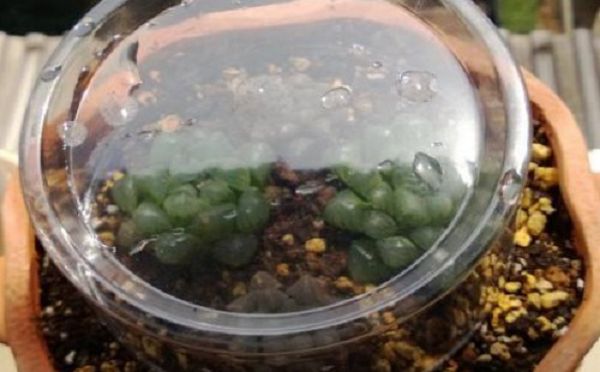
When Haworthia cooperi var. truncata encounters harsh climate conditions, it often needs to be grown in a closed, humid environment to maintain its fresh vitality, so that it always retains its ornamental value. However, growing Haworthia cooperi var. truncata in a closed, humid environment also requires certain methods, techniques, and precautions, otherwise it may bring unnecessary trouble. Today, the editor mainly introduces the precautions for growing Haworthia cooperi var. truncata in a closed, humid environment.
When the growing environment for Haworthia cooperi var. truncata is relatively suitable, there is generally no need for closed, humid cultivation. After all, once closed, humid cultivation ends, restoring it to a natural growth state requires going through an adaptation process. In this short adaptation period, if all goes well, everyone is naturally happy, but if it does not go smoothly, it may cause some adverse growth conditions. For growing Haworthia cooperi var. truncata in a closed, humid environment, there are mainly the following precautions:
1. Avoid direct sunlight during closed, humid cultivation
Although Haworthia cooperi var. truncata can maintain its growth vitality and good ornamental effect through closed, humid cultivation when it encounters a harsh growing environment, direct sunlight must be avoided during closed, humid cultivation, especially strong light. Because if exposed to direct sunlight, it often causes the local ambient temperature to rise, thus causing Haworthia cooperi var. truncata to actually become steamed.
If this happens, it is not only unfavorable for the plant to maintain a normal growth state, but may also cause serious harm. After all, when growing succulents, safety comes first, and one should not blindly carry out closed, humid cultivation in pursuit of temporary good looks. Therefore, even for closed, humid cultivation, certain methods and techniques must be mastered, otherwise haste makes waste.
2. The timing of closed, humid cultivation must be chosen correctly
Although Haworthia cooperi var. truncata can be grown in a closed, humid environment throughout the four seasons, it is not necessary to do so when the plant's growing environment is relatively normal. Because after the plant undergoes closed, humid cultivation and then returns to a normal growth state, it will experience certain risks. After all, when a plant goes from one growing environment to another, it must go through an adaptation process, and this process is similar to repotting and recovering from transplant shock.
1. If Haworthia cooperi var. truncata is grown in a closed, humid environment in spring and autumn, it is mainly to accelerate its growth, and it should be done on cloudy and rainy days at a temperature of 5°C-10°C; if it is a sunny day, it is recommended to remove the closed, humid cultivation device in time and let it fully receive soft light. However, during light exposure, no water droplets should remain on the leaves of Haworthia cooperi var. truncata, otherwise the leaves are prone to sunburn. You can first place the potted plant in a cool and well-ventilated environment to let excess water evaporate before letting it receive light.
2. Haworthia cooperi var. truncata that has just been watered thoroughly is not suitable for closed, humid cultivation. Usually, it needs to be placed in a well-ventilated environment for a day, and after excess water evaporates and the humidity in the pot decreases somewhat, then closed, humid cultivation can be carried out. In this way, closed, humid cultivation will also be safer.
3. In winter, because the temperature environment is relatively harsh, closed, humid cultivation is very suitable for keeping the plant growing and ornamental. Carrying out closed, humid cultivation in winter is actually creating a greenhouse environment for it, but we need to frequently inspect the conditions in the pot, especially checking whether mold has developed. At the same time, watering should be scientific and reasonable, so as to keep the potting soil slightly moist.