How to solve the problem of long, thin stems and small leaves on a goldfish plant
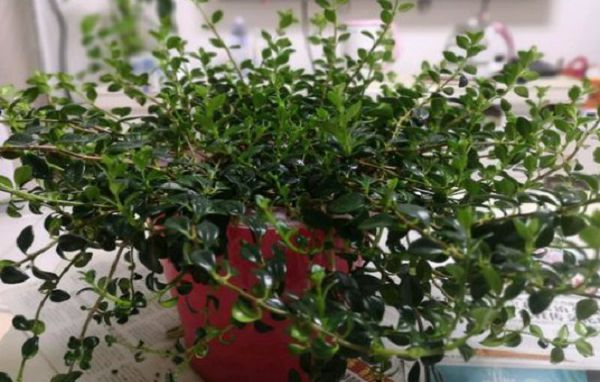
The goldfish plant (Nematanthus gregarius) is a common potted plant in many growers' homes. It is not only evergreen year-round, but also blooms beautifully, looking just like little goldfish, very cute. But if we are usually neglectful of management or care for it improperly, its ornamental value will also be completely lost.
Recently, some growers have reported that their potted goldfish plants have developed thin, elongated stems and thin, sparse leaves. What is going on here? When a goldfish plant shows this condition, what should we do?
If a goldfish plant is grown well, not only is the potted plant's shape attractive, with compact and lush branches and leaves, but during the flowering period it will also be covered with pretty little goldfish. If its stems grow rather thin and elongated and its leaves are sparse and small, not only does the potted plant look unattractive, but it will also inevitably struggle to bloom later on. Clearly, the plant must have a growth problem.
In fact, thin, elongated stems and small leaves on a potted plant are an obvious sign of leggy growth. The same is true for the goldfish plant, and the negative consequences of leggy growth for it are very obvious. If we want to restore the goldfish plant to its originally attractive growing state, we first need to solve the leggy growth problem.
The main cause of leggy growth in goldfish plants is a lack of light in the growing environment. Moreover, if water and fertilizer are relatively abundant, this will accelerate its leggy growth. If we want to solve the leggy growth of the goldfish plant, we first need to promptly improve the growing environment, and then quickly adjust our management methods.
1. Change the growing environment
Although the goldfish plant prefers a cool and humid growing environment, if you want it to grow normally, you also need to ensure sufficient light. If the growing environment is shaded and lacking light for a long time, it is also prone to leggy growth, since it grows quickly and has strong sprouting ability. And if water is relatively abundant at this time, it will accelerate the leggy growth even more.
Therefore, at this point we should promptly place the potted plant in a spot with sufficient light to ensure normal photosynthesis. Considering that the goldfish plant likes cool, ventilated conditions and cannot tolerate direct strong light, it is recommended to place it in a bright, well-ventilated spot with plenty of scattered light.
2. Properly control water and fertilizer
The goldfish plant grows quickly and has a relatively high demand for water and fertilizer, but if water and fertilizer are given too generously in an environment lacking light, this will further worsen the leggy growth. As a result, its stems grow rather thin and elongated, its leaves are also sparse and small, and the branches and leaves may even lean every which way.
So while increasing light, we also need to properly control water and fertilizer, especially by promptly reducing watering; at least for a short period, do not water too generously. Generally, by placing it in a bright, well-ventilated spot with sufficient light while properly controlling water for a period of time, the leggy growth can be noticeably curbed.
3. Prune scientifically
If the goldfish plant's leggy growth is quite severe, although the above two measures can control it well, the original rather thin and elongated stems still look rather unattractive, and the effect of sprouting new branches and leaves is not obvious. So at this point we also need to use pruning for scientific treatment.
Generally, you need to cut off those thin, elongated stems that are leaning every which way, and properly shorten the other longer stems. Through pruning, you can not only stimulate the plant to sprout new branches and leaves, but also further control the potted plant's shape. The new branches sprouted by the goldfish plant will also be thicker and stronger, and the leaves will be broader and more glossy green, and the leggy growth will disappear along with it. Moreover, later on the goldfish plant will grow vigorously and bloom more easily.