How to grow a bonsai kumquat? Complete guide to cultivation methods and precautions
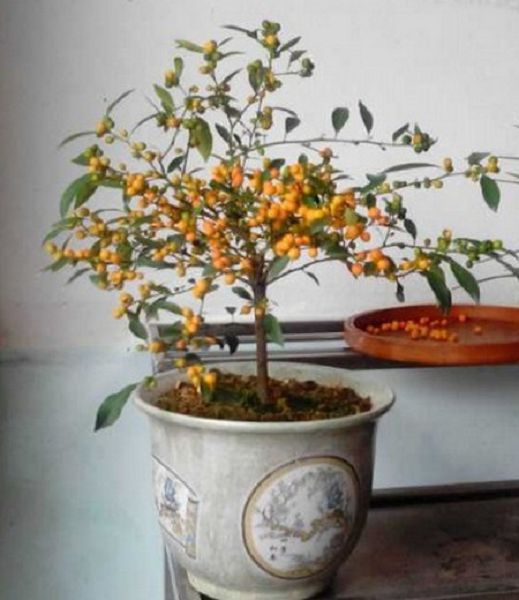
Kumquat, also known as yangnai kumquat, mandarin orange tree, milk kumquat, golden jujube, golden bullet, golden elixir, kumquat, Mashui kumquat, jinju, and jinju, belongs to the genus Fortunella in the family Rutaceae, and is a well-known ornamental fruit plant. Especially in Guangdong and Hong Kong, China, many residents buy them during the Spring Festival for good luck. The kumquat is an evergreen shrub. Flowers are solitary, white, and fragrant. The fruit is mostly oval, golden yellow, and glossy; some varieties are edible, and it is mostly propagated by grafting.
Growing kumquats generally requires attention to the following points:
1. Temperature:
The suitable temperature for kumquat growth is 22-29°C, and the most suitable indoor display temperature in the north is 10-15°C. If the plant is still small and has not fruited, the overwintering humidity is 3-5°C, and it should not exceed 10°C, otherwise dormancy will be affected. When the outdoor temperature rises back to 10°C at night, move it outdoors for care, and strengthen ventilation and light. After the autumn turns cool, move it back indoors.
2. Light
Kumquat is a light-loving plant; during the growing period, place it in a sunny spot. In hot summer with strong direct sun, it can be slightly shaded. In winter when viewing the fruit, place it indoors in a bright spot. For dormant small plants, light requirements are not strict in winter.
Kumquat likes a warm and humid climate with plenty of sunlight, and during care it should be placed in a sunny place. If there is insufficient light and the environment is shaded, it often causes excessive growth of branches and leaves and fewer flowers and fruits. Because kumquat likes a cool climate in summer, or when summer sunlight is intense, it is better to place it in a slightly shaded spot at this time. The indoor temperature in winter should be above freezing. If the indoor temperature is too high, the plant cannot get sufficient dormancy, then growth will be weak the next year, and flowers and buds are likely to drop.
After March, most of the kumquat fruits fall naturally; remove the remaining fruits by hand to save nutrients, and at the same time thin out overly dense branches, crossing branches, some excessive-growth branches, and inner branches that receive no light. For the retained 1-year-old branches, carry out heavy pruning, leaving 2-3 buds per branch, with the cut bud facing outward, so as to make the crown open and allow ventilation and light.
During the flowering and fruiting period, pay attention to thinning flowers and fruits, keep the earlier-opening flowers, and remove late and weak flowers. Generally, flowers opening in May-June have a relatively high fruit-setting rate and should be retained more. Remove flowers and fruits after July.
3. Potting:
Kumquat originates from the subtropics and likes slightly acidic soil. When repotting in spring, keep part of the soil ball to protect the roots, and prune excessive old roots. Place two horse-hoof slices at the bottom of the pot, and above that fill with a mixture of decomposed sawdust and an equal amount of garden soil, or 8 parts of loose, fertile soil rich in humus plus 2 parts cinder.
4. Skillful pruning
Pruning is an important technical measure to make kumquat bloom abundantly and bear many fruits. To make the tree shape beautiful and bear more fruit, before the sap begins to flow each year and before spring buds sprout, carry out one heavy pruning, cutting off dead branches, diseased and pest-infected branches, overly dense branches, and excessive-growth branches, keeping 3-4 robust, evenly distributed branches from the previous year, leaving only 2-3 buds at the base of each branch and cutting off the rest. In this way, more than 10 full spring shoots can sprout. When the new shoots grow to 15-20 cm, pinch off the tips to make the plant shape fuller; at this time apply a quick-acting phosphorus fertilizer once to promote flower bud differentiation.
When flowering, thin the flowers appropriately to save nutrients. After young fruits form, when the young fruits grow to about 1 cm in size, fruit thinning can be carried out; leave 2-3 fruits per plant on thick branches, and keep one fruit per weak branch, and make the fruits on the whole plant even. Timely prune off autumn shoots so as not to let it bear fruit a second time, so as to benefit consistent fruit shape, size, and ripeness, and improve ornamental value.
5. Water well
Kumquat likes moisture but hates waterlogging, and overly wet potting soil easily causes root rot. Therefore, during the growing period it is best to keep the potting soil moderately moist. Spring is dry and windy, so mist the leaves once a day to increase air humidity. In summer, mist 2-3 times a day and also spray water on the ground. But avoid spraying water during the flowering period to prevent flower rot and affect fruiting. In the rainy season, promptly pour out accumulated water in the pot to avoid root rot. When placed outdoors in summer, it is best to prop up the flowerpot with bricks to facilitate drainage. From the white flowering stage to the young fruit stage, kumquat is relatively sensitive to water requirements. At this time, if the potting soil is too dry, the flower stalks and fruit stalks easily form an abscission layer and drop; if watered excessively and the potting soil drains poorly, it also easily causes flower and fruit drop. Therefore, at this time it is best to keep the potting soil in a neither dry nor wet state.
For watering, master the principle of watering when dry and stopping when wet, and when watering, water thoroughly. During the flowering period, the potting soil should be slightly dry; after fruit setting is stable, water normally. When the young fruit is as large as a soybean, fertilizer and water can be increased. Kumquat likes a humid environment, so during the display period and peak growing season, often spray water on the leaves and around the flowerpot, but never spray the flowers during the flowering period to avoid flower rot. For plants dormant at lower temperatures, control watering.
6. Apply sufficient fertilizer
Kumquat likes fertilizer. For potting, it is best to choose a culture soil mixed with 4 parts leaf mold, 5 parts sandy soil, and 1 part cake fertilizer. When repotting, apply horse-hoof slices or decomposed cake fertilizer at the bottom of the pot as a base fertilizer. From the beginning of new bud sprouting until before flowering, apply decomposed dilute sauce residue water once every 7-10 days, with several applications of alum fertilizer water in between. You can also apply decomposed sesame paste residue or compound fertilizer under the dry surface soil, then water immediately.
Note that fertilization should be in small amounts and multiple times, and organic fertilizer must be fully decomposed. The interval between applications of solid fertilizer is generally 1 month. Do not fertilize during the winter fruit-viewing period. After early summer, it is better to apply more phosphorus fertilizer to benefit bud formation and fruiting. At the early fruiting stage, fertilization should be paused; when the young fruit grows to about 1 cm, liquid fertilizer can be applied once a week until the end of September.
7. Pest and disease control:
The main pests of kumquat include aphids, scale insects, and red spiders, which can be controlled with a 0.067% solution of 40% omethoate emulsifiable concentrate, or a 0.67% solution of 40% Supracide. Kumquat is an acid-loving flower, and in the north there is often chlorosis due to iron deficiency. When preparing the culture soil, a small amount of ferrous sulfate can be added, or during the growing season spray the leaves with a 0.1% ferrous sulfate aqueous solution once every 15-20 days. Or add a few drops of vinegar when watering, or regularly water with alum fertilizer water containing 1% ferrous sulfate. Under poor ventilation and poor light, kumquat may develop sooty mold and powdery mildew, which can be controlled with a 0.125%-0.142% solution of 70% thiophanate-methyl.