How to control viral diarrhea in piglets? A farrowing house case sharing
A case sharing on the control of viral diarrhea in piglets in a farrowing house
Let us start with an actual case from a pig farm.
This is a 200-sow farm in the south. In mid-June 2020, the farm owner reported to the market business manager that after his first-parity sows farrowed, 2-3 days after birth, the newborn piglets showed severe watery diarrhea, severe dehydration, and a piglet mortality rate as high as over 90%. The owner had raised pigs for many years and had rich clinical experience. At that time, he mainly suspected three viral diseases: transmissible gastroenteritis, epidemic diarrhea, and pseudorabies.
So the owner took measures for the newborn piglets such as oral administration of epidemic diarrhea vaccine and emergency intramuscular vaccination against pseudorabies, and used fluid replacement + antibiotics for the affected pigletstreatmentto prevent dehydration and secondary infection in the pigs, but still could not stop the outbreak of diarrhea and the death of piglets. In utter desperation, the owner selected affected pigletspig diseasefeed and sent it to a third-party authoritative laboratory for testing. After gene sequencing, the diagnostic result was rather unexpected to the owner: it was not the three viral diseases he had imagined, but infection with a variant strain of porcine reproductive and respiratory syndrome virus.
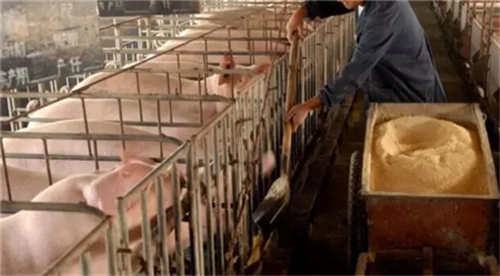
After obtaining the pathogen test results, according to the actual situation of the pig farm, the following measures were taken:
(1) No emergency vaccination against porcine reproductive and respiratory syndrome;
(2) All dehydrated piglets were culled, and piglets over 10 days of age were weaned early, given fluid replacement, and fed warm water + high-quality creep feed + milk powder;
(3) The farrowing house was thoroughly disinfected with 5% caustic soda, fumigated with peracetic acid, and left empty for 10 days;
(4) Starting in mid-July, Kangzhiyuan was added to the whole sow herd. In the first 3 weeks, the dosage of Kangzhiyuan was 4kg/t, 3kg/t, and 2kg/t respectively. In the first 2 weeks, Chuankexin (1.5kg/t) was also used together. After the sows had used Kangzhiyuan for 3 weeks, they were subsequently fed continuously at 2kg/t.
Results
22 days after the farm used this protocol, 12 sows were about to farrow. The owner still felt a bit uneasy. From early August to mid-August, the piglets in the 12 farrowing pens no longer showed watery diarrhea or dehydration symptoms. The watery diarrhea caused by variant porcine reproductive and respiratory syndrome was effectively controlled, the survival of piglets in the farrowing house was significantly improved, and the piglets were normally weaned at 22 days of age.
Summary:
Diarrhea in piglets in the farrowing house caused by porcine reproductive and respiratory syndrome is common in production. Especially at present, many pig farms use three-way cross commercial pigs converted into sows, and the activity level of porcine reproductive and respiratory syndrome keeps increasing. At present, the effective approach is: short-term suppression with antibiotics + nonspecific immune regulation with traditional Chinese medicine. According to the activity level of porcine reproductive and respiratory syndrome, consider vaccination against it as appropriate. Especially in the upcoming autumn and winter seasons, even greater attention is needed. It is strongly recommended to use Chuankexin + Kangzhiyuan for prevention and control in sows during the major perinatal period, before and after vaccination against porcine reproductive and respiratory syndrome, and during the nursery period, so as to effectively suppress porcine reproductive and respiratory syndrome.