Sow didn't eat for 4 consecutive days after farrowing, and this turned out to be the reason
Sow didn't eat for 4 consecutive days after farrowing, and the reason turned out to be this
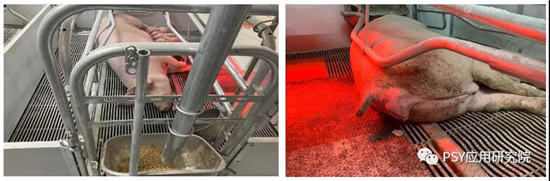 The sow was lethargic and not eating Gray thick pus discharged from the vulva
Measures taken by the farrowing house staff:
Before and after feeding each day (2 times), the sow was driven up to drink water, and glucose water was administered, with anti-inflammatory drugs injected intramuscularly (oxytetracycline, lincomycin and ceftiofur used alternately). On the day after farrowing, 100ml of Gongyanjing plus 20ml of lincomycin was infused to promote the discharge of thick pus.
The sow did not eat continuously after farrowing because she had not finished farrowing!!!
As a result, on the morning of the 4th day after farrowing, the sow successfully expelled one dead fetus, so on that day 100ml of Gongyanjing plus 20ml of lincomycin was infused again. On the 5th day after farrowing, the sow began to eat a small part of the feed.
Although the sow eventually gradually resumed feed intake, because she had not eaten feed for a long time, this caused great harm to the sow's postpartum recovery and the rapid growth of the piglets. Therefore, through the above production case, the lesson for pig farms is that only by paying attention to monitoring the sow's farrowing process can we help her recover better after farrowing.
2 problems existing in the farrowing houses of some pig farms
1. Farro wing records are not standardized
⟧ The time of water breaking and placenta expulsion in sows is just as important as the interval between births. Only by keeping clear records can the farrowing house staff know whether the sow has finished farrowing. However, having no farrowing records and not recording them is the true portrayal of many pig farms, resulting in sows with abnormal farrowing not receiving timely assistance.
Pig farms need to standardize the filling in of farrowing records
2. No strengthened management after manual extraction of piglets from the sow
When facing dystocia in sows, most farrowing house staff choose to directly extract the piglets. However, after the extraction is completed, they do not strengthen management of the sow, such as timely infusion to restore farrowing ability and antibacterial anti-inflammatory treatment, which increases the difficulty of the sow's subsequent farrowing and even easily causes the last piglets or placental fragments to be unable to be expelled for a long time.
Farrowing house staff manually extracting piglets from the sow
What methods can be used to determine whether a sow has finished farrowing?
1. Look at the sow's external performance
If there are piglets not yet delivered, the sow will show symptoms such as straining, twitching and trembling; if the sow suddenly becomes quiet, it means she has finished farrowing.
2. Look at the strength of the sow's straining
If there is no straining, it means the sow has finished farrowing; if there is still slight straining, it means there are still placental fragments or fetuses not completely expelled.
3. Look at changes in the sow's body
Observe the triangular area on the sow's upper abdomen. If after delivering one piglet the sow suddenly relaxes and the triangular area collapses quite obviously, it means the sow has basically finished farrowing.
4. Look at the color and thickness of the placenta
During the sow's farrowing process, the placenta produced in the early stage is pulled by the piglets, becoming thin and dark in color; the placenta produced at the end is not pulled by other piglets, and because too much umbilical cord blood is lost, the placenta is relatively thick and pale.
5. Look at the number of umbilical cords on the placenta
Generally speaking, the number of umbilical cords on the placenta corresponds to the number of piglets. If the number of umbilical cords on the expelled placenta is found to be consistent with the number of piglets already delivered, it means the sow has finished farrowing.
6. Look at the integrity of the fetal membrane
If a complete fetal membrane appears on the placenta, it means the sow has finished farrowing. This is because the fetal membrane of the last piglet delivered has not been damaged by the previous piglets and will be relatively complete.
7. Look at whether the piglet is wrapped in fetal membrane
The last piglet delivered is more often delivered together with the placenta because the placenta has already detached from the uterine wall and can only rely on uterine contractions. If a piglet is found to be wrapped in fetal membrane, it means the sow has finished farrowing.
8. B-ultrasound judgment
Pig farms with the conditions can directly use B-ultrasound to determine whether the sow has finished farrowing.
Summary:
Farrowing house management focuses on details. If you want to raise sows well, you must first learn to observe every movement of the sow. As a farrowing house manager, you need to master the correct methods for judging whether a sow has finished farrowing; at the same time, you must also standardize related operations such as farrowing records and manual extraction treatment. Only in this way will postpartum problems in sows become fewer and fewer.