What to Do When Echeveria 'Huthspinke' (Chuxiang) Succulent Leaves Get Spots? Causes and Solutions
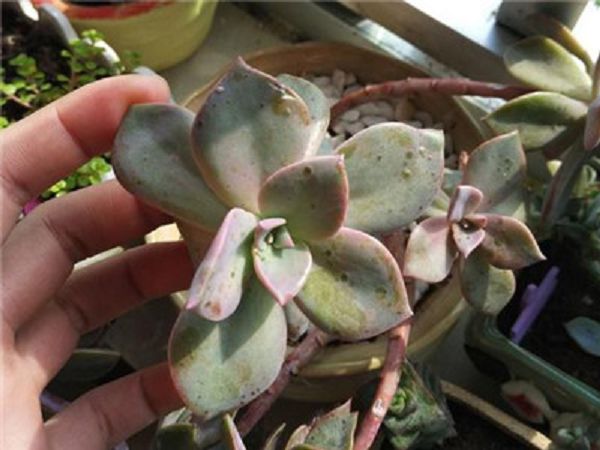
Echeveria 'Huthspinke' Developing Black Spots
Black spots on Echeveria 'Huthspinke' leaves are usually caused by black spot disease. The spots are roughly circular and slightly raised, with no other symptoms on the plant in the early stages. But gradually the leaves will wither or turn to mush, dropping at the slightest touch. Slowly all the leaves will be covered in black spots, and then the whole plant dies.
The process from black spots appearing to the whole Echeveria 'Huthspinke' withering is relatively slow, and before it dies it can also infect other plants, so it must be treated promptly.
Causes of Black Spots on Echeveria 'Huthspinke'
Careless routine care, such as watering directly onto the leaves or the center of the rosette, causing water to sit for long periods.
A stuffy, poorly ventilated environment, especially the muggy heat of summer, breeds various bacteria.
Once Echeveria 'Huthspinke' develops black spots, it is quite troublesome to deal with, and there is only a 50% chance of recovery. So during routine care you must pay constant attention to them. Please do not casually discard the sick succulents around you; try your best to save them.
What to Do When Echeveria 'Huthspinke' Develops Black Spots
The weakness of black spot disease is that it fears high temperatures and fears dryness. Simply place the affected plant in direct sunlight, keep the environment relatively dry, and expose it to full sun for a period of time. Spray with fungicide promptly until it improves.
In routine care also note: do not use soil that has not been sterilized and disinfected, keep the growing environment well ventilated, never let plants get rained on at will when the rainy season comes (this point is very important), and never let the potting soil stay wet for long periods.