Reasons for Cymbidium Orchid Bud Drop and How to Fix It
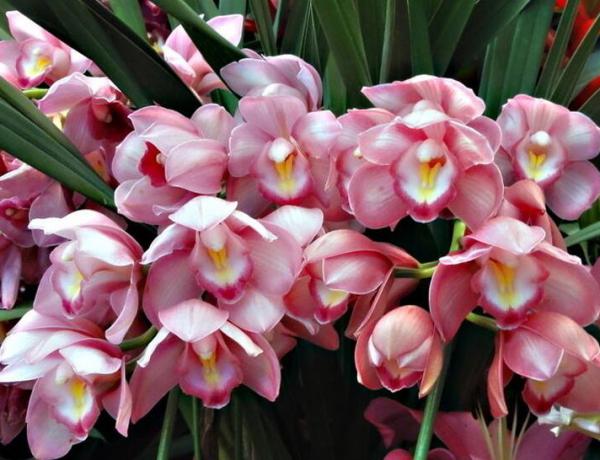
Every year just before the Spring Festival, the best-selling flower in flower markets everywhere is the Cymbidium orchid. Cymbidium orchids have large blooms and upright, emerald-green leaves. They combine the showy beauty of ordinary flowering plants with the unique charm of orchids, and they symbolize good fortune and wealth, making them very popular among flower lovers.
With the Spring Festival approaching, whether you grow your Cymbidium orchid yourself or bought one at the flower market, it is currently in the bud or blooming stage, and you need to guard against buds drying up and dropping, which would ruin the Spring Festival bloom. Why do some growers' Cymbidium orchids drop their buds? Nine times out of ten it comes down to 4 causes. If you want your Cymbidium orchid to bloom successfully, you cannot skip the work of preventing bud drop in advance.
I. Causes of Bud Drop in Cymbidium Orchids and Solutions
1. Bud drop caused by excessively high ambient temperature
Cymbidium orchids like a cool growing environment and cannot tolerate high temperatures or strong direct sun. During the bud stage, if the temperature is kept between 10 and 20 degrees, with a day-night temperature difference of no more than 10 degrees, the buds will develop normally. If the indoor temperature stays above 20 degrees for a long time with no temperature difference, the buds will not develop fully and may develop too quickly ahead of time, resulting in poor bloom quality and a shortened flowering period.
When the indoor temperature stays above 25 degrees for a long time and there is no temperature difference or only a small one, vegetative growth speeds up, leaf buds sprout quickly, and buds very easily dry up and drop. Generally speaking, in areas where homes have no heating, Cymbidium orchids dropping buds due to high temperatures is relatively rare. In areas where homes have heating, the indoor temperature is high and the day-night temperature difference is small, so bud drop in Cymbidium orchids is more likely to occur.
Solution: If the ambient temperature where you grow your Cymbidium orchid stays above 20 degrees for a long time, the day-night temperature difference is less than 5 degrees, the buds gradually wrinkle, dry up and drop, and there are no other care problems, then you should consider temperature as the cause. At this point, move the Cymbidium orchid to an environment with a temperature between 10 and 20 degrees, with the day-night temperature difference controlled between 5 and 10 degrees, and the bud drop will gradually improve.
Note: Once a Cymbidium orchid starts dropping buds, promptly check the buds that have not yet dropped. If some buds have already lost water and shriveled, remove them even if they have not dropped. Such damaged buds cannot recover, and they not only spoil the appearance of the whole plant but also affect your mood. Removing them early saves nutrient consumption and frees you from worrying about them, so you can focus on caring for the other healthy buds to bloom.
2. Bud drop caused by spraying water on the buds
Cymbidium orchids like a moist growing environment, and some growers, when caring for a Cymbidium orchid with buds, spray the whole plant from time to time, thinking this increases air humidity and benefits bud growth and development. In fact, once a Cymbidium orchid has formed its bud clusters, you should keep the buds away from water, otherwise the buds will easily wrinkle and drop.
The reason is that in winter, Cymbidium orchids are basically grown indoors, where ventilation is poor. After spraying water on the buds, droplets gather on them for a long time and cannot evaporate, which affects bud development, causes tissue death, and ultimately kills the buds. Especially when indoor ventilation is poor and the temperature is on the high side, buds that get wet easily rot or wrinkle and drop, and cannot open normally, so pay attention during care.
Solution: If you have a habit of spraying water on the leaves of your Cymbidium orchid and notice buds rotting or wrinkling and dropping, stop spraying immediately, remove the rotted or wrinkled buds, and increase ventilation; the undamaged buds will then grow normally. If you really want to spray water on the leaves of a Cymbidium orchid with buds, do it at noon on a clear day, and open the windows for ventilation right after spraying so the droplets evaporate within 5 minutes.
Note: Although the Cymbidium orchid is also a type of orchid, it is still somewhat different from the spring orchid (Cymbidium goeringii) and the Chinese cymbidium (Cymbidium faberi) that we usually grow. Spraying water on the leaves not only causes buds to drop but may also cause spots on the leaves. Therefore, even outside the flowering period, you should avoid spraying water directly on the leaves when caring for Cymbidium orchids. If you feel the air humidity is low and is affecting the growth of your Cymbidium orchid, just spray around it and on the ground, or use a humidifier. Cymbidium orchids grown outdoors are more resistant than those grown indoors, but during long spells of rainy weather, it is still best to keep them somewhere they will not get rained on.
3. Bud drop caused by overwatering
During the bud stage, Cymbidium orchids should still be watered on a wet-dry cycle: water when the potting soil is seven or eight parts dry, and water thoroughly in one go. If you water too frequently, the roots get damaged or rot, and the first thing the plant abandons is its buds, causing them to wrinkle and drop, and some even rot black. Especially with a newly purchased Cymbidium orchid, control watering for the first week, which helps the plant adapt to your home environment.
If you water it right after bringing it home, problems are more likely. Some growers think a Cymbidium orchid needs a lot of water while it is growing buds, but that is not actually the case; the buds do not consume much water, and slightly dry potting soil even benefits bud development.
Solution: If you have recently watered your Cymbidium orchid a lot and the buds are wrinkling, dropping or rotting black, stop watering immediately, increase ventilation time, and remove the already damaged buds while watching closely. If the buds stop wrinkling, dropping or rotting black after you stop watering, you can continue growing it. If, after you stop watering, the buds not only keep dropping but leaf tips also turn black and leaves turn yellow, then it is best to repot, as root rot is very likely.
Note: When the indoor temperature is below 10 degrees, be cautious about watering Cymbidium orchids. At low temperatures the plant is less active and needs very little water, so the risk of watering too much greatly increases. But you also cannot let a Cymbidium orchid go without water for a long time, as lack of water will likewise cause buds to lose nutrients and drop. Exactly how often to water a Cymbidium orchid should be decided by the temperature where you are and the growing medium you use, not by following the crowd and watering every few days just because someone else does.
4. Bud drop caused by improper fertilizing
Cymbidium orchids have a long flowering period and many flowers on a single flower spike, so nutrient consumption during bud growth and development is relatively high. Therefore, when growing Cymbidium orchids, fertilize diligently in autumn to prepare for winter bud formation and blooming. But if your Cymbidium orchid has already formed its bud clusters, it is best to stop fertilizing and simply wait for the flowers to open.
Fertilizing when the buds are fairly large very easily causes fertilizer burn, and the buds dry up and drop. Especially when applying quick-acting fertilizers to a Cymbidium orchid with buds, such as Peters Professional 2 (Huaduoduo No. 2) or monopotassium phosphate, the chance of fertilizer burn is even greater. In a low-temperature environment, you should absolutely not fertilize a Cymbidium orchid. The basic temperature requirement for fertilizing is above 12 degrees, so pay attention to changes in the ambient temperature.
Solution: If you have recently fertilized your Cymbidium orchid and it drops buds, the leaf tips turn black, or the leaves look less glossy, consider fertilizer burn as the cause. If you applied a solid fertilizer, remove the remaining fertilizer, increase watering appropriately, improve ventilation, and wait for it to recover. If you watered with a liquid fertilizer, then on a clear day give the Cymbidium orchid a large amount of plain water to dilute the fertilizer content in the pot, then increase ventilation so the water in the pot evaporates as quickly as possible; this can also reduce the harm caused by fertilizer burn.
Note: It is best not to fertilize a newly purchased Cymbidium orchid, because to ensure the spike formation rate and overall condition, these orchids have already been given plenty of fertilizer before leaving the greenhouse, enough to last until they finish blooming. Some Cymbidium orchids are sold in their original pots, and you can see lots of granular fertilizer on the surface of the potting soil. If you fertilize before the Cymbidium orchid has adapted to your home environment, it easily causes fertilizer burn, leading to bud drop and scorched tips.
II. How to Prevent Bud Drop in Cymbidium Orchids
1. Maintain a reasonable growing temperature
When caring for a Cymbidium orchid with buds, it is best to keep the temperature between 10 and 20 degrees, no higher than 25 degrees at most, no lower than 5 degrees at the lowest, and the day-night temperature difference between 5 and 10 degrees. Once the first flower of the Cymbidium orchid opens, keeping it in an environment of 5 to 15 degrees allows the flowering period to last about 3 months. In an environment of 15 to 25 degrees, the flowering period lasts only about a month and a half to two months.
2. Do a good job of watering
While a Cymbidium orchid is growing buds, water on a wet-dry cycle. Cymbidium orchids are generally grown in deep pots, so when watering, fully consider the moisture level at the bottom of the pot rather than only looking at the surface. When the ambient temperature is high, water more frequently; the lower the ambient temperature, the less often you should water.
3. No fertilizing and no spraying during the bud stage
Once the buds of a Cymbidium orchid have swollen, stop fertilizing and simply wait for the flowers to open. Especially when the buds are showing color and about to open, fertilizing easily causes buds and flowers to drop and also greatly shortens the flowering period. When caring for a Cymbidium orchid with fairly large buds, also avoid spraying water or letting it get rained on, to prevent bud drop.
4. Prevent prolonged exposure to strong sun
How quickly Cymbidium orchid buds grow is closely related to light. If the buds are small and you want them to open quickly, give more hours of light. If the buds are large and you do not want them to open right away, grow the plant in a spot with weaker light. When the temperature is above 25 degrees, when caring for a Cymbidium orchid with buds, shade 30% to 50% at noon to prevent sunburn on the buds and leaves, which would spoil the display.
5. Increase ventilation
During the bud stage, more ventilation benefits bud growth and development, makes bud drop less likely, and results in more vivid flower colors. If a Cymbidium orchid is kept for a long time in a poorly ventilated spot, besides being prone to bud drop, it may also grow weakly and develop dull, lusterless leaves.
III. How to Make Cymbidium Orchids Bloom Faster
Some growers' Cymbidium orchids still have fairly small buds now and may not bloom during the Spring Festival. So how do you make a Cymbidium orchid bloom faster and catch up with the Spring Festival? You only need to do two things well:
1. Grow it in a warm environment
Keep a Cymbidium orchid whose buds are still fairly small in an environment between 12 and 24 degrees; the plant's metabolism speeds up, the buds can quickly swell, and it will bloom in time for the Spring Festival.
2. Increase light hours
When a Cymbidium orchid's buds are still fairly small and you want them to open quickly, ensure 4 to 5 hours of direct light each day, and the buds will grow quickly. But when giving light, note that at noon, when the temperature is high and the light is strong, you should shade appropriately to prevent sunburn on the buds and leaves. When the light is weak at noon and in the afternoon, more sun exposure can promote bud development.
Cymbidium orchids dropping buds is mostly caused by excessively high temperatures, overly frequent watering, fertilizing during the bud stage, and spraying water on the buds or letting them get rained on for long periods. As long as you avoid these four "pitfalls," the buds growing up and blooming will not be a problem. When caring for a Cymbidium orchid with buds, do good work preventing bud drop: on the one hand, ensure the ambient temperature, no higher than 25 degrees and no lower than 5 degrees.
On the other hand, water reasonably, control fertilizing, increase ventilation, and avoid strong direct sun. The flowering period of Cymbidium orchids can be controlled artificially: if you want them to bloom earlier, raise the temperature and increase light hours. Conversely, if you want a Cymbidium orchid to bloom later, weaken the light and lower the ambient temperature, and you can delay the flowering time.