How to grow potted ginseng fruit? Teaching you the correct cultivation methods
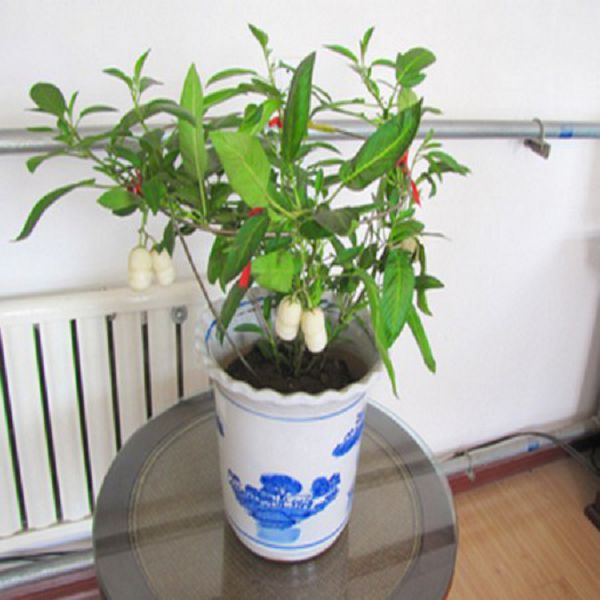
Ginseng fruit is a highly nutritious fruit with fresh, fragrant, and juicy flesh, no core inside, and a unique flavor. It has characteristics of high protein, low fat, and low sugar, and is rich in vitamin C and various trace elements, with the highest content of zinc. The commonly known ginseng fruit is a fruit native to the Wuwei region of China, rich in protein, vitamins, and mineral elements, with health benefits. When the fruit matures, the skin turns golden yellow, and its shape resembles a human heart. Its flesh has a unique taste, crisp and juicy, and is neither sour nor astringent, making it a relatively popular fruit.
Ginseng fruit is a plant that not only has attractive fruit but is also rich in nutrients, helping people supplement the substances their bodies need. Originally, ginseng fruit was mostly grown in the ground, but because it has become widely loved by people in recent years, it has gradually become one of the more mainstream ornamental houseplants. The price of ginseng fruit was initially hyped up quite high, but now it has begun to stabilize and decline.
Only by growing ginseng fruit well and ensuring its fruit-setting rate and fruit quality can the value and price of ginseng fruit itself remain unaffected, so mastering some knowledge about growing ginseng fruit is quite necessary.
1. Preparing potting soil and potting up: The potting soil should have good water retention, fertilizer retention, drainage, and aeration, and be rich in nutrients. A good and easy-to-mix nutrient soil is needed. Use 6-7 parts of fertile old vegetable garden soil or leaf mold, 1-2 parts of decomposed livestock and poultry manure or cake meal fertilizer, and 2 parts of yellow sand. The nutrient soil must be thoroughly mixed evenly, and it is best to pile and ferment it in advance, turning the pile multiple times. Before arranging the flower pots, lay a layer of plastic film on the ground first, then arrange the flower pots, to prevent roots from growing out through the drainage holes and rooting into the soil, which would cause wilting or death of the plant when the pot is moved due to root breakage. In order to increase the spacing between flower pots. During the growth cycle, the flower pots can be moved 2-3 times according to the plant's growth vigor, to avoid excessive density causing leggy growth, which could induce pests and diseases or affect the ornamental value.
Potting soil: The potting soil should have good water retention, fertilizer retention, drainage, and aeration, and be rich in nutrients. Use 6-7 parts of fertile old vegetable garden soil or leaf mold, 1-2 parts of decomposed livestock and poultry manure or cake meal fertilizer, and 2 parts of yellow sand. The nutrient soil must be thoroughly mixed evenly, and it is best to pile and ferment it in advance, turning the pile multiple times. Before arranging the flower pots, lay a layer of plastic film on the ground first, then arrange the flower pots, to prevent roots from growing out through the drainage holes and rooting into the soil, which would cause wilting or death of the plant when the pot is moved due to root breakage.
Potting up: From the seedling bed or open-field seedlings, select healthy, short, and well-shaped seedlings, and transplant them into large clay pots or tile pots with good drainage and aeration. When potting up, first use a tile piece to cover half of the drainage hole at the bottom of the pot, then use another tile piece to cover it diagonally. You can also place some crushed stones at the bottom of the pot, cover them with some coarse-grained soil, and finally fill in the nutrient soil. When planting, place the seedling in the center of the pot, hold it upright, and fill nutrient soil around it. When the nutrient soil is added to half, gently lift the seedling upward to spread the roots, then press the potting soil firmly with your hands, leaving 2 cm-3 cm from the pot rim. After planting, water thoroughly to settle the roots, and place in a shaded area for 3-5 days to improve the survival rate.
2. Potting up seedlings: From the seedling bed or open-field seedlings, select healthy, short, and well-shaped seedlings, and transplant them into large clay pots or tile pots with good drainage and aeration. When potting up, first use a tile piece to cover half of the drainage hole at the bottom of the pot, then use another tile piece to cover it diagonally. You can also place some crushed stones at the bottom of the pot, cover them with some coarse-grained soil, and finally fill in the nutrient soil. When planting, place the seedling in the center of the pot, hold it upright, and fill nutrient soil around it. When the nutrient soil is added to half, gently lift the seedling upward to spread the roots, then press the potting soil firmly with your hands, leaving 2 cm-3 cm from the pot rim. After planting, water thoroughly to settle the roots, and place in a shaded area for 3-5 days to improve the survival rate.
3. Timely watering: Ginseng fruit is neither drought-tolerant nor waterlogging-tolerant. Potted ginseng fruit should keep the soil moist, and sufficient water should be provided during the fruit enlargement period. Generally, water once a day in summer, preferably in the morning or evening; in spring and autumn, water every other day, either in the morning, evening, or at noon; in winter, water once every 3-4 days, preferably at noon. In terms of water management, after planting, water 1-2 times to promote survival, then water in combination with fertilization, and water appropriately as needed. Ginseng fruit is afraid of both too much water and drought, and the soil should be kept moist during the fruit enlargement period.
4. Cleverly applying top dressing: For fertilizing ginseng fruit, base fertilizer is the main approach, and top dressing should be applied cleverly. Potted ginseng fruit is mostly placed in courtyards or on balconies, so top dressing should be hygienic. You can use decomposed cake meal, soybean cake water, rice washing water, fish washing water, and flower fertilizer, etc. Apply top dressing at least 3 times, namely the seedling-strengthening fertilizer, the fruit-promoting fertilizer, and the fruit-setting fertilizer. The stems and leaves of ginseng fruit have a strong ability to absorb fertilizer, so foliar spraying can be used, that is, spraying the stems and leaves with 0.2% potassium dihydrogen phosphate or potassium nitrate 2-3 times. In terms of fertilizer application, before fruit setting, try to maintain steady growth of the plant to prevent leggy growth that makes fruit setting difficult. After the first fruit cluster sets fruit, apply fruit enlargement fertilizer, with compound fertilizer applied at 30 kg per mu. After the second and third fruit clusters set fruit, also apply fruit enlargement fertilizer according to growth vigor, to meet the needs of later fruit enlargement.
5. Trellising and shaping: The stems of ginseng fruit are relatively soft, so special attention should be paid to trellising and shaping for potted ginseng fruit. Generally, for each pot, use small bamboo poles or small tree branches about 60 cm long (both need to be smoothed) inserted around the pot (10 cm into the soil), and use wire or bamboo strips to form a circle, square, or oval at the top, comparable in size to the pot rim, and tie them firmly with rope or thin wire (for open-field cultivation, the four bamboo poles should be inserted near the roots so that they can be moved into the pot together with the soil ball). Then use plastic strips, hemp strips, etc. to tie the stems to the support, keeping the stems straight and the tightness moderate. Note that on each inflorescence, only 4-6 healthy flowers should be retained, and all the rest should be removed. When the fruit grows to the size of a bean, retain 2-4 fruits on each side branch. At the same time, select and retain flowers and fruits distributed around the pot and around the top, with even distribution, consistent size, and good shape, to improve the ornamental value.
6. Bud removal, pinching, and fruit thinning: Ginseng fruit has strong tillering ability, and bud removal is a routine task for potted ginseng fruit, generally requiring removal once about every 10 days. For each plant, select 4 healthy fruit-bearing branches close to the ground and reasonably distributed, and remove all the rest. After fruit setting, pinch the growing tip above the fruit cluster, leaving 2-3 leaves. When flower buds begin to form, the first fork below the flower bud is called the door fork, and its growth vigor is particularly strong. After 6 days of sprouting, it can surpass the terminal bud, causing the flower bud to drop. When flower buds are found, pinch the growing tip in time. After pinching, a fork must be removed again every 3-4 days. Proper fruit thinning is an important measure to increase yield. After fruit setting, retain the large fruits with neat fruit shape; remove the rest, retaining 2-3 fruits per inflorescence.
7. Pests and diseases: The main pests and diseases of ginseng fruit are similar to those of solanaceous vegetables. Common diseases include viral disease, phytophthora blight, and gray mold; viral disease is mainly controlled by planting virus-free seedlings, and other diseases can be controlled with ridomil, sandofan, etc. The main pests include white grubs, aphids, and red spider mites. They can be controlled with phoxim, imidacloprid, flufenoxuron, etc.