How to Divide Clivia Sprouts? Detailed Explanation of the Key Points of the Division Method
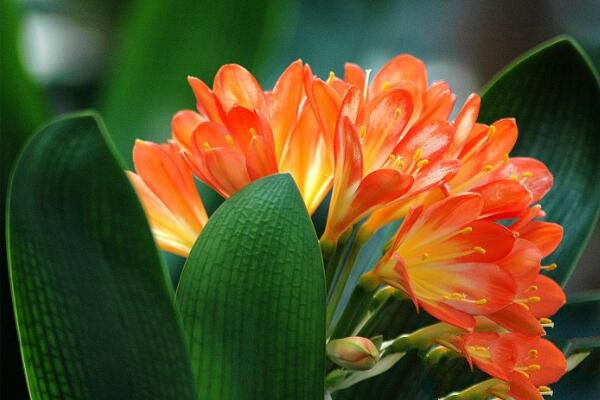
Many flowers in daily life do not need division, but the flower introduced today actually grows better after its sprouts are divided. Below, I will explain the method for dividing Clivia sprouts.
Once Clivia enters the mature stage, it can grow new sprouts. When the new sprouts are broken off and cultivated into new plants, this is called asexual propagation of Clivia. According to the position where the sprouts grow, they can be divided into stem-side sprouts, stem-base sprouts, and leaf-gap sprouts. These sprouts all grow from the stem. When the sprouts grow to 6-7 leaves, stem-base sprouts and stem-side sprouts can be divided. The best time for division is in spring and autumn, at the same time as repotting and changing the soil. Because the temperature is lower at these times, the wounds from division are less likely to become infected or rot. As for leaf-gap sprouts, you must wait until the leaves on the sprouting side naturally fall off and the entire sprout is exposed before considering handling them. By then, the sprouts are generally quite large.
Division methods:
You can use the method of cutting the sprout or breaking it off by hand. Cutting is mostly used for stem-base sprouts, where the connection between the offset and the mother plant is large and breaking by hand makes it hard for the sprout to keep roots. Use a knife to cut off the needed rhizome together with the sprout. This can increase the survival rate of the sprout. Breaking by hand is mostly used for stem-side sprouts or leaf-gap sprouts, because these two kinds of sprouts are on the outer side of the stem. During the operation, hold the mother plant's pseudobulb with one hand, pinch the base of the sprout with the other hand, and bend it gently. Pay special attention to keeping some roots on the new plant, as this makes it easier to survive. Be sure to apply plant ash, charcoal powder, or gentian violet to the wound after breaking it off for disinfection, and let it dry in the sun for 4-5 hours until the wound is dry before potting it. Note that the nutrient soil near the wound should be mixed with some river sand, and do not water too much. This helps the wound recover as quickly as possible and prevents rot.