When a pig vomits, what is the first thing a pig farmer should think of?
On the WeChat backstage, a netizen left a message that their pig had recently shown symptoms of vomiting, and during the process of connecting with pig farms, the author found that pig vomiting is also a problem troubling currentpig farmers. Today the author will review several diseases that may cause pig vomiting and the corresponding solutions. And we have invited senior veterinarian teacher Luo Huaixian to give everyoneprevention and controlsuggestions for pig vomiting.
First, check the pig's feed to see whether there are mycotoxins, because in winter the phenomenon of pig vomiting caused by mycotoxins is relatively more frequent. Among mycotoxins there is one called vomitoxin, which is also one of the chief culprits causing pig vomiting. Pigs are very sensitive to vomitoxin; a small dose of 50ug/kgb.w of vomitoxin can cause pigs to vomit,
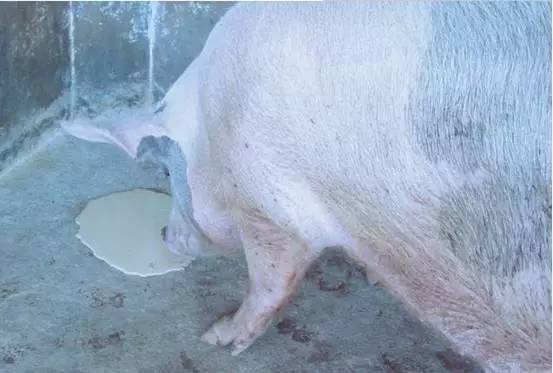
Pig vomiting caused by intake of feed containing vomitoxin
Clinical symptoms of mycotoxin poisoning
I. Suggestions
Q1 What are the factors that can generally cause pig vomiting?
Luo Huaixian: If gastroenteritis occurs, there will be vomiting and diarrhea; in general, mycotoxins account for the majority, and sometimes there is also gastric ulcer.
Q2 If it is caused by gastroenteritis, how should it be prevented and controlled?
Luo Huaixian: First control it so that no new cases occur, then control secondary infection.
Q3 If it is caused by mycotoxins, how should it betreated?
Luo Huaixian: It is recommended to use gentian violet to repair the gastric mucosa, use probiotics and oligosaccharides for detoxification, and use sorbitol to eliminate toxins.
II. Several other diseases that cause pig vomiting
Transmissible gastroenteritis
Porcine transmissible gastroenteritis is a viral infectious disease characterized by causing vomiting, severe diarrhea and other symptoms in piglets within two weeks of age, and its mortality rate is very high, but the mortality rate of pigs over five weeks of age is very low. After pigs of different ages are infected with transmissible gastroenteritis, their clinical symptoms are very different; for example, the clinical symptoms of growing pigs and finishing pigs infected with transmissible gastroenteritis are relatively mild, and they can survive after several days of anorexia or diarrhea; for pigs that have previously been infected with transmissible gastroenteritis and already have their own resistance, there may also be no symptoms of illness at all; the clinical symptoms of replacement gilts, foundation sows and boars are diarrhea or anorexia, and they can survive. Since there is still no effectivetreatmentmethod for this disease at present, therefore, attention must be paid to doing a good job of vaccine immunization in advance.
Porcine epidemic diarrhea
The symptoms of porcine epidemic diarrhea are similar to porcine transmissible gastroenteritis, and it is also an acute intestinal infectious disease caused by a virus, commonly seen in finishing pigs and piglets. This disease is seasonal, and in our country it often occurs from December in winter to February of the following year. Porcine epidemic diarrhea is similar to porcine transmissible gastroenteritis, and often manifests as an outbreak form of diarrhea. The main clinical symptoms of this disease are vomiting, diarrhea and dehydration, with feces being grayish yellow or gray, and the feces as thin as water. But the condition is slightly milder than the latter, and the speed of spread is slightly slower; generally, vomiting is likely after accidentally eating feces or suckling milk, and the severity of symptoms is also related to the age of the pig; the younger the age, the more severe the symptoms.
Porcine hemagglutinating encephalomyelitis
Porcine hemagglutinating encephalomyelitis can be divided into the encephalomyelitis type and the vomiting and emaciation type, with no regional restrictions, and it can occur in pigs of different ages. Encephalomyelitis mostly occurs in suckling piglets, especially piglets less than one week old. In the early stage of the disease, appetite decreases or even anorexia and cessation of eating occur; next, symptoms of lethargy and vomiting appear, accompanied by constipation, and in very few cases there is an increase in body temperature. In severe cases, the hair bristles, the limbs appear blue, there is sneezing, coughing, teeth grinding, and then gradually difficulty breathing, unsteady walking, blindness appears, the body becomes paralyzed, and finally coma leads to death. The symptoms of the vomiting and emaciation type are relatively mild; in the early stage there is an increase in body temperature, refusal to eat, constipation, a sharp drop in body weight, and a liking for drinking large amounts of water. In severe cases, the pig cannot swallow and has difficulty drinking water, and dies of dehydration after a few days. The morbidity and mortality of both the encephalomyelitis type and the vomiting and emaciation type are extremely high, and even if they do not die, they will stop growing.
Porcine pseudorabies
Porcine pseudorabies is caused by pigs being infected with pseudorabies virus, can occur in all four seasons, and has a wide incidence, among which the most important factor is the age of the pig. The most severe condition is shown in young pigs, and it easily causes massive death. After newborn piglets are infected with this virus, they mainly show obvious neurological symptoms, increased body temperature, persistent body fever, vomiting, lethargy, diarrhea, and even foaming at the mouth, difficulty breathing, rapid onset, and high mortality; once affected, almost all die. Weaned piglets infected with pseudorabies virus show symptoms such as diarrhea and vomiting. Adult pigs generally have mild symptoms, showing slight body fever, decreased appetite, coughing and other symptoms, and easily recover.
Gastroenteritis
Gastroenteritis is severe inflammation appearing in the surface layer of the gastrointestinal tract, generally caused by pigs eating moldy feed or accidentally eating sharp things, and it can occur in pigs of all ages. In the early stage, affected pigs only show indigestion, decreased appetite and lack of energy. In severe cases, vomiting occurs, and the vomit carries blood or bile, accompanied by symptoms of mild abdominal pain, bad breath, yellow tongue coating, and cold limbs. If timelytreatmentis not carried out, the symptoms intensify, with continuous diarrhea, and the feces appear watery.
Gastric ulcer
Gastric ulcer is divided into three types, acute, subacute and chronic, and can occur in pigs of any age. Acute gastric ulcer has no clinical symptoms, and pigs mostly die from gastric mucosal bleeding; pigs with subacute gastric ulcer have obvious anemia symptoms, weakness, anorexia, accelerated breathing, and black feces; at the beginning of the disease there is abdominal pain, teeth grinding, restlessness, and even vomiting, blood in the stool, and dry defecation; pigs with chronic gastric ulcer show decreased appetite or cessation of eating, and the feces appear coal tar-like.
Parasitic diseases
Porcine stomach nematodiasis is mainly caused by Ascarops dentata, Ascarops strongylina, Gnathostoma hispidum and Gnathostoma doloresi parasitizing in the stomach of pigs, thereby triggeringparasitic diseases. This type of disease is relatively common among endemic pig vomiting diseases, and its symptoms are not obvious, increasing thedifficulty of treatment. Affected pigs, especially young pigs, will have a large number of stomach nematodes parasitizing, thereby triggering inflammation of the gastric mucosa, increased thirst, decreased appetite, vomiting, emaciation, abdominal pain, anemia, chronic gastritis symptoms and so on.
Poisoning
Poisoning by chemical substances can also cause vomiting symptoms, such as inorganic antimony poisoning, tin poisoning, arsenic poisoning, fluorine poisoning, ethylene glycol poisoning and organophosphate poisoning, etc. Vomiting symptoms caused by drug poisoning will not only harm the gastrointestinal tract, but also affect the central system; the vomiting caused by poisoning is mainly piperazine poisoning and deworming drug poisoning, which will attack the gastrointestinal tract and blood, leading to mental depression, pale visible mucosa, red spots appearing on the skin of the limbs, emaciation, and affecting normal growth and development. (Source:Pig DiseaseTong Classroom)