Key Postpartum Tasks for Sows and Prevention and Treatment of Abnormal Conditions
Analysis of Key Postpartum Tasks for Sows and Prevention and Treatment of Abnormal Conditions
Check the afterbirth
Check whether the afterbirth has been completely expelled, and whether the number of afterbirths or umbilical cords is consistent with the number of piglets born. If the afterbirth is not expelled, inject 10 mg of diethylstilbestrol intramuscularly; after the cervix dilates, inject 30 international units of oxytocin intramuscularly every 30 minutes, for 2 to 3 consecutive times. After confirming that the afterbirth has been completely expelled, place 800,000 to 1,600,000 international units of penicillin deep into the birth canal.
Adopt appropriate anti-inflammatory methods
For first-litter sows, or sows with oversized or too many fetuses, or sows with difficult labor, the uterus is easily damaged. Anti-inflammatory treatment should be given in a 7-day course, with each dose based on 30,000 units of penicillin per kg of body weight injected intramuscularly, twice a day. At the same time, warm 0.1% potassium permanganate solution can be infused deep into the birth canal until normal recovery is achieved. For multiparous sows with a history of postpartum illness, the same method of medication as above should also be used.
For multiparous sows with normal spontaneous delivery, each dose should be based on 20,000 units of penicillin per kg of body weight, twice a day, for 20 consecutive days.
If a sow still discharges pus from the birth canal 1 week after anti-inflammatory treatmentTreatment:
First, infuse 200-300 ml of lukewarm 0.1% potassium permanganate solution into the uterus, and at the same time inject 5 mg of diethylstilbestrol intramuscularly to dilate the cervix; after about 30 minutes, inject 30 international units of oxytocin intramuscularly, once every 30 minutes, for 2 consecutive times. At the same time, inject a mixed solution of penicillin and streptomycin intramuscularly, combined with dexamethasone sodium phosphate injection for systemictreatment. Alternatively, place 100 ml of a mixed solution of 10% glucose saline + 800,000 to 1,600,000 units of penicillin deep into the birth canal, once a day, for 3 consecutive days; the effect is excellent.
For postpartum anti-inflammatory treatment, removing blood stasis and resolving stagnation, and retained afterbirth in sows, Chinese herbal medicine can also be mixed into the feed. Take 0.25 kg of fresh motherwort + 1000 ml of water, boil down to 300-400 ml, wait until lukewarm, add 0.2 kg of brown sugar, divide into morning and evening portions and mix into the feed, for 3 consecutive days; the effect is relatively good.
Feeding aspects
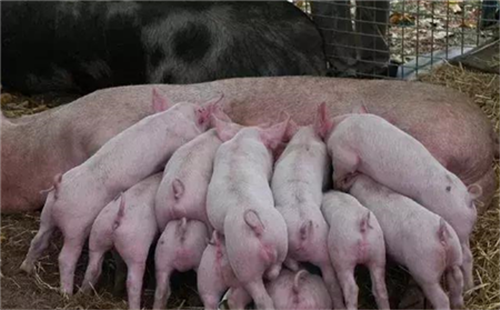
During farrowing, a great deal of physical energy is consumed and a lot of body fluid is lost, so the sow shows fatigue and thirst. Therefore, sufficient warm 1% saline should be prepared for the sow to drink. Within 8 hours after farrowing, the sow should not be fed, but warm water should be guaranteed; on the morning of the 2nd day, give liquid feed, because the digestive function of the sow after farrowing is very weak, and the feeding amount should be gradually restored. If the sow's digestive capacity recovers well and there are many piglets, after 2 days the feeding amount can be restored to the pre-farrowing level. If the sow has little or no milk, measures must be taken immediately to save the piglets; first prepare some milking-promoting porridge-type feeds, such as millet porridge, soup made from small fish and small shrimp, soybean milk, milk, etc., and feed 3 times a day. After milk production increases, gradually reduce and finally stop feeding. If there is still no effect, medication can be used to promote milk let-down.
Galactagogues:
Cowherb seed (Vaccaria hispanica) 40 g, akebia stem (Akebia quinata) 30 g, motherwort (Leonurus japonicus) 50 g, medicated leaven 40 g, common burreed tuber (Sparganium stoloniferum) 30 g, red peony root (Paeonia lactiflora) 20 g, fried malt 50 g, safflower (Carthamus tinctorius) 30 g. Mix these 8 herbs, add water and boil into a decoction, 1 dose per day, administered in 2 portions, for 2-3 consecutive days.
Management aspects
After the sow finishes farrowing, promptly remove contaminants. After wiping the walls, floor, and railings clean, spray 2% Lysol for disinfection, creating a hygienic, quiet, and fresh-air environment for the sow. Carefully observe the behavior of the sow and piglets after farrowing. After farrowing, the sow's uterus and birth canal sustain varying degrees of damage, and pathogenic microorganisms easily invade and multiply, bringing harm to the body. For commonly occurring diseases such as metritis, postpartum fever, mastitis, and piglet diarrhea, they should be detected early and treated earlytreatment, so as to avoid infecting the entire litter of piglets.
For example: if a sow is found to be listless, have reduced appetite, leave leftover feed, etc., the cause should be identified promptly. If it is caused by uterine inflammation, continuous injection of penicillin for 2 days can cure it, and generally it will not affect nursing the piglets. If piglet diarrhea is found, the source of infection should be eliminated immediately, and timelytreatment. Three days after farrowing, the sow can be released into a exercise area to move freely, so that it can be exposed to sunlight, recover strength, and promote digestion, which is very beneficial for increasing milk production. However, the activity time must not be too long, to prevent chilling and fright. In the author's survey of sow production in this county, it was found that the vast number of rural specialized sow-raising households generally do not pay attention to hygienic measures for postpartum sows, which very easily causes many common obstetric diseases in sows after farrowing, such as metritis, mastitis, agalactia syndrome, postpartum fever, tetanus, and postpartum anorexia, thereby affecting reproductive function, or even leading to culling. Paying attention to postpartum hygiene of sows can greatly reduce the occurrence of many postpartum diseases.
Prevention of common postpartum diseases in sows
1. Postpartum refusal to eat
For sows refusing to eat due to birth canal infection, 8 million units of penicillin and 4 million units of streptomycin can be mixed in 20 ml of analgin for 1 intramuscular injection, twice a day, for 2 consecutive days. For sows with anorexia caused by excessive feeding or feed that is too concentrated,concentrate feed, roughage, and green feed should be reasonably matched; sows should not be fed too fat or too thin.
2. Postpartum agalactia and hypogalactia
For those with hypogalactia, use 10 tablets of milk-promoting agent orally, for 3-5 consecutive days, or inject 20-30 units of oxytocin intramuscularly, 1-2 times. Wash the afterbirth and stillborn piglets clean, add water and an appropriate amount of salt, cook thoroughly, and mix into feed for oral administration in several portions. Earthworms, river shrimp, and small fish (especially crucian carp) all have milk-promoting effects and can be boiled and fed. A Chinese herbal formula can also be used: angelica (Angelica sinensis), cowherb seed (Vaccaria hispanica), globe thistle root (Rhaponticum uniflorum), and tetrapanax pith (Tetrapanax papyrifer) 30 g each, boiled in water, mixed with bran and fed. Once a day, for 3 consecutive days.
3. Postpartum constipation
The following methods can be usedfor prevention and treatment:
(1) Add green and succulent feed;
(2) Increase water intake and add artificial rehydration salts;
(3) 500-1000 ml of glucose saline and 3 ampoules of 10 ml vitamin C, for one intravenous injection;
(4) 1-5 ml of compound vitamin B, 2.4 million units of penicillin, and 30 ml of antondine, injected intramuscularly separately;
(5) Yeast, rhubarb soda tablets, multi-enzyme tablets, and lactasin 40 tablets each, ground into fine powder together, taken in 4 portions;
(6) Feed 25 g of baking soda (sodium bicarbonate) daily, divided into 2-3 times, administered in drinking water.
4. Postpartum uterine prolapse
In cases of incomplete uterine prolapse, 500-1000 ml of 0.1% potassium permanganate solution or physiological saline can be injected into the uterine cavity, using the pressure of the liquid to restore the uterus. For complete uterine prolapse, first remove feces attached to the mucosa, then wash with 0.1% potassium permanganate solution or 1% saline. For severe edema, wash with 3% alum water. During reduction, 2 people lift the uterus to the same height as the vagina, 1 person holds the uterine horn with the left hand and performs reduction from the tip of the uterine horn with the right thumb. Then form the hand into a cone shape and, like turning out intestines, push forcefully when the pig is not straining, turning it inward in sequence. Use this method to push the two uterine horns into the uterine body one after another, and at the same time push the uterine body into the pelvic cavity and abdominal cavity. After reduction is complete, suture the vulva with 2 stitches of thick silk thread to prevent prolapse again. Administer anesthesia if necessary. After reduction, inject antibacterial drugs for anti-inflammatory treatment.
5. Postpartum lameness in sows
If there is trauma, antibacterial and anti-inflammatory treatment is needed: use 10 ml of antondine, 3.2 million units of penicillin, and 1-10 ml of vitamin B, twice a day, intramuscularly; dexamethasone 10 ml, once a day; intravenous injection of 150-200 ml of 10% calcium gluconate, once a day, for 6-10 consecutive days. For those with severe pain, add 20 ml of 20% sodium salicylate during intravenous injection, and procaine block can be used at the painful lumbar area.
6. Postpartum paralysis in sows
Dry and crush pig bones or other fresh livestock and poultry bones, mix into feed and feed to pigs, 30 g per pig per day. For severe cases, inject 40-80 ml of 5-10% calcium chloride injection intravenously once. High-proof white liquor can also be applied to the skin and manual massage performed to promote blood circulation and restore nerve function. In addition, the content of wheat bran in the daily ration can be appropriately increased. For feeds relatively high in phosphorus such as rice bran, add roughage relatively high in calcium such as sweet potato vines, and feed as much green and succulent feed as possible; this also has a good effect on preventing sow paralysis. (Source: Today's Pig Farming)