What to do about root rot in Clivia? These solutions are very practical
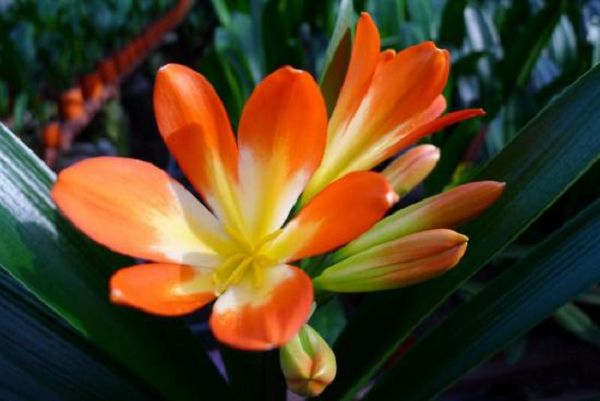
Summer is here, and fellow Clivia growers will once again sigh, "The season for Clivia root rot has arrived!" Dear reader, do you know why Clivia is prone to root rot in summer? The optimal growing temperature for Clivia is 5°C-25°C. In the hot and humid summer, if care is improper, root rot occurs very easily. So after Clivia roots rot, how should we handle it? Let's read on together to learn more.
How to deal with Clivia root rot:
If a grower finds that their Clivia has root rot, first knock the Clivia out of the pot, remove the soil, cut off the rotted roots, rinse the roots with clean water, then apply a 5‰ potassium permanganate aqueous solution to the rotted root areas (other disinfection methods can also be used, such as wood ash), then wrap all the leaves with newspaper or white paper, exposing the roots, and place the roots in sunlight for half an hour.
After treatment, if only a few roots of the Clivia have rotted, it can be directly planted into sterilized nutrient soil, with little watering for half a month, and growth can recover after one month. If most of the roots have rotted, it should be planted in a pot filled with fine sand and placed in a cool, shady spot to encourage new roots to sprout. After about a month and a half, when new roots have grown, replace the nutrient soil and normal care and management can resume. Other media can also be used, such as perlite, sphagnum moss, etc.
In summer, in addition to measures such as shading, ventilation, and cooling for Clivia care, one should also apply no fertilizer or less nitrogen fertilizer, control watering, and water only when dry, and so on, to control plant growth.
Clivia care:
1. Soil. Clivia prefers loose, fertile neutral or slightly acidic humus soil. The growing soil can be mixed from 65% humus soil, 20% clean sand, and 15% fine grass ash. Alternatively, you can dig up soil from rock crevices in the mountains, pine needle soil from under pine trees, or soil made from rotted larch leaves; fallen leaves that have rotted for years or grass debris also work. The general principle is that the soil should be rich in nutrients, and it is best if water drains through when watered.
2. Watering. Clivia prefers neutral water. Clean, unpolluted tap water, well water, river water, etc. can all be used for watering, but since fresh tap water and well water are lower in temperature than the soil and contain some impurities, they should be left to stand for 1-2 days before use. There is also quite a bit of know-how when it comes to watering. For young Clivia seedlings, the best method is to use a spray bottle to spray-irrigate. Point the nozzle upward and spray toward the leaves. The benefit of doing this is that besides achieving the purpose of watering, it also washes off dust, and at the same time leaves mist droplets on the leaf surface, ensuring a certain humidity on the leaf surface. In sunlight, water evaporation can lower the leaf surface temperature and prevent sunscald.
However, for Clivia that is currently flowering, spray irrigation cannot be used for watering, to prevent water from entering the leaf sheaths and causing heart rot. For Clivia in its flowering period, water can only be poured into the pot. So when should you water, and how much water is appropriate? This mainly depends on the ambient temperature where the Clivia is located. The general watering principle is "wet then dry, water only when dry, water thoroughly when completely dry." Watering thoroughly means making all of the Clivia's roots be at the same moisture level. Judging whether the water has been watered thoroughly cannot be based only on whether water flows out of the bottom of the pot. This is because sometimes after the potting soil dries, it hardens and shrinks into a clump; after watering, the water quickly flows from the pot wall to the bottom of the pot and runs out through the bottom hole, while the central part of the potting soil has not come into contact with even a tiny bit of water. If watering is stopped at this time, the Clivia leaves will wilt, and when it is in the process of shooting up a flower stalk, it can cause the stalk to be trapped.