Can high-level buds of Dendrobium be transplanted?
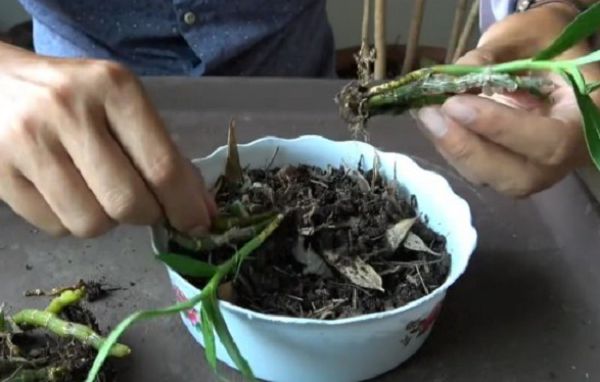
Dendrobium prefers a warm, humid, and well-ventilated growing environment. It is relatively shade-tolerant but not tolerant of direct strong light. In the wild, it usually grows on the bark of large tree trunks or in cracks between rocks. It is clear that Dendrobium is both a plant with fairly strong vitality and an epiphytic plant. Because of its extremely high edible and medicinal value, along with its good ornamental value, its economic value has multiplied, so it has been highly sought after since ancient times.
However, Dendrobium is also a plant with fleshy roots, characterized by being relatively drought-tolerant but not tolerant of waterlogging, and it generally absorbs and supplies nutrients through the roots in the growing medium. When the root system's ability to absorb declines, the plant is more likely to grow high-level buds from the stems, and white aerial roots will also grow from the base of the high-level buds.
Through these aerial roots, the plant absorbs nutrients, water, and oxygen from the air, thereby ensuring that the high-level buds can continue to grow. But the growth of high-level buds is also a sign of poor growth. Continually leaving them on the Dendrobium stems will only consume nutrients from the mother plant. When the mother plant's roots are not in good condition, this often accelerates the mother plant's decline toward death.
In this situation, some growers may think of using these high-level buds for transplanting to propagate new small Dendrobium potted seedlings. If possible, then we naturally make full use of the resources, avoid waste, and at the same time reduce the burden on the mother plant, avoiding greater losses for us.
As for handling these high-level buds, we can either cut them off and throw them away, but that wastes resources, since every part of Dendrobium is a treasure. Generally, they are picked off for use as food ingredients or tea, but that is not the only use. We can usually also transplant them into pots, thereby cultivating more new Dendrobium potted plants.
However, it is generally necessary to wait until the root system of these high-level buds has grown to a length of about 2 cm or more before transplanting, as this gives a higher survival rate. Even so, we do not want a normally growing Sansevieria trifasciata to develop high-level buds; for Dendrobium, this is a relatively dangerous signal. Even if we transplant and propagate the high-level buds, we also need to promptly replace the growing medium for the mother plant, since it is generally only when the growing medium has problems and becomes unsuitable for the mother plant's growth that it produces high-level buds.