Can carbendazim be sprayed on Diospyros rhombifolia during its fruiting period?
Carbendazim is a highly effective yet low-toxicity, systemic fungicidal and disinfecting agent. This fungicide offers excellent systemic therapeutic and protective effects on plants, primarily targeting diseases caused by fungi, with obvious antibacterial and fungicidal action. Many enthusiasts who grow flowers and plants in pots often use it, mainly to prevent wound infection through disinfection, thereby improving the survival rate of the plants.
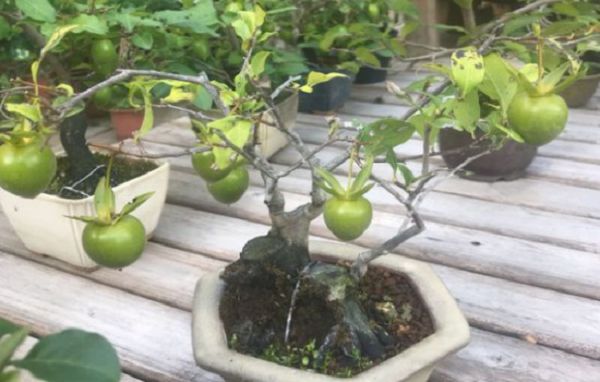
As an excellent material for making ornamental fruit bonsai, Diospyros rhombifolia requires proper fruit preservation and stabilization as an important measure to maintain its ornamental value. Many enthusiasts, when potting up Diospyros rhombifolia, usually need to use carbendazim to disinfect it and provide some guarantee for its survival.
The main function of carbendazim is disinfection and sterilization, inhibiting the growth of fungi. During the fruiting period of Diospyros rhombifolia, harmful bacteria may also breed due to an unsuitable growing environment. If the bacteria are allowed to spread, they will attack the fruits of Diospyros rhombifolia, thereby affecting the growth and development of the fruits and reducing fruit quality and yield.
Therefore, during the fruiting period of Diospyros rhombifolia, we can also appropriately spray a little carbendazim solution. But when using carbendazim, you must master the timing and control the concentration properly. If the timing is not well mastered or the concentration is not well controlled, it will be harmful rather than beneficial. In terms of timing, it is generally better to spray some carbendazim solution before the fruits of Diospyros rhombifolia begin to color.
To ensure that spraying carbendazim solution during the fruiting period of Diospyros rhombifolia is safer, you must pay attention to controlling the concentration. As for the concentration, it is appropriate to dilute 50% carbendazim with water at a ratio of 400-500 times, then spray it over the entire Diospyros rhombifolia plant by misting, covering it thoroughly and completely without leaving any dead corners, especially after the plant has been infected by pathogens.
However, carbendazim is, after all, a chemical agent. If used too frequently or at too high a concentration, it is also detrimental to the growth and development of the fruits. And if the concentration is too low, it often fails to achieve the disinfection and sterilization effect. Therefore, although a little carbendazim solution can be used during the fruiting period of Diospyros rhombifolia, it should not be used frequently, and the concentration must also be controlled well. If you are not sure, when the plant is growing normally, it is not recommended to use it.