A detailed guide to the care and management of jade plant bonsai
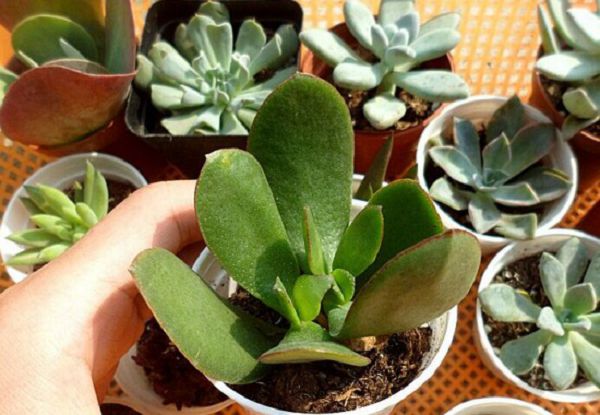
Jade plant, also known as jade tree (Crassula ovata, synonym Crassula argentea), originated in southern Africa. It likes a warm, dry environment with plenty of sunlight. It is not cold-hardy, fears strong light, and tolerates slight shade. A fertile, well-drained sandy loam soil is best. In winter, the temperature should not fall below 7°C.
The jade plant's crown is upright and elegant, its stems and leaves are emerald green, and it bears white flowers at the tips, making it very refined and distinctive. If combined with a pot stand and gravel to create a small bonsai, it is even more attractive when placed on a tea table or desk. It is usually propagated by cuttings. In the growing season, cut a plump, well-filled terminal branch 8-10 cm long, let it dry slightly, then insert it into a sand bed; it roots about 3 weeks after insertion. Single-leaf cuttings can also be used; after cutting the leaf, let it dry, then insert it into a sand bed, and it roots about 4 weeks after insertion. When the roots are 2-3 cm long, pot it up. In cultivation, repot every spring and add fertile soil.
Jade plant (Crassula ovata) grows fairly quickly; to keep the plant full and shapely, do not overdo water and fertilizer. During the growing period, water 2-3 times a week, and strictly control watering in the hot, humid months of July-August. In midsummer, if ventilation is poor or there is excessive lack of water, the leaves can also turn yellow and drop, so it should be kept in a semi-shaded place. After autumn begins, gradually reduce watering. When grown outdoors, avoid heavy rain washing over it, otherwise too much water accumulates at the roots and can easily cause root rot and death. Each year when repotting or bringing it indoors in autumn, pay attention to shaping and pruning so that the plant's form becomes more antique and elegant.
Jade plant is very easy to grow; the main thing is to give it plenty of sun. Do not water it too much. Jade plant is highly adaptable, extremely drought-tolerant, and not demanding about soil. During the growing period, it is enough to keep the potting soil slightly moist and the environment ventilated; do not water too much, and water again only after the soil has dried. Waterlogged potting soil will cause root rot. In summer, if the potting soil is too dry, it can also cause leaf drop. During cultivation, it generally needs little fertilizer; applying 1-2 times a year with diluted liquid fertilizer is enough.
Pruning: Jade plant can be pruned according to individual preference. If you prefer a round, full crown, prune away leggy branches and branches that are too overlapping and crowded, so that the outer crown is full and the inner branches are properly spaced. If the plant is old, with a thick old trunk and a crown that is not very round, it can be pruned, or styled as a stump bonsai, cutting away some branches and leaves according to the shaping requirements.
Light and temperature control: Spring and autumn are the suitable growing seasons for jade plant, with an optimum growing temperature of 20-30°C. In summer, when it is hot, shade it to avoid direct sunlight; when the temperature exceeds 38°C, growth slows. In winter, place it indoors in a sunny spot and maintain a room temperature of 7-10°C. If the temperature drops below 0°C, it will freeze and die.
Water and fertilizer management: During the growing period, water jade plant once every 2-3 days, but do not let water accumulate. In hot summer, strictly control watering and increase ventilation, otherwise leaf drop is likely. In winter, reduce watering, and keep the potting soil slightly dry. During the growing period, apply topdressing, generally 2-3 times a month with decomposed diluted cake liquid fertilizer. To keep the jade plant full and shapely, do not use too much water and fertilizer, so as to avoid leggy growth.
Pest and disease management: The main diseases are anthracnose and leaf spot, which can be sprayed with 70% thiophanate-methyl wettable powder at 1000 times dilution. Indoors, where ventilation is poor, stems and leaves are easily harmed by scale insects; spray with 40% omethoate emulsifiable concentrate at 1000 times dilution to kill them.
Warm reminder:
Jade plant contains toxic enzymes that release substances harmful to the human body, and the sap in its stems and leaves is strongly irritating to the skin, so it should not be placed indoors. When the human body comes into contact with the sap flowing from branches and leaves, it can cause skin redness, swelling, pain, and blistering; if it accidentally splashes into the eyes, it can cause blindness. If the jade plant is well cared for, it will bloom every year; if not, it may not bloom even once in 20 years.