How to care for winter jasmine (Jasminum nudiflorum) in winter? A detailed guide to care methods
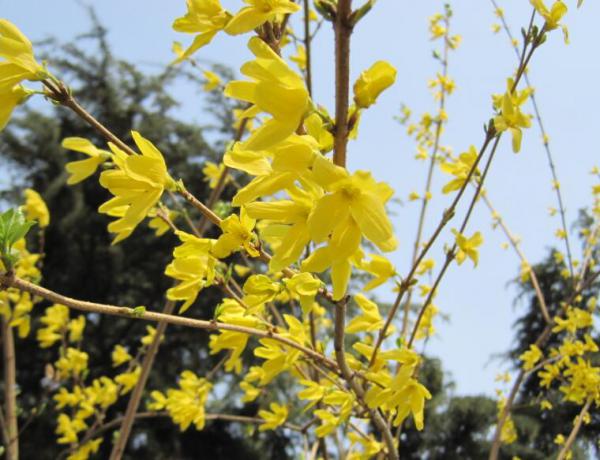
After the onset of winter, the temperature drop becomes gradually more pronounced, and many flowers need supplementary nutrients, good insulation and cold protection. As a flower that blooms relatively early in spring, winter jasmine benefits greatly from strengthened care now, which plays a key role in its early-spring blooming. If management is neglected in autumn and winter, the flowering period will be relatively late and the number of blooms will also be affected, so from now on care and management of winter jasmine should be strengthened.
If you want winter jasmine to form buds and bloom in early spring, then sufficient nutrients must be ensured before winter begins. At this point, start supplementing it with some balanced nutritional elements; when fertilizing at this time, it is best to apply a nitrogen-phosphorus-potassium compound fertilizer, so that the nutritional elements the plant absorbs will be more balanced, which can increase the plant's cold resistance and provide enough nutrition to sustain flowering the following spring.
To make winter jasmine grow robustly, you should also regularly apply some decomposed organic phosphorus and potassium fertilizer in the pot, such as decomposed soybean cake, chicken manure, bone residue and eggshells; these can all be buried around the soil, but be careful not to bury them on the root system, otherwise it can easily cause root burn and lead to rot.
As the saying goes, "All things grow thanks to the sun," and winter jasmine is also a light-loving plant; whether in the growth period or the bud-forming and flowering period, it needs sufficient light. Ensuring sufficient light during the growth period helps the plant produce chlorophyll and promotes the plant's absorption and utilization of nutrients, so that it can grow robustly and bloom abundantly.
In summer the light intensity is strong, so avoid direct strong sunlight to prevent the sun from scorching the leaf surface and causing the plant to dehydrate and wither. In autumn and winter, you can absolutely place a winter jasmine bonsai in a sunny spot to receive all-day sunlight; this can accelerate the plant's growth rate, thicken the branches and improve the ornamental effect.
In winter, with sufficient light, many can bloom from New Year's Day to the Spring Festival; if sunlight is lacking, the flowering period will be relatively delayed. So after winter begins, try to place the potted plant on a sunny balcony; such an environment will make the plant bloom earlier.
Reasonable watering should also be done in autumn and winter. After autumn begins, water evaporation is less and the plant's demand for water also decreases; when watering, do not do it too frequently, and do not let the potting soil stay too wet, otherwise it will cause root rot and, in severe cases, the death of the whole plant. In autumn, just keep the potting soil slightly moist; after winter begins, as long as the potting soil is not too dry, do not water frequently.
In addition, many gardening enthusiasts ask whether winter jasmine can resist cold. In fact, winter jasmine has a certain cold tolerance; in many northern regions, winter jasmine planted in the ground also overwinters in the open air. However, potted winter jasmine is best moved indoors after winter begins and placed in a sunny spot, and the indoor temperature should not be lower than 10°C; this allows the plant to form buds and bloom earlier.
The temperature has now dropped noticeably. Those growing winter jasmine at home should fertilize in advance, reduce watering and increase light exposure, and after winter begins move the bonsai indoors to a spot with sufficient light for care.