What are the causes and treatments of anorexia in sows?
What should you do if a sow develops anorexia? Causes and treatments of anorexia in sows
Below we will explain anorexia in sows to you in detail.
Recently, somepig farmersasked: A sow eats less feed after farrowing, becomes thin, and has rough hair - what is the cause? So, if a sow develops anorexia, how should it betreated? Below we will explain anorexia in sows to you in detail.
Postpartum anorexia in sows is a metabolic disorder.
The main clinical signs are: feed intake gradually decreases, progressive emaciation, constipation, dark yellow urine, low fever, sunken abdomen, dull coat, shrunken udder, and milk secretion gradually drying up. If nottreated in time, it will not only affect the piglets due to insufficient milk, causing malnutrition, stunted growth, and turning them into runt pigs or even death, but will also worsen the sow'sdiseasecondition, with appetite further declining or complete refusal to eat, and the appearance of difficulty walking, frequently lying down and unable to rise, occasional groaning, and a state of exhaustion.
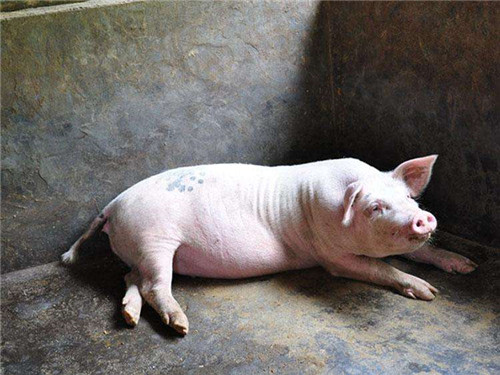
1. There are many causes of postpartum anorexia in sows, but the main ones are the following
① The sow usually has nutritional imbalance and is overly fatigued during farrowing, resulting in disordered appetite;
② The sow swallowed the afterbirth, causing indigestion;
③ The feed is too refined and green and roughage is insufficient, causing constipation and reduced appetite in the sow;
④ After farrowing, the sow's abdominal pressure suddenly drops, affecting normal digestive function;
⑤ Feeding is started too early after farrowing, with too much feed and feed that is too thick, so the sow develops anorexia due to indigestion;
⑥ The sow develops a postpartum infection and body temperature rises, leading to refusal to eat.
2. When carrying outtreatment, different situations should be distinguished and differenttreatmentmeasures adopted
① For sows whose body temperature is normal after farrowing, whose feces are dry or normal, but whose udder is relatively small, milk production is reduced, and anorexia or refusal to eat appears, the method of feeding kelp can be used fortreatment. That is: wash the kelp, chop it, put it in a pot and boil it until cooked, and after it cools slightly, let the sick pig eat it or feed it by drenching, once daily, 500 grams each time. For mild cases, generally 2 feedings can cure it, and for severe cases only 5 feedings are needed.
② For anorexia in sows caused by nutritional imbalance, excessive fatigue during farrowing, or feed that is too refined and indigestion, Chinese herbal medicine can be used fortreatmentThe prescription is: Codonopsis 20 grams, Astragalus 20 grams, mirabilite 50 grams, gypsum 5 grams, bitter orange 5 grams, tangerine peel 15 grams, Scutellaria baicalensis 15 grams, rehmannia 15 grams, licorice 10 grams, brown sugar 10 grams. Among these, mirabilite, gypsum, and brown sugar are wrapped separately. Decoct the other Chinese medicines twice with water, mix the filtrates, then dissolve in the mirabilite, gypsum, and brown sugar, and mix them all into the feed, letting the sick pig eat it all at once. Generally, on the second or third day after eating, the symptoms gradually lessen until recovery. If one dose still shows no obvious effect, another dose can be given after 5 to 6 days. If two doses are taken consecutively, it can generally be completely cured.
③ For anorexia or refusal to eat in sows caused by postpartum infection and elevated body temperature, antibiotics are needed fortreatment, in order to eliminate infection and lower body temperature. For example, inject penicillin, streptomycin, sulfonamides, etc. Once the sow's postpartum infection is cured, the sow's anorexia or refusal to eat is eliminated.