How to grow orange jasmine (Aglaia odorata)? A detailed guide to growing orange jasmine
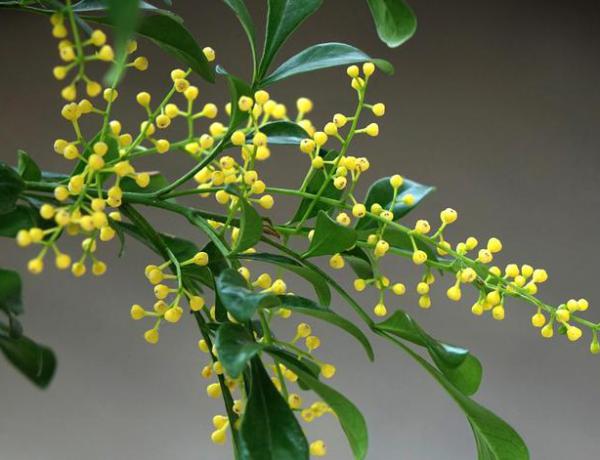
Orange jasmine, also called four-season orange jasmine, is an evergreen small shrub with golden-yellow flowers and a round, attractive shape. With proper care, it can bloom multiple times a year, and its peak and most fragrant blooming period is from July to August each year. Orange jasmine is a flower plant deeply loved by people. When it blooms, its fragrance spreads all around. Placed in a living room, porch or study, waves of floral scent drift over, fresh and elegant, intoxicating.
In the Yangtze River basin region of our country, orange jasmine is a very easy flower to keep alive. Generally, as long as it is placed outdoors in a sunny spot and given one thorough watering a day, it can bloom and be fragrant without special care. But in northern regions it becomes one of the most difficult flower varieties to grow, and the key problem is the pH of the water.
This is because orange jasmine prefers acidic soil. If it encounters alkaline soil or water with too high an alkali content, it will develop yellow leaves or even wither and die. Therefore, to grow orange jasmine well in the north, you really need to put in some hard work. So how exactly can you grow orange jasmine well? What care issues need attention? Today let us share together some basic knowledge on how to grow orange jasmine well.
1. Choose acidic loam soil for planting.
Orange jasmine is especially sensitive to the pH of the planting soil and likes to grow in loose, breathable, fertile, well-drained acidic sandy loam. Therefore, for household potted orange jasmine, it is best to choose weakly acidic loam with a pH of 5~6 for planting. Absolutely avoid soil that is heavily alkaline and highly sticky. To grow orange jasmine in the north, you can regularly apply a small amount of a 500-fold diluted ferrous sulfate solution to the potting soil, or add a few drops of rice vinegar when watering, which can improve the alkalinity of the potting soil and make it more acidic.
2. Watering and fertilizing must be appropriate.
Orange jasmine prefers moisture. During the growing season, watering should be moderate and appropriate. Absolutely avoid overwatering and water accumulation in the pot, which obstructs root respiration and over time causes root rot. During the flowering period, do not water too much either, to avoid flower and bud drop, but it should not be too dry either. If watered too little, leaf edges will dry out.
Therefore, in the high-temperature summer season, in addition to watering orange jasmine every morning and evening, you should also mist the branches and leaves from time to time and spray water on the ground around the plant to increase humidity and lower temperature. Orange jasmine likes fertilizer. During the growing season, apply thin cake fertilizer once a week, and appropriately increase the application of phosphorus fertilizer, which can promote bud formation and make the flowers more numerous and brilliant, with an even more captivating fragrance. Stop fertilizing at the end of September.
For the last fertilization, apply a compound fertilizer mainly based on potassium fertilizer once, to supplement nutrients for orange jasmine and enhance its disease resistance and cold resistance. Although orange jasmine likes fertilizer and water, after being brought indoors to overwinter, when the temperature drops to 12°C, orange jasmine enters dormancy, and respiration and transpiration have already decreased. At this time, absolutely do not fertilize again, and also reduce the amount of watering; watering once every 15 days is enough.
3. There are requirements for temperature and light.
Orange jasmine prefers a warm environment with sufficient light. It is not cold-tolerant and is slightly shade-tolerant. The winter temperature must not be lower than 10°C; below 10°C will cause cold damage. The suitable growing temperature for orange jasmine is around 20~25°C. Orange jasmine has poor cold tolerance. Each spring, it is best to move it outdoors for care from late April to early May. Never move it outdoors too early, because after overwintering, orange jasmine is relatively weak.
Spring temperatures vary greatly. If a late spring cold snap occurs or a northwest wind blows, it is very easy for the plant to suffer cold wind damage, causing leaf drop or even plant death, so be sure not to move it outdoors too early. Normally, when caring for orange jasmine, it is best to place it in a spot with relatively sufficient sunlight, such as a south-facing balcony, south-facing windowsill, courtyard, and so on. But at noon in summer when sunlight is strong, it still needs slight shading to avoid scorching the plant's leaves and flower buds.
4. Ventilation and air flow must be ensured.
Orange jasmine likes a growing environment with good ventilation and strong soil breathability. Therefore, during normal care, open windows frequently for ventilation and air exchange; if conditions permit, it can be placed outdoors for growing. For balcony care, open windows often for ventilation to avoid a stuffy, hot summer with high temperature, high humidity and no air flow, which causes poor respiration in orange jasmine and wilting, yellowing and falling leaves.
5. Timely pruning must be done well.
If nutrition is sufficient and normal care and management are in place, orange jasmine will grow very quickly and vigorously. It can grow 3~5 times of new shoots each year, and will grow taller and taller. At the same time, it will also grow many side branches and become denser and denser. Especially for household potted orange jasmine, if it grows too tall and too dense and room space is limited, timely pruning is necessary.
The method is: at any time, cut off overly long branches to make the plant shorter; at any time, remove inner side branches and side branches growing inward, to make the density more reasonable, which helps ventilation and air flow and increases light. Branch pruning can be done at any time, with the goal of being aesthetically pleasing and the plant shape being rounded and full.