What causes cockscomb to not bloom?
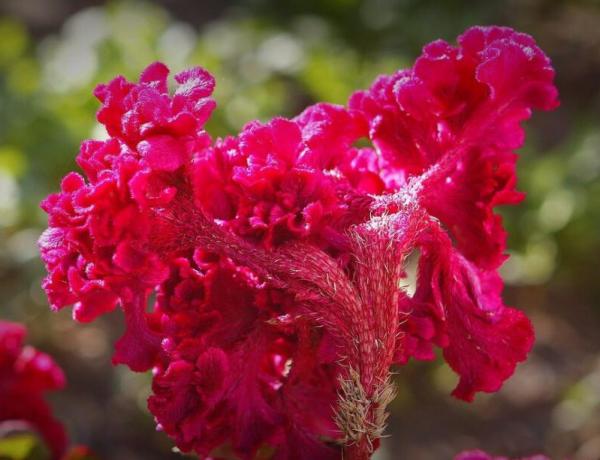
Cockscomb, also known as big rooster flower, small-head cockscomb, and pheasant-tail cockscomb, is an annual herbaceous plant. Unlike most flowers, its blooming period is not in spring when all flowers compete in beauty, but in summer and autumn. Its flowers come in many colors, with red, purplish red, and orange-yellow being the most common, and its flower shape is unique, with inflorescences in spikes shaped like a rooster's comb, giving it high ornamental value.
Although cockscomb is beautiful, it is not easy to care for, especially for flower lovers with little planting experience, for whom it is even more difficult. They often care for it for years without ever seeing it bloom, and they feel especially puzzled. To be honest, carefully tending cockscomb for years and still not having it bloom really should not happen; even a wild grass growing by the river should have bloomed several times over so many years.
So why does cockscomb not bloom? What is being done wrong? Below I will explain the three main reasons that cause cockscomb not to bloom, along with the corresponding solutions, as well as two points to note while caring for cockscomb, hoping to help flower lovers.
Cockscomb not blooming mainly has the following three main reasons:
1. Insufficient light
Cockscomb is a flower that likes sun but fears strong light. During its growth period, it needs to be fully exposed to sunlight to meet its light requirements, so that it can produce more nutrients for the plant to use, its flower buds can differentiate better, and it can develop more flower buds. Only when these conditions are met can it bloom beautiful flowers.
If it is kept in a dark environment for a long time, it cannot carry out photosynthesis well, so it cannot produce more nutrients for the plant to use, its flower buds cannot differentiate, and flower buds are even harder to grow. Under such circumstances, getting it to bloom is basically impossible.
It should be noted that although cockscomb likes sun, it avoids strong light. Too strong light will scorch its leaves, speed up leaf water evaporation, and make the leaves become dry, yellow, and wilted. Its flower buds will also gradually fall off because of strong light exposure, leading to fewer flowers or even no flowers.
Solution: In winter, spring, and autumn, keep cockscomb under the sun all day to receive direct sunlight and meet its light requirements. After summer arrives, do not put it under the sun for exposure; instead, place it in an environment with plenty of bright indirect light for care. You can also avoid the high-temperature period by letting it see the sun every day before the sun is directly overhead in the morning and when the sun is about to set in the afternoon, and keep it in a cool, ventilated place for care during the rest of the time.
2. Watering too much
Cockscomb is a plant that fears waterlogging. During its growth process, water needs to be applied scientifically and reasonably according to its growth needs to meet its growth requirements. If water is applied blindly and in large amounts, causing the soil to remain overly wet for a long time or even waterlogged, then over time it will hinder root respiration, gradually rot its roots, and affect the normal function of the roots, making the roots unable to absorb and transport water and nutrients for the plant to use. Because the plant cannot get sufficient nutrients and water, it will gradually wilt, and its leaves will turn yellow and fall off, so it will not have enough energy to develop flower buds or bloom.
Solution:
1. During the growth period of cockscomb, the watering frequency can be appropriately increased to meet its growth needs, about once every three days, keeping the soil slightly wet.
2. Summer and autumn are the blooming period of cockscomb. To ensure the flowering quality of the plant and extend its blooming time, the amount and frequency of watering can be increased at this time to meet its water needs, preferably watering once a day, so that the flowers the plant produces are colorful and graceful.
3. After winter arrives, the temperature is relatively low, and cockscomb's demand for water is also greatly reduced. Basically, watering just a little once every more than a week can meet its growth needs.
3. Insufficient nutrients
Whether it is cockscomb or other flowers and plants, if you want them to bloom beautiful flowers, you need to apply fertilizer in time so that the root system can absorb sufficient nutrients. Only in this way can the plant grow sturdy and have more energy to bloom.
If its nutritional needs are not met and the plant remains in a "starving" state for a long time, its growth will become worse and worse, its stems will become especially thin, and its leaf color will become lighter and lighter. Under such circumstances, it is impossible for it to bloom beautiful flowers.
Solution: Before planting cockscomb, do the base fertilizer work well so that the plant can absorb sufficient nutrients from the soil for its growth. During the vigorous growth period, apply phosphorus and potassium fertilizer about once every ten days. After the flower buds form, appropriately increase the fertilizing frequency; you can apply liquid fertilizer once a week, which can better promote flower bud differentiation and improve flowering quality. After the seeds form, reduce the number of fertilizations so that the seeds can mature better.
If you want cockscomb to bloom more and more beautiful flowers, in addition to doing the above three aspects well, you also need to pay attention to the following two points:
1. Manage temperature well
Cockscomb is a plant that likes warmth, and its most suitable growth temperature is around 25 degrees. Too high a temperature will "harm" the plant's root system and also speed up leaf water evaporation, so the leaves cannot get sufficient water supply and gradually become dry, yellow, and wilted. Too low a temperature will affect the plant's growth and may even freeze the plant, causing it to wither.
Therefore, managing temperature well is very important for the growth of cockscomb. In the hot summer, you can take some shading and cooling measures for cockscomb, and you can spray some water around the plant with a spray bottle every morning and evening to lower the surrounding temperature. After the cold winter arrives, promptly move the cockscomb indoors and take good insulation measures, trying to keep the temperature above 20 degrees.
2. Choose suitable soil for planting
Cockscomb is not very strict about soil requirements, but to help it grow better and make its root system more developed, it is best to choose loose, fertile sandy soil with good drainage and aeration for planting. This type of soil better matches its growth habits and is less prone to compaction and hardening, which is very beneficial to the growth of cockscomb.
If cockscomb has been cared for for years and still does not bloom, it is actually caused by improper care methods. As long as management is strengthened in the three aspects of light, watering, and fertilizing, cockscomb can bloom sooner. And if you want cockscomb to bloom more and more beautiful flowers, you also need to manage temperature well and choose suitable soil for planting. Only by doing all aspects well can the plant grow vigorously and bloom beautifully.