How to grow cherry tomatoes? Detailed guide to cultivation methods and precautions
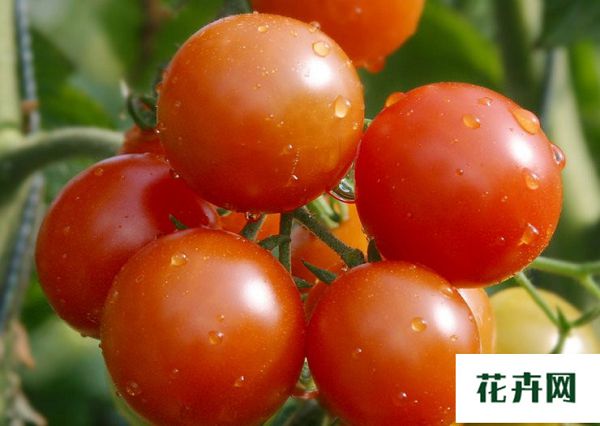
Also known as small tomatoes or cherry tomatoes, they have high nutritional value and a unique flavor, offering both eating and ornamental value, and are deeply favored by consumers. Sometimes when we want to eat some small tomatoes, we have to go to a lot of trouble to buy them from a fruit stall, the journey is long, and we don't know whether they are pollution-free, so there is a lack of guarantees. Let me teach you a trick: grow small tomatoes on your balcony, and they are absolutely pure natural food.
1. Preparation before planting
Soil preparation: If the soil is dug back from a flowerbed or field, first sift it and crush all the large clumps. Then disinfect the soil; there are generally three ways. The quicker way is to wrap the soil well, find an abandoned pot, and steam it for 30 minutes; the high temperature will remove pathogens in the soil. Spreading the soil in a thin layer and drying it in the sun for 5 to 10 days can also achieve a disinfection effect. If you are not in a hurry, you can wait until summer, moisten the soil, seal and wrap it, and dry it in the sun; this way the temperature inside the soil becomes especially high and can kill microorganisms. Finally, mix fertilizer into the soil in a certain ratio. The organic fertilizer mixed in must be fermented and fully decomposed, and chemical fertilizers should be used as little as possible.
Seedling stage: First is seed disinfection. Soak the seeds in warm water at 55°C for 15 to 20 minutes, stirring constantly, with the water amount about 5 times the volume of the seeds. After cooling to 28°C, maintain this temperature and soak for 12 to 24 hours, changing the water once or twice during this period. Next is germination. Drain the disinfected seeds, place them on a wet towel and wrap them up, put them in an environment at 28 to 30°C, rinse them with clean water once a day, and in 1 to 2 days the seeds will germinate.
2. Planting
Dig a 1 cm deep hole in the soil, put the germinated seeds in, cover with 0.5 to 1 cm of loose soil, and maintain the temperature at around 25°C. It is best to water this soil thoroughly the day before. Before the seedlings push through the soil, water more to keep the soil moist. After three to four days, the seed's two cotyledons will emerge from the soil. Then keep the daytime temperature unchanged, and lower the nighttime temperature to around 20°C, until the number of leaves increases to four or five. After that, when watering, you need to water only when dry and then water thoroughly, that is, water after the soil has dried, and water thoroughly each time. After each watering, use a small hook to loosen the soil about 5 cm deep.
3. Transplanting
After the seedlings grow 4-5 leaves, they can be transplanted. Dig the seedlings out of the original small pot with soil, dig a hole in a large flower pot, place the entire small soil ball in, and water thoroughly. Transplanting allows the seedlings to have their roots broken and then regrow, so the crop will grow better. In principle, after transplanting, do not water or apply additional fertilizer, but this also depends on the actual situation; if the soil is too dry, supplement some appropriately.
4. Flowering and fruiting
About 15 days after transplanting, the tomato seedlings have already begun to grow in the large pot. After the plant begins to flower and set fruit, water thoroughly and apply additional fertilizer, and afterward, every 7 to 10 days, water and apply additional fertilizer, and loosen the soil. Maintain the temperature at 25 to 30°C during the day and 15 to 20°C at night. When it grows to about 40 cm, you need to make a support to let the plant climb along the support and continue growing, preventing lodging. Note that the support must follow the original growth direction and must not be twisted.
Tomatoes are bisexual flowers and generally self-pollinate, but you can also gently tap the plant with a bamboo pole to promote pollination. In addition, when the plant's branches grow to about 10 cm, promptly remove the side shoots to prevent the side branches from growing wildly and affecting fruit growth. [span]From sowing to harvest takes about 3 months.
Soil
Q: What exactly is the difference between ordinary soil, commercially sold growing media, and nutrient solution, and which is better for growing vegetables?
A: This involves the concepts of soil cultivation and soilless cultivation. First, growing crops with traditional field soil is called soil cultivation. Before cultivation, the soil needs to be mixed 1:1 with fully decomposed organic fertilizer or peat before use. The decomposition referred to here means the organic fertilizer has no smell at all; otherwise it will burn the seedlings.
Second, growing crops with nutrient solution or with growing media proportionally blended from peat, vermiculite, perlite, etc. is called soilless cultivation. Nutrient solution is very hard for ordinary citizens to buy, and even if bought, without professional equipment it is not suitable for growing vegetables, but is more suitable for use as a top-dressing fertilizer.
Third, commercially available pre-mixed growing media have the advantage of not needing base fertilizer mixed in, no disinfection, and good air permeability. The growing effect is no different from ordinary soil.
In addition, hydroponics is best done with a special device in which the nutrient solution circulates and flows, ensuring respiration of the plant roots. Such devices come in many forms, such as ladder frames, columns, and wall-mounted types. The purchase price is about 1,000 yuan.
Containers
Q: What kind of containers are actually good?
A: Containers are generally chosen from whatever is available locally; as long as there is a drainage hole, they can be used. However, clay containers are more recommended because they have better air permeability. In addition, the size of the container chosen should depend on the type of vegetable. Generally speaking, fruiting vegetables require a flower pot with both diameter and depth above 30 cm; leafy vegetables can use a flower pot with a diameter of 15 cm to 20 cm and a depth above 20 cm.
Tips: Pest and disease control
Home cultivation generally does not have pest or disease problems. Usually, pay attention to controlling humidity so it is not too high and water appropriately. If small insects appear on the plants, you can regularly spray soapy water or water soaked with tobacco shreds at a 15-day interval; promptly remove rotten fruit and cut off rotten leaves.