How to propagate Christmas cactus by cuttings, it can quickly take root and survive even in winter
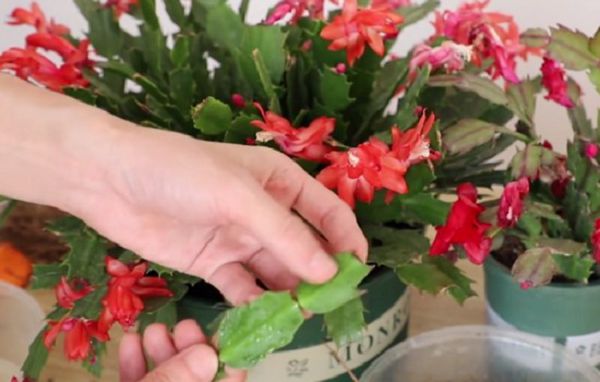
The Christmas cactus blooms abundantly and beautifully, and the sight of it bursting into full bloom is stunning, making it an excellent houseplant. That is why many plant enthusiasts like to grow it as a potted plant at home. Moreover, its propagation method is very simple; generally, you just cut off a stem segment and it will easily take root and survive after being planted as a cutting. So the Christmas cactus is mostly propagated into young plants by cuttings, with a particularly high survival rate.
Not only that, the Christmas cactus also has a particularly long flowering period, blooming continuously from October in the autumn of the previous year all the way to February of the following spring, and winter happens to be its peak blooming season. So being able to enjoy its beautiful blooms in the cold winter is very heartwarming and makes people forget the cold. But besides blooming in winter, it can even be propagated by cuttings in winter in the southern regions of our country.
The Christmas cactus is generally more suited to being propagated by cuttings in spring and autumn, but if we carry out the cutting process as described here, it will also take root and survive relatively quickly in winter. This is because winter in the south, compared to the north, is cool but not cold, and warm but not hot. Let us take a look below at how we propagate the Christmas cactus by cuttings in winter.
To propagate the Christmas cactus by cuttings, we first need to use loose, breathable soil with strong water permeability. Generally, sandy soil mixed with pine needle soil, or leaf mold mixed with sandy soil, or garden soil mixed with vermiculite, are recommended. Although the soil mixing methods vary, they are all very suitable for propagating the Christmas cactus by cuttings. And good soil is more conducive to the cuttings taking root and surviving.
The stems of the Christmas cactus are made up of many stem segments. We can either cut off a stem with several stem segments for planting as a cutting, or cut off just a single stem segment as the cutting; usually both are feasible. But to avoid wasting material, we generally just cut off one stem segment for leaf cuttings. However, no matter how it is planted, you must first dry the wound on the stem segment in advance. Generally, drying it for 5-7 days is enough before using it for cuttings, thereby reducing the chance of wound infection after planting and increasing the survival rate.
Moreover, in order to achieve a very high survival rate when propagating the Christmas cactus by cuttings in winter, it is usually recommended to apply some rooting powder to the base of the end of the stem segment used for planting, to speed up rooting. Then insert the leaf into the moist substrate, but be careful to control the depth of the part buried in the substrate appropriately. By no means insert it too deep or too shallow, otherwise it will affect rooting. Generally, inserting about half a leaf is enough.
After completing the cutting, place it in a cool, ventilated environment for care, and during this period be careful to control temperature and humidity. Generally, the ambient temperature is required to stay above 10°C, preferably around 15°C. If the temperature is below 10 degrees, the plant's vitality will decline, thereby affecting the rooting speed; if the ambient temperature is below 5°C, it will often increase the chance of frost damage. Also, you need to regularly mist the substrate to keep it moist.
But to help keep it warm and moist, it is recommended to cover it with film or a bag after planting, so it is neither easily frost-damaged nor easily dehydrated, thereby speeding up leaf rooting. With about half a month of careful care, it will take root and survive. One month after planting, we can gradually provide it with light and consider fertilizing as appropriate.