How should hollyhocks be handled before winter
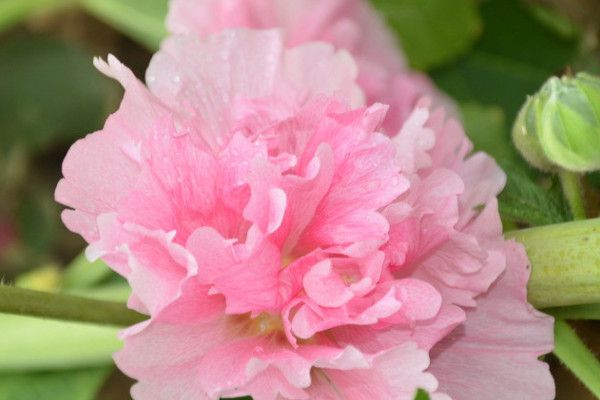
Before winter, hollyhocks need some of the dead branches removed; cut off the withered parts and the dead stems, leaving the roots at ground level. At this point, watering should be reduced or stopped to keep the soil dry. When the temperature drops too quickly, the ground-level root area of the hollyhock should be covered with straw, plastic film and other coverings to achieve a warming effect.
How to handle hollyhocks before winter
1. Remove dead branches
Before winter arrives, some of the hollyhock's branches and stems will dry up or even wither. This is normal. Because the temperature is too low, this phenomenon will gradually spread to the aboveground parts of the whole hollyhock, and the stems will wither and die. There is no need to leave them attached to the main root. At this point, they should be cut off with scissors or a knife at the part close to the root at ground level.
2. Reduce watering
In winter, hollyhocks enter a semi-dormant state. Since the aboveground parts have withered and been cut off, they no longer need water supply, so both the amount and frequency of usual watering should be reduced as winter approaches. Too much water will cause waterlogging or freezing, harming the roots that are still alive. Once winter formally begins, watering should be stopped, and you should wait for the temperature to rise again for the roots to send out new shoots.
3. Wrap the roots
Hollyhocks generally do not need to be covered. They can survive safely at temperatures between minus 5°C and minus 10°C, but when the temperature drops too much, to prevent the hollyhock from freezing to death due to low temperatures, the ground-level root area where the dead stems have been removed needs to be covered with straw to keep the roots warm. Plastic film can also serve the same purpose.