Tips for fast rooting and sprouting of kalanchoe cuttings, fertilize after half a month
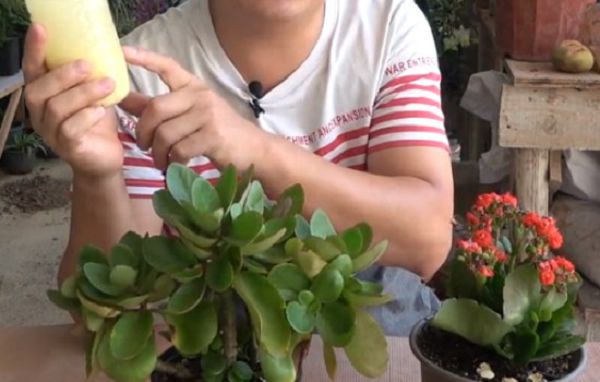
Kalanchoe (Kalanchoe blossfeldiana) is very suitable for propagation by cuttings to produce small potted plants, and you can either take stem cuttings or leaf cuttings, with the survival rate usually very high. But compared with leaf cuttings, stem cuttings have more advantages in sprouting and blooming, because kalanchoe grown from leaf cuttings usually sprouts very slowly, normally taking several months, so we need to wait with enough patience.
After rooting and sprouting, kalanchoe grows relatively quickly, and generally after about 3 months of care it can bloom. And its flowering period is especially long, blooming one flush after another, with a single flush usually lasting 1 month, and one full flowering cycle reaching as long as 2 months. So if you take stem cuttings, not only do they sprout faster, they also bloom earlier than leaf cuttings. In terms of propagation efficiency, stem cuttings are superior to leaf cuttings.
It can be seen that kalanchoe grown from stem cuttings roots and sprouts faster than from leaf cuttings, usually taking only about half a month for the stems to root, and after rooting they sprout quickly. So generally, half a month after taking kalanchoe stem cuttings, we can fertilize them, which better promotes the growth of the cuttings.
But if you fertilize kalanchoe after it roots, you must focus mainly on supplementing nitrogen, because nitrogen is the most important nutrient element for promoting plant growth. At this time, supplementing some nitrogen to rooted kalanchoe cuttings can speed up root growth and also make the cuttings sprout more quickly. And it is best to cut a robust stem from the mother kalanchoe plant as the cutting, as the survival rate and sprouting rate are often much higher.
But to improve the survival rate of cuttings, after cutting the stem you should not rush to plant it; instead, let the wound dry before taking the cutting, and generally after 3-4 days the wound will become dry. This way, after planting, wound infection is unlikely, and it will quickly survive, with roots visible in at most 2 weeks.
After the kalanchoe stem cuttings have rooted, we can give them a little light fertilizer. But at this time its roots are very young and fragile, so the fertilizer must be chosen well, and the concentration must also be controlled well. Generally at this time, to promote growth, we mainly supplement a little nitrogen fertilizer, and it is best to choose mild soybean water, which has a very high nitrogen content and also contains a certain amount of phosphorus and potassium nutrients.
As for concentration and frequency, generally dilute it with clear water at 1:500, then keep watering it once a month. In this way, the kalanchoe can maintain vigorous growth. Of course, the care environment must also be suitable, requiring temperature and humidity conditions to be met, and there should be some scattered light, and ventilation conditions should also be good, so that kalanchoe cuttings will grow quickly and healthily.