Why is the incidence of porcine respiratory disease complex so high?
Why is the incidence of porcine respiratory disease complex so high?
In spring, the temperature difference is too large, causing great stress to the pig herd. In addition, to keep warm, many barns keep doors and windows tightly closed, causing the ammonia concentration and the number of bacteria and viruses in the barn to increase, causing pigs to develop symptoms of respiratory disease such as elevated body temperature, difficulty breathing, coughing, panting and abdominal breathing, resulting in the emergence of porcine respiratory disease complex, which is extremely harmful to pig farms. Mr. Qiao Hanjian, head of the Jiangsu province base station of Jinzhu Mall, based on his many years of experience in veterinary drug distribution, proposed that adding four types of drugs - amoxicillin, doxycycline, florfenicol and antiviral drugs - to the feed can effectivelyprevent and treatrespiratory diseases on pig farms.
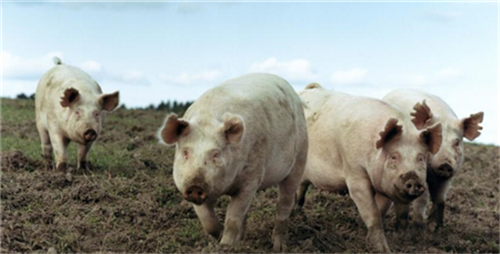
The incidence of porcine respiratory disease complex is high, and it is mostly mixed infection!
It is understood that porcine respiratory disease has become a major problem in intensive pig farms, with a general incidence of 30% to 80%, and a mortality rate of 5% to 30%, or even higher. In mild cases, it causes slow or stagnant growth of the pig herd, reduced feed conversion, extended time to market, decreased production performance and a higher culling rate; in severe cases, it causes mass death.
A reporter checked relevant materials and found that in 2007, Zhang Sihua et al. conducted a seroepidemiological survey of 420 serum samples from 20 large-scale pig farms and found that porcine respiratory disease complex infection was widespread, but the infection status differed between farms and between pig herds. The main pathogens were porcine reproductive and respiratory syndrome virus with a positive rate of 33.1%, porcine circovirus type 2 at 90.5%, Mycoplasma hyopneumoniae at 34.8%, Actinobacillus pleuropneumoniae at 72.7%, etc. In 2010, Liu Cuiquan et al. reported that single infection accounted for 28.11%, mixed infection accounted for 43.77%, and double, triple and quadruple mixed infections accounted for 28.11%, 12.46% and 3.20% respectively. Among them, the mixed infection form of blue ear disease + porcine circovirus type 2 (+ others) was more common, accounting for 52.03% of all mixed infection samples.
Porcine respiratory disease——“Raising is more important than prevention, and prevention is more important than treatment”
The causes of porcine respiratory disease are complex. It can be caused by a single factor such as infectious pathogens, poor environmental conditions, drug-induced factors, and health care and immune factors, or by a combination of factors, leaving pig farm owners exhausted in dealing with it. Mr. Qiao Hanjian told reporters that when respiratory diseases occur on a large scale,treatmentno longer has an obvious effect, and one can only watch the pig farm suffer losses. Therefore, respiratory diseases on pig farms should still focus on prevention,treatmentas a supplement, and combining raising with prevention.
“In seasons with a high incidence of respiratory diseases, such as seasonal transitions and large temperature differences between day and night, adding 1 kg each of amoxicillin, doxycycline, florfenicol and antiviral drugs per ton of feed can effectively prevent the occurrence of porcine respiratory disease complex on pig farms.” Mr. Qiao Hanjian mentioned that at the same time, daily management work should be done well from the following three aspects to improve the immunity of the pig herd and achieve combining raising with prevention: First, strengthen feeding management. Ensure each pig barn remains clean and tidy, strengthen warmth preservation in winter and cooling in summer, and if viruses are found, isolate andtreatthem promptly; for severely ill pigs, cull them promptly. Second, strengthen disinfection work. Formulate reasonable hygiene and disinfection measures, and disinfect pig barns regularly. Third, rationally match the daily ration. According to the nutritional needs of pig herds at different stages, ensure the pig herd is at a balanced and reasonable nutritional level, thereby significantly improving the disease resistance of the pig herd.