To reduce the risk of virus transmission through feedback feeding, the key lies in correct operating procedures
The correct operating procedures for reducing the risk of virus transmission through feedback feeding - the key lies in these few steps
Is feedback feeding actually effective? Do the benefits outweigh the risks, or do the risks outweigh the benefits? The author once discussed the issue of feedback feeding with a veterinary expert who has been active in Europe year-round. He said that in European pig farms, PED control is mainly based on feedback feeding, and the feedback feeding operation continues until the last sow shows diarrheal symptoms.
Another professor from Thailand said that he believes that as long as more than 30% of sows show diarrheal symptoms, the feedback feeding is successful, because the diarrhea virus has already spread within the pig house, and infection is certain; it is just that some sows may have already been infected with the virus before, and reinfection only serves to activate memory cells without producing diarrhea. Are European pig farms not afraid that feedback feeding will bring the risk of spreading other infectious diseases? Some domestic experts would say, how can the pathogen environment in Europe compare with that in China? Why can't domestic pig farms make the pathogen environment simpler? In the final analysis, biosecurity has not been implemented properly.
The author is not a supporter of feedback feeding, but also does not think it is a particularly dangerous operation. If the disease is to be spread within the pig farm through feedback feeding, then how did these pathogens get into the piglets? Of course, the sows transmitted them. Did the viruses in the sows not spread to one another during gestation? Since they are viruses, even if their transmissibility is not as strong as that of foot-and-mouth disease virus, it is still enough to spread throughout the entire sow herd during the whole gestation period. Of course, accurately finding feedback feeding materials is also very helpful for reducing the risk of spreading other unnecessary pathogens.
1. Basic operations of feedback feeding
1. Selection of feedback feeding materials
The selection of feedback feeding materials is the foundation and key to whether feedback feeding can succeed. Select piglets within 7 days of age in the farrowing house that show obvious symptoms of epidemic diarrhea. Symptoms include vomiting first and then diarrhea, severe dehydration, and a dirty yellow, damp body.
Select live piglets, first wash the skin all over the body, and wash off the disinfectant on the skin to avoid the disinfectant killing the diarrhea pathogens. Then bleed the piglets to death, draining the blood as thoroughly as possible to ensure that the prepared feedback feeding material has good palatability.
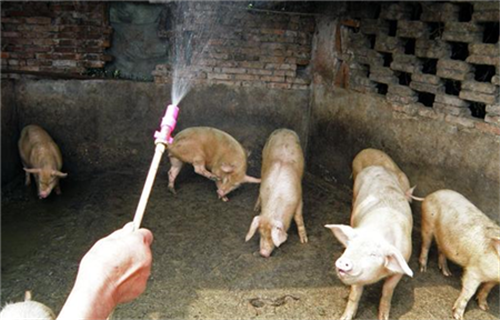
2. Collection of feedback feeding materials
Open the piglet from the chest, and observe whether the lungs are fresh pink. If the color is dull, then infection with other pathogens is suspected, and it cannot be used as feedback feeding material. Observe the piglet's main internal organs from top to bottom; they should remain intact and free of infection. The intestinal wall is generally semi-transparent, the stomach contents are white milk curds, and the intestines contain yellow diarrheal material. The mesentery should remain bright red, with no lacteal lines. If the piglet's intestinal wall has severe congestion and edema, and the mesentery has lacteal lines, this indicates that it is not a viral infection.
Select the stomach and intestines of piglets with typical symptoms, cut them out completely, and place them in a basin mixed with ice cubes.
3. Preparation of feedback feeding samples
To ensure the survival of the virus, the entire preparation process must be carried out in a low-temperature environment.
Use scissors to cut the collected piglet stomach and intestines into pieces as much as possible, then mix with ice cubes and put into a juicer, pour in skim milk (add 250ml of skim milk to the gastrointestinal material of one piglet), and then grind. During the grinding process, note that the temperature must not be too high. If the temperature is too high, stop to cool it down.
Pour the ground material mixture into a container (plastic bags, bottles, etc., which must be used after ultraviolet disinfection) for later use.
4. Feeding of feedback feeding materials
When the pig farm is relatively stable and epidemic diarrhea occurs only sporadically, feed it mainly to replacement gilts in a concentrated manner.
When the pig farm is under pressure from epidemic diarrhea infection, or during the first infection, feed the entire sow herd, including weaned sows, pregnant sows more than 1 month after mating, and replacement pigs. Lactating sows and sows within one month after mating do not need to be fed.
After feedback feeding, within 2-3 days the sows will show symptoms such as vomiting and diarrhea. This is a normal reaction after infection with the virus, and it generally stops quickly and the sows resume feed intake.
Feedback feeding is an emergency intervention plan when epidemic diarrhea problems occur on a pig farm. Truly selecting and preparing feedback feeding materials according to standards can, on the premise of ensuring the success of feedback feeding, avoid the spread of other pathogens to the greatest extent.
2. Epidemic diarrhea and PRRS
Epidemic diarrhea on pig farms generally occurs together with PRRS. On pig farms where PRRS is unstable, epidemic diarrhea also fluctuates periodically, with a high incidence in first-parity pigs and sporadic occurrence within the farm.
Therefore, even if the pig farm has done enough vaccine immunization, feedback feeding, and other prevention and control measures, it still cannot control sporadic epidemic diarrhea. At this time, the pig farm should consider PRRS as the chief culprit. On pig farms where PRRS is unstable, virus-carrying sows have low immunity, and neither feedback feeding nor vaccine immunization can be effective. There are also insufficient maternal antibodies in the sows' colostrum to protect newborn piglets so they can "come out unscathed" from the complex farrowing house environment.
The stabilization of PRRS on a pig farm should be the top priority. The combination of vaccine immunization and Ailixin control, especially the use of Ailixin before and after vaccine immunization, can give full play to the effect of vaccine immunization and reduce the side effects of vaccine immunization. In a pig farm with stable PRRS, other diseases, even epidemic diarrhea, are not difficult-to-control "major diseases."